10-cr LPG connections including 4-cr free to poor women given in 4 yrs, claims PM Modi

News Network
May 28, 2018

New Delhi, MAY 28: Prime Minister Narendra Modi on Monday said 10 crore LPG connections including 4 crore free to poor women, were given in last four years, compared to 13 crore in six decades since independence, as his government stepped up efforts to shield women and children from kitchen smoke.

Interacting through video-conference with some of the women beneficiaries who received free cooking gas connection under the Pradhan Mantri Ujjwala Yojana, Modi recounted his own childhood when his mother struggled with smoke emitting from cooking on firewood or cow dung, to say his government will increase coverage of clean fuel to 100 percent households in the near future.

"Till 2014, only 13 crore LPG connections were given. These were mostly to rich and affluent class. In the past four years, we have given 10 crore new LPG connections, mostly to poor," he said. "Ujjwala Yojana has strengthened the lives of the poor, marginalised, Dalits, tribal communities. This initiative is playing a central role in social empowerment."

Launched in May 2016, the scheme aims to provide in next three years as many as 5 crore free cooking gas connections to women from extremely poor households, aimed at reducing the use of polluting fuels such as wood and dried cow dung that, according to the World Health Organization, cause 1.3 million premature deaths in India every year.

The target was raised to 8 crore this year by adding two additional years.

India aims to increase liquefied petroleum gas (LPG) usage to cover 80 percent of its households by March 2019, against 72.8 percent in 2017. The Prime Minister did not give a date for achieving 100 percent coverage.

Modi said LPG is the cleanest and easily available source of energy that is giving women a healthier lifestyle, saving them time, helping them financially and saving the environment.

As many as 45 percent of the four crore free LPG connections given under Ujwalla are to Dalits, he said.

Stating that his government stood for empowerment of the Dalits, the Prime Minister said more than 1,200 petrol pumps have been given to Dalit families since 2014 as compared to 445 retail outlets given to such families during 2010-2014 period of the previous UPA regime.

Similarly, 1,300 families got LPG distributorship as compared to 900 in the previous years.

The government, he said, is very serious in eliminating middlemen and so the beneficiary list has been made transparent.

Apart from those included under socio-economic caste census (SECC) to avail the scheme, the extended Pradhan Mantri Ujjwala Yojana would now cover all SC/ST households, most backward classes, beneficiaries of Pradhan Mantri Awas Yojana (Gramin), Antyoday Anna Yojana, forest dwellers, people residing in river and river islands.

Modi said the government is targeting one lakh LPG Panchayats (peer learning platforms to support behaviour change in Ujjwala beneficiaries) this year to boost the LPG refill consumption and provide a window for the benefits of cleaner fuel to become visible.

Under the Pradhan Mantri Ujjwala Yojana, the government provides a subsidy of Rs 1,600 to state-owned fuel retailers for every free LPG gas connection that they install in poor rural households without one.

This subsidy is intended to cover the security fee for the cylinder and the fitting charges. The beneficiary has to buy her own cooking stove and refills.
To reduce the burden, the scheme allows beneficiaries to pay for the stove and the first refill in monthly instalments. However, the cost of all subsequent refills has to be borne by the beneficiary household.

He said 70 percent of the villages are 100 percent covered by LPG and 81 percent village are covered up to 75 percent.

In his interaction with women beneficiaries from different states, he asked them if they were getting LPG refills on time and if any middlemen were asking for money.
 
He asked them about their experience of using LPG and how it saved them time, which they can utilise for supporting the family financially by starting schemes like tiffin service.

He asked women to give healthy and nutritious food to their kids and not just rely on junk food.

Modi said he will never forget one of Premchand's stories, Idgah. "The story is about young Hamid, who does not buy sweets or gifts during Id but buys a 'Chimta' so that his grandmother does not burn her hands while cooking. This story is extremely emotional."

"Ujjwala Yojana is leading to better health for India's Nari Shakti," he said. 

Comments

Wellwisher
 - 
Monday, 28 May 2018

A new trend trying to fool the citizens. After a massive Rs 15lakhs controversy; 2 crores job;Note Bund, Aadhar card fraud  mr.modi statred to make publisity about his achievement. All the projects so far inagurated  by him are the program of previous Government he trying to tkae the credit and trying to divert the citizens mind from raising oil price to some other corner.

Wah this what his desh bhakt  move.


Add new comment

  • Coastaldigest.com reserves the right to delete or block any comments.
  • Coastaldigset.com is not responsible for its readers’ comments.
  • Comments that are abusive, incendiary or irrelevant are strictly prohibited.
  • Please use a genuine email ID and provide your name to avoid reject.
News Network
January 2,2020

United Nations, Jan 2: Nearly 400,000 babies were born around the world on New Year's Day with India recording the highest number of these births worldwide at 67,385, the UN children's agency said.

An estimated 392,078 babies were born around the world on New Year's Day, according to UNICEF. Of this, an estimated 67,385 babies were born in India, the most globally. China comes in second with 46,299 births.

The beginning of a new year and a new decade is an opportunity to reflect on our hopes and aspirations not only for our future, but the future of those who will come after us,” UNICEF Executive Director Henrietta Fore said.

As the calendar flips each January, we are reminded of all the possibility and potential of each child embarking on her or his life's journey—if they are just given that chance.”

Fiji in the Pacific most likely delivered 2020's first baby, while the US, the last of the New Year's Day. Globally, over half of these births were estimated to have taken place in eight countries - India (67,385), China (46,299), Nigeria (26,039), Pakistan (16,787), Indonesia (13,020), United States of America (10,452), Democratic Republic of Congo (10,247) and Ethiopia (8,493).

Each January, UNICEF celebrates babies born on New Year's Day, an auspicious day for child birth around the world, it said. However, for millions of newborns around the world, the day of their birth is far less auspicious.

In 2018, 2.5 million newborns died in just their first month of life; about a third of them on the first day of life. Among those children, most died from preventable causes such as premature birth, complications during delivery, and infections like sepsis. In addition, more than 2.5 million babies are born dead each year.

UNICEF said over the past three decades, the world has seen remarkable progress in child survival, cutting the number of children worldwide who die before their fifth birthday by more than half. But there has been slower progress for newborns. Babies dying in the first month accounted for 47 per cent of all deaths among children under five in 2018, up from 40 per cent in 1990.

UNICEF's Every Child Alive campaign calls for immediate investment in health workers with the right training, who are equipped with the right medicines to ensure every mother and newborn is cared for by a safe pair of hands to prevent and treat complications during pregnancy, delivery and birth.

Too many mothers and newborns are not being cared for by a trained and equipped midwife or nurse, and the results are devastating,” said Fore. “We can ensure that millions of babies survive their first day and live into this decade and beyond if every one of them is born into a safe pair of hands.”

India is projected to surpass China as the world's most populous country around 2027. According to UN estimates, India is expected to add nearly 273 million people between 2019 and 2050, while the population of Nigeria is projected to grow by 200 million. Together, these two countries could account for 23 per cent of the global population increase to 2050.

China, with 1.43 billion people in 2019, and India, with 1.37 billion, have long been the two most populous countries of the world, comprising 19 and 18 per cent, respectively, of the global total in 2019. Through the end of the century, India is estimated to remain the world's most populous country with nearly 1.5 billion inhabitants, followed by China with just under 1.1 billion, Nigeria with 733 million, the US with 434 million, and Pakistan with 403 million inhabitants.

Comments

Add new comment

  • Coastaldigest.com reserves the right to delete or block any comments.
  • Coastaldigset.com is not responsible for its readers’ comments.
  • Comments that are abusive, incendiary or irrelevant are strictly prohibited.
  • Please use a genuine email ID and provide your name to avoid reject.
News Network
May 21,2020

Bengaluru, May 21: The top two food-delivery startups, Swiggy and Zomato, will begin delivering alcohol in some cities starting from today, as they cash in on the high demand for booze during the country's coronavirus lockdown.

India was among the few countries to restrict liquor and tobacco sales as it announced one of the world's strictest lockdowns in March.

Hundreds of people started queuing up at liquor stores earlier this month when the government eased some restrictions, leading the police to resort to baton-charges to disperse crowds in some cases.

The companies will roll out the service in select cities in Jharkhand, starting with Ranchi from today, Swiggy and Zomato said in separate statements.

Swiggy said it was in advanced talks with multiple states to launch the service in more locations, and both firms said the move to allow alcohol orders through smartphones will promote social distancing and customer safety.

"By enabling home delivery of alcohol, we can generate additional business for retail outlets while solving the problem of overcrowding," said Anuj Rathi, vice president of products at Bengaluru-based Swiggy.

The new service also comes as both Swiggy and Zomato face sharp declines in their core business, with restaurants remaining shut during the two-month lockdown, forcing the companies to cut hundreds of jobs to save cash.

News agency reported earlier this month that Zomato was aiming to branch out into delivering alcohol. Swiggy is backed by South African internet group Naspers Ltd, while Ant Financial, an affiliate of Chinese e-commerce giant Alibaba Group Holding Ltd, is a major investor in Zomato.

Comments

Add new comment

  • Coastaldigest.com reserves the right to delete or block any comments.
  • Coastaldigset.com is not responsible for its readers’ comments.
  • Comments that are abusive, incendiary or irrelevant are strictly prohibited.
  • Please use a genuine email ID and provide your name to avoid reject.
Agencies
July 30,2020

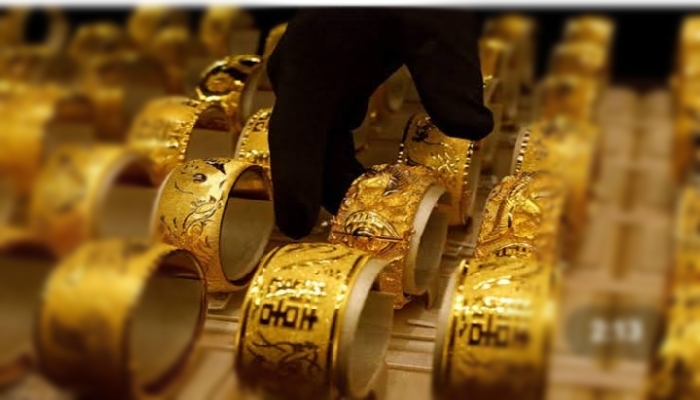
New Delhi, Jul 30: India's gold demand in 2020 is expected to fall to the lowest level in 26 years with domestic bullion prices hitting a record high and as falling disposable incomes could curtail retail purchases, the World Gold Council (WGC) said on Thursday.

Lower demand by the world's second-biggest bullion consumer could limit a rally in global prices, which hit a record high earlier this month, although it could also reduce India's trade deficit and support the ailing rupee.

"Fast rising gold prices could act as headwinds," said Somasundaram PR, the managing director of WGC's Indian operations.

Local gold futures have jumped 35% so far this year after rising a quarter in 2019.

India's gold consumption in the first half of 2020 plunged 56% on-year to 165.6 tonnes. Meanwhile, the coronavirus-triggered lockdown also slashed demand by 70% in the June quarter to 63.7 tonnes, the lowest in more than a decade, the WGC said in a report published on Thursday.

Millions of Indians have lost their jobs or taken a pay cut after the country imposed a lockdown on its 1.3 billion people to curb the spread of the virus that has infected more than 1.5 million Indians.

Consumption is generally high during the June quarter due to weddings and key festivals such as Akshaya Tritiya, but lockdown restrictions kept shoppers indoors this year.

The weak demand in the first half could drag down India's gold consumption in 2020 to the lowest since 1994, when demand stood at 415 tonnes, Somasundaram said, adding that it is still difficult to provide an estimate for full-year demand as the coronavirus crisis is still unfolding.

"Indian demand has previously jumped as much as 300 tonnes in a quarter. Latent demand could come out in the second half," Somasundaram said.

Comments

Add new comment

  • Coastaldigest.com reserves the right to delete or block any comments.
  • Coastaldigset.com is not responsible for its readers’ comments.
  • Comments that are abusive, incendiary or irrelevant are strictly prohibited.
  • Please use a genuine email ID and provide your name to avoid reject.