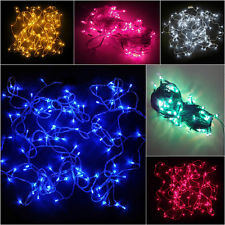
10-month-old girl swallows LED bulb when were busy in celebrating Diwali

[email protected] (CD Network)
November 1, 2016

bulbBengaluru, No 1: A 10-month-old baby girl swallowed an LED bulb with metal electrodes while her parents were arranging electric diyas outside for Diwali their house in Bengaluru.

When the child's mother saw the baby swallowing the bulb, she tried to remove it from her mouth but failed.

The contraption, which was about 5 centimetres long, caused breathing problems for the baby. She was rushed to Columbia Asia referral hospital in Yeshwantpur around 10 p.m.

Sai Prasad T.R., Senior Consultant, Paediatric Surgery, performed an emergency bronchoscopy to remove the contraption from the baby's trachea. “A chest X-ray revealed that the metallic foreign body had got stuck in her trachea.

The wires extended into the right main bronchus. Fortunately, the glass bulb did not break in the wind pipe,” he said, adding that the baby was discharged on Monday morning.

Comments

Jinu
 - 
Tuesday, 1 Nov 2016

What kind of parents are they...? first should take care of kids. then celebration

Kumar
 - 
Tuesday, 1 Nov 2016

What busy??? Cant take care of kids????

Add new comment

  • Coastaldigest.com reserves the right to delete or block any comments.
  • Coastaldigset.com is not responsible for its readers’ comments.
  • Comments that are abusive, incendiary or irrelevant are strictly prohibited.
  • Please use a genuine email ID and provide your name to avoid reject.
News Network
March 4,2020

Vijayapura, Mar 4: Despite strict measures to prevent any kind of embarrassing incidents during II PU board exams, the first three pages of Physics question paper was doing rounds on social media within an hour of commencement.

According to sources, “after removing the question papers from the sealed paper envelope, one of the supervisors is suspected to have taken photographs of it and circulated to the various social networking sites and Whatsapp. In an hour it spread across the district and the incident is said to be happened at Shanteshwar Pre-University College at Indi town.”

As many as 27,359 students were enrolled for the PU Board exams and among them 7,984 students have registered for Science. On the first-day, Physics for Science and History for Arts examinations were held in 41 centres of the district.

Confirming the question papers are being circulated over social networking applications, Deputy Commissioner YS Patil told TNIE that: “According to the Karnataka Education Act 24 (a) it cannot be considered as the question paper leak.”

“Even we have contacted the head office of the PU Board they also collecting the primary details denied to claim it as question paper leak. However, a committee will investigate and will also visit the college in the earliest. If any of the supervisors found guilty an action will be initiated against them. It is not a question paper leak instead it might be lapse of duty from the supervisors and investigation will be made,” stated DC Patil.

Comments

Add new comment

  • Coastaldigest.com reserves the right to delete or block any comments.
  • Coastaldigset.com is not responsible for its readers’ comments.
  • Comments that are abusive, incendiary or irrelevant are strictly prohibited.
  • Please use a genuine email ID and provide your name to avoid reject.
News Network
April 2,2020

The current physical distancing guidelines provided by the World Health Organisation (WHO) and by the US Centers for Disease Control and Prevention (CDC) may not be adequate to curb the coronavirus spread, according to a research which says the gas cloud from a cough or sneeze may help virus particles travel up to 8 metres. The research, published in the Journal of the American Medical Association, noted that the the current guidelines issued by the WHO and CDC are based on outdated models from the 1930s of how gas clouds from a cough, sneeze, or exhalation spread.

Study author, MIT associate professor Lydia Bourouiba, warned that droplets of all sizes can travel 23 to 27 feet, or 7-8 metres, carrying the pathogen.

According to Bourouiba, the current guidelines are based on "arbitrary" assumptions of droplet size, "overly simplified", and "may limit the effectiveness of the proposed interventions" against the deadly pandemic.

 She explained that the old guidelines assume droplets to be one of two categories, small or large, taking short-range semi-ballistic trajectories when a person exhales, coughs, or sneezes.

However based on more recent discoveries, the MIT scientist said, sneezes and coughs are made of a puff cloud that carries ambient air, transporting within it clusters of droplets of a wide range of sizes.

Bourouiba warned that this puff cloud, with ambient air entrapped in it, can offer the droplets moisture and warmth that can prevent it from evaporation in the outer environment.

"The locally moist and warm atmosphere within the turbulent gas cloud allows the contained droplets to evade evaporation for much longer than occurs with isolated droplets," she said.

"Under these conditions, the lifetime of a droplet could be considerably extended by a factor of up to 1000, from a fraction of a second to minutes," the researcher explained in the study.

The MIT scientist, who has researched the dynamics of coughs and sneezes for years, added that these droplets settle along the trajectory of a cough or sneeze contaminating surfaces, with their residues staying suspended in the air for hours.

"Even when maximum containment policies were enforced, the rapid international spread of COVID-19 suggests that using arbitrary droplet size cutoffs may not accurately reflect what actually occurs with respiratory emissions, possibly contributing to the ineffectiveness of some procedures used to limit the spread of respiratory disease," Bourouiba wrote in the study


Comments

Add new comment

  • Coastaldigest.com reserves the right to delete or block any comments.
  • Coastaldigset.com is not responsible for its readers’ comments.
  • Comments that are abusive, incendiary or irrelevant are strictly prohibited.
  • Please use a genuine email ID and provide your name to avoid reject.
News Network
February 28,2020

Bengaluru, Feb 28: The Liquefied Petroleum Gas penetration in Karnataka is 'absolutely 100 per cent' due to the Prime Minister Ujjwala Yojana, Indian Oil Corporation Karnataka Executive Director D L Pramodh said here on Friday.

In 2014, LPG penetration in the State was only 68 per cent, but after the PMUY, massive number of gas connections were given in the last five years, he said, adding, "It is absolutely 100 per cent today."

"There are 1.6 crore LPG connections out of which around 31.5 lakh -- or around 20 per cent -- come under the PMUY. The 100 per cent LPG penetration in the state will help women in rural areas to make their kitchens smokeless. Against the national average of 2.88 cylinders per family per PMUY annually, the figure is Karnataka 3.4 cylinders in Karnataka," Pramodh told reporters.

On the initiative of blending ethanol with petrol, he said it's 8.6 per cent in Karnataka, the highest comparedto other states, where it's five per cent to 5.5 per cent. The state aims to increase it to 10 per cent. By March 31, the IOC would commission the Rs 10 crore Vapour Recovery System at the Devanagonthi terminal on the city outskirts which would ensure that vapour does not go out in the air when tankers are being filled with fuel. "This is an important measure taken tominimise pollution", he said.

Pramodh also said the IOC has started mobile fuel dispensers, delivering fuels at the doorsteps.

Regarding the IOC's preparedness for Electric Vehicle charging stations, Pramodh said the Ministry of Power has given the company a target to set up 500 charging stations across India in the first phase. The IOC has already signed MoUs with NTPC, Power Grid Corporation Limited, Hyundai Motors, Tech Mahindra and Tata Power in this regard.

In Karnataka, 58 sites have been identified for setting up charging and battery swapping stations.

"Total electric vehicle charging facilities planned by IOC in Karnataka by March 31 is 34, out of which 26 will be EVcharging sites and eight battery swapping stations," Pramodh said.

Comments

Add new comment

  • Coastaldigest.com reserves the right to delete or block any comments.
  • Coastaldigset.com is not responsible for its readers’ comments.
  • Comments that are abusive, incendiary or irrelevant are strictly prohibited.
  • Please use a genuine email ID and provide your name to avoid reject.