


14-yr-old Muslim boy, 15-yr-old Hindu girl fall in love; her elders kill him, bury in backyard

[email protected] (News Network)
July 22, 2016

Muzaffarnagar, Jul 22: Police have arrested three persons of a Hindu family for killing their 14-year-old Muslim neighbour and burying him in the backyard of their house after a 15-year-old female member of their family fell in love with him, here in Uttar Pradesh.
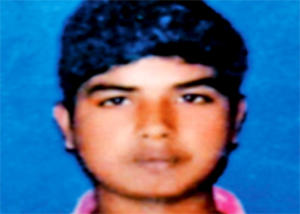
lover1In fact the Hindu and Muslim families had been living as neighbours for two decades, sharing a single wall that separated their houses. When the Muzaffarnagar riots broke out, the violence left their bond untouched.

On Thursday, in what sent shock waves through Muzaffarnagar, the police dug out the body of Irshad, the school-going teenager, from the compound of the Sainis. According to police the family members of the girl kidnapped the boy, killed and buried him quietly. Two brothers of the girl and an uncle have been arrested in connection with the case.

Shakeel Ahmad had filed a missing person report at Jansath police station on Tuesday after his son didn't return home even by late evening. The boy had never done that before. But it took investigators little time to piece the sordid puzzle together. Somebody had seen Irshad and the girl walking together a few days back. After that it didn't take cops long to follow clues that led to the Sainis' backyard.

"We felt something was fishy when the boy's call detail report (CDR) revealed that he had been in constant touch with one specific person. Interestingly, both sim cards were registered in Irshad's name, which means the youth had given that number to the girl. Further investigations revealed that it was a girl in the neighbourhood with whom he was communicating," said SSP Deepak Kumar.

"Questioning of the brothers of the girl confirmed that the boy was strangulated soon after he was abducted on Monday night. His body was hidden in a shallow pit in a plot that belonged to the uncle of the girl. We recovered the body and have arrested Pawan and Mohan Saini, the brothers, along with the uncle."

Ahmad, still to recover from the loss of his son, said, "These people shared the wall of our house. They were our neighbours. They could have brought the matter to us and we would have reprimanded our son. He didn't deserve this fate. He was just a little boy."

Not taking any chances as the incident happened in Kawal, the village many regard as the epicenter of the Muzaffarnagar riots of 2103 that left 63 dead and more than 50,000 homeless, the district administration rushed a contingent of PAC and police force from five stations to the area that's classified as hyper-sensitive.

As news of the murder spread on Thursday morning, tension began building up, forcing IG (Meerut zone) Sujeet Pandey to promptly order deployment of additional force in Kawal. The situation, though simmering with tension, is under control. "It was a race against time," SSP Kumar said. "We couldn't have waited for long as things could have gone out of control, what with the reputation of Kawal."

Jamshed Ahmad, pradhan of Kawal, said, "We still haven't got over what happened here three years ago. This was uncalled for. We have to do everything in our power not to let things go wrong again."

Comments

L K Monu Borkala
 - 
Friday, 22 Jul 2016

Shameless animals can do anything for the sake of religion. very very sad and painful incident. so young he is and how can they kill this boy?? they could have informed their parents...Yaa Allah Save the humanity....

Add new comment

  • Coastaldigest.com reserves the right to delete or block any comments.
  • Coastaldigset.com is not responsible for its readers’ comments.
  • Comments that are abusive, incendiary or irrelevant are strictly prohibited.
  • Please use a genuine email ID and provide your name to avoid reject.
coastaldigest.com web desk
June 9,2020

With the steep hike in excise duty in the past couple of months, an average consumer of petrol now pays over 275% in taxes to centre and states on a litre of the fuel.  The base price of petrol is just about Rs 18. The taxes are close to Rs 50 and the pump price is over Rs 72.

India imports 85% of all its crude oil demand.  After a steep hike in excise duty in the past two months despite a hold on daily price revisions by the oil public sector undertakings (PSUs), Indian consumers now pay 275% collectively in excise duty to state and centre. 

The central government hiked excise on petrol and diesel by Rs 10 and Rs 13 respectively last month. The excise duty on petrol is taxed around Rs 33-a-litre while the same on diesel it is Rs 32.

The Value-Added Tax (VAT) on both petrol and diesel is Rs 16.44 and Rs 16.26 respectively. Both the taxes together are around Rs 49 while it is sold at petrol pumps at 73-per-litre.

These two taxes cumulatively account for 69% of tax which is higher than anywhere else in the world. The same is taxed at 19% in the US, 47% in Japan, UK 62% and 63% in France. The government does not pass on the benefit of lower crude oil prices to the customer.

It is to be noted that Indian consumers continued to pay Rs 70-a-litre even when crude oil prices hit a paltry US $ 20-a-barrel on April 12.

Former finance minister and Congress leader recently took a jab at the Centre over rising prices stating, “Fuel selling prices raised twice in two days, following tax hikes two weeks ago. This time to benefit oil companies. Government is poor, it needs more taxes. Oil companies are poor, they need better prices. Only the poor and middle class are not poor, so they will pay”.

Comments

Lovely indian
 - 
Wednesday, 10 Jun 2020

Acche din for modi bakth....lets enjoy


you need only ram mandir and NRC

Add new comment

  • Coastaldigest.com reserves the right to delete or block any comments.
  • Coastaldigset.com is not responsible for its readers’ comments.
  • Comments that are abusive, incendiary or irrelevant are strictly prohibited.
  • Please use a genuine email ID and provide your name to avoid reject.
Media Release
February 14,2020

Veteran journalist P. Sainath has said that the nation is in a crisis. And this crisis is not limited to just the rural area. It has become a national crisis at various areas such as agriculture, education, economy, job creation etc.

He was delivering the endowment lecture on the topic ‘Indian democracy at the post-liberalization and post-truth era’ at Media Manthan 2020 organized by the PG department of journalism and mass communication at St Aloysius College (Autonomous). 

Mr Sainath said that the many policies adopted in the 90s led to India becoming unusually unequal. Referring to the speech Ambedkar had made at the Constituent Assembly while handing over the draft of the Constitution, Mr Sainath said, “Ambedkar had warned about the weakness of Indian democracy that liberty without equality allows the supremacy of a few over the multitude. Liberty, equality and fraternity must be kept together as we cannot have one without the other.” 

Mr Sainath stated that the agrarian crisis was no longer about the loss of productivity, employment or about farmer suicide; it was a societal, civilizational crisis. Commenting on the lopsided policies such as cow-slaughter ban, he explained how cow slaughter ban had adversely affected many industries due to their interdependency. While Muslims who slaughtered cows were rendered helpless, the cattle traders who were mostly OBCs lost their earnings as the cattle prices crashed. An important industry like Kolhapur sandals industry in Maharashtra went bankrupt as a result of the cow slaughter ban in Maharashtra. He said the policymakers had no idea how the rural industries were interconnected. Demonetisation too devastated the rural economy as 98 percent of rural transactions happen through cash. 

Mr Sainath also spoke about the crisis of inequality which affects the Dalits and the Adivasis far more than anyone else as 90 percent of the rural households take home less than Rs 10,000/- per month. “Women are yet another group whose labour is never counted in the gross domestic product. Women and girls globally do unpaid work which amounts to about 12.5 billion working hours per year. Monetarily speaking, this is worth 10.8 trillion dollars,” Mr Sainath added. 

Speaking about the crisis of jobs Mr Sainath said that major companies were laying off employees just to create more profits for the investors and the adoption of artificial intelligence in the industry would further destroy millions of jobs.

Rector of St Aloysius College Institutions Fr Dionysius Vaz SJ, Principal Dr (Fr) Praveen Martis SJ, HOD of Journalism and Mass Communication department Dr (Fr) Melwyn Pinto SJ were present.

‘Veerappan and Vijay Mallya’s business models are interesting!’

Addressing the gathering during his endowment lecture on Friday, Mr Sainath made an interesting comment on the so called ‘revenue model’. “Whenever I visit IIMs and IITs for lectures on my PARI project, the students there ask me what my revenue model for my project is. I tell them that I do not have a revenue model. In fact, journalism does not begin with a revenue model. Gandhiji, Ambedkar, Bhagat Singh were all great journalists. But they did not have a revenue model,” Mr Sainath said.

On a lighter note, he said that the best revenue model that he liked was that of forest brigand Veerappan and liquor baron Vijay Mallya. “Veerappan ruled the forest for forty years and from the top ministers to the villagers he could dictate terms and liver royally. Similarly, Mallya’s revenue model was to steal the banks and run away abroad and live like a king,” Mr Sainath added.

Journalism is not and can never be a business. It is a calling, he opined. While newspaper can be a business, television can be a business, journalism per se cannot be reduced to a business. “Unfortunately today, journalists are recruited on a contract basis and they have no bargaining power; and there are no unions to fight for their cause. Hence, they are at the mercy of the corporate media houses for their survival and are made to write stories that cannot be called journalism,” Mr Sainath said.

Answering a question as to the pressures he faced as a journalist, he said that external pressures from the government or others could be very well handled. It is the internal pressures from once own media house that journalists find it difficult to manage.


Comments

Add new comment

  • Coastaldigest.com reserves the right to delete or block any comments.
  • Coastaldigset.com is not responsible for its readers’ comments.
  • Comments that are abusive, incendiary or irrelevant are strictly prohibited.
  • Please use a genuine email ID and provide your name to avoid reject.
coastaldigest.com news network
July 14,2020

Bengaluru, July 14: Girls outshone boys in the Second Pre-University Board examinations in Karnataka, results of which were announced on Tuesday.

As many as 6.75 lakh students had written the examination of which 4.17 lakh students passed.

Thus, the pass percentage is 61.80 per cent, Primary and Secondary Education Minister S Suresh Kumar said while announcing the results.

He said 68.73 per cent girls cleared the exam against the boys whose pass percentage was 54.77 per cent.

In terms of urban versus rural, 62.60 per cent students passed in the urban area while 58.99 per cent were from rural areas.

The three districts where the students' performance was excellent were Udupi, Dakshina Kannada and Kodagu whereas the districts where students fared badly were Chitradurga, Raichur and Vijayapura, the minister said.

Both Dakshina Kannada and Udupi have recorded 90.71 percent results. Kodagu has bagged second position with 81.53 pass percentage. Vijayapura district has recorded lowest pass percentage (54.22)

Combination wise, the pass percentage of students in science stream is 82.57 per cent, Commerce 72.60 per cent and Arts 47.90 per cent, said the Minister.

He also said of those who passed the examination, 72. 45 per cent were from English medium and 47.56 from Kannada medium.

There are 68,866 distinction scorers, 2,21,866 students who got first division and 77,455 students who passed the exam in second division, the minister added.

Comments

Add new comment

  • Coastaldigest.com reserves the right to delete or block any comments.
  • Coastaldigset.com is not responsible for its readers’ comments.
  • Comments that are abusive, incendiary or irrelevant are strictly prohibited.
  • Please use a genuine email ID and provide your name to avoid reject.