177 minority schools in Mangalore; highest in state

[email protected] (CD Network)
June 18, 2014

Mangalore, Jun 18: The coastal district of Dakshina Kannada, which is known as one of the educational hubs in India, is also a centre of minority education.

akidAccording to the statistics provided by the Department of Public Instruction (DPI), Mangalore accounts for the highest number of minority schools in Karnataka.

At present, there are 1,059 minority schools, of which 177 schools are in Mangalore. Bangalore Urban district has 160 minority schools.

With the State Cabinet deciding to change the criterion for granting minority status to primary schools, hundreds of schools across the State are likely to become eligible for minority status in the coming months.

This would also mean that the number of seats for children belonging to underprivileged sections in private schools under the RTE would reduce as minority schools are exempted from admitting students under the quota.

A large number of applications of schools, which had applied for minority status were put on the back burner as the definition on minority schools was stayed by the High Court of Karnataka.

The BJP government in July 2012 had notified that a minority school should have 75 per cent intake of students of a notified minority community. On June 13 this year, the State Cabinet decided to reduce the intake to 25 per cent.

Explaining the future course of action, Mohammad Mohsin, Commissioner for Public Instruction, said that once the new guidelines were drafted, the stay order issued by the High Court could be vacated. “Following that, the Directorate of Urdu and Other Minority Language Institutions under the Department of Public Instruction will examine all the parameters and give minority status tag to schools that are eligible,” he said.

Meanwhile, D.Z. Gulshad Ahmed, president of the Karnataka Unaided Minorities Schools Management Association welcomed the new rule. However, he said there was a need for the government to be wary while awarding minority status as several schools now wanted to claim minority status to be exempted from providing admission under the RTE quota.

However, Karnataka Unaided Schools Management Association (KUSMA) termed the new rule unsatisfactory. In a press release, KUSMA said the new definition would only recognise those minorities which are sizeable in any given locality and it would neglect the smaller minorities.

“Such discrimination against smaller minorities would plainly be unconstitutional,” the release said.

Comments

Add new comment

  • Coastaldigest.com reserves the right to delete or block any comments.
  • Coastaldigset.com is not responsible for its readers’ comments.
  • Comments that are abusive, incendiary or irrelevant are strictly prohibited.
  • Please use a genuine email ID and provide your name to avoid reject.
coastaldigest.com news network
August 5,2020

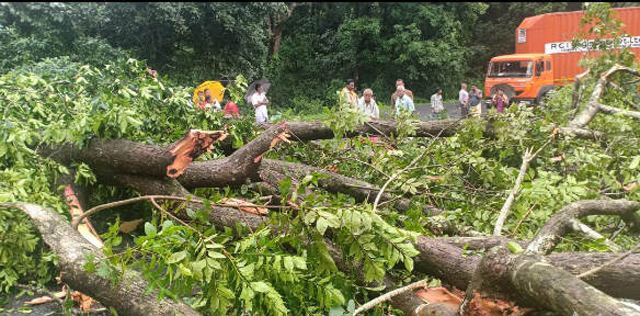
Mangaluru, Aug 5: Normal life was thrown out of gear as heavy rain and gusty winds lashed large parts of coastal and malnad districts of Karnataka in last 48 hours. Widespread power outages due to tree fall and minor landslides were reported in last 24 hours.

Meanwhile, Indian Meteorological Department has sounded a red alert for Uttara Kannada, Udupi and Dakshina Kannada districts 8:30am of August 5.

In Mangaluru city there were several tree falls disrupting power supply in key areas of the city. Four electricity poles were damaged after a tree fell on Boloor Jarandaya road due to rain and heavy winds. In Neermarga too, there were a couple of tree falls in the morning cutting off power supply, which was not restored till this report was sent.

Mescom bore the brunt of the rains in Udupi and Dakshina Kannada District and at the last count as many as 148 electric poles, 23 transformers and 65 kilometer conductor wires were damaged due to poles being damaged in tree fall and landslides.

Traffic was affected on Charmadi Ghat on the Mangaluru-Chikkamagaluru route due to a tree fall on the second hair pin bend. 

On Monday, landslides near Kottigehara, Chikkamagaluru District, left traffic badly affected. Though normalcy has been restored on the route after blocking the road for restoration till Tuesday morning, locals fear more landslides due to continuous downpour.

Kodagu district too received heavy rainfall in past 24 hours which resulted in water logging in low-lying areas.

In the Coast, Uttara Kannada received the highest amount of rainfall at 91mm, followed by Udupi at 75 and DK at 73mm. The highest Rainfall of 241 mm was recorded at Castlerock, Supa Taluk in Uttara Kannada District.

KSNMDC bulletin stated that widespread moderate to heavy rains associated with strong surface winds at times and isolated very heavy to extreme heavy rains was likely over Udupi, Dakshina Kannada and Uttara Kannada districts It also stated that wind speeds ranging between 50kmph to 60 kmph was forecast along the coast of Karnataka from Mangaluru to Karwar, warning fishermen not to venture into the sea.

Comments

Add new comment

  • Coastaldigest.com reserves the right to delete or block any comments.
  • Coastaldigset.com is not responsible for its readers’ comments.
  • Comments that are abusive, incendiary or irrelevant are strictly prohibited.
  • Please use a genuine email ID and provide your name to avoid reject.
News Network
July 28,2020

Hounde, Jul 28: Coronavirus and its restrictions are pushing already hungry communities over the edge, killing an estimated 10,000 more young children a month as meager farms are cut off from markets and villages are isolated from food and medical aid, the United Nations warned Monday.

In the call to action shared with The Associated Press ahead of publication, four UN agencies warned that growing malnutrition would have long-term consequences, transforming individual tragedies into a generational catastrophe.

Hunger is already stalking Haboue Solange Boue, an infant from Burkina Faso who lost half her former body weight of 5.5 pounds (2.5 kilograms) in just a month. Coronavirus restrictions closed the markets, and her family sold fewer vegetables. Her mother was too malnourished to nurse.

“My child,” Danssanin Lanizou whispered, choking back tears as she unwrapped a blanket to reveal her baby's protruding ribs.

More than 550,000 additional children each month are being struck by what is called wasting, according to the UN — malnutrition that manifests in spindly limbs and distended bellies. Over a year, that's up 6.7 million from last year's total of 47 million. Wasting and stunting can permanently damage children physically and mentally.

“The food security effects of the COVID crisis are going to reflect many years from now,” said Dr. Francesco Branca, the WHO head of nutrition. “There is going to be a societal effect.”

From Latin America to South Asia to sub-Saharan Africa, more poor families than ever are staring down a future without enough food.

In April, World Food Program head David Beasley warned that the coronavirus economy would cause global famines “of biblical proportions” this year. There are different stages of what is known as food insecurity; famine is officially declared when, along with other measures, 30% of the population suffers from wasting.

The World Food Program estimated in February that one Venezuelan in three was already going hungry, as inflation rendered salaries nearly worthless and forced millions to flee abroad. Then the virus arrived.

“Every day we receive a malnourished child,” said Dr. Francisco Nieto, who works in a hospital in the border state of Tachira.

In May, Nieto recalled, after two months of quarantine, 18-month-old twins arrived with bodies bloated from malnutrition. The children's mother was jobless and living with her own mother. She told the doctor she fed them only a simple drink made with boiled bananas.

“Not even a cracker? Some chicken?” he asked.

“Nothing,” the children's grandmother responded. By the time the doctor saw them, it was too late: One boy died eight days later.

The leaders of four international agencies — the World Health Organization, UNICEF, the World Food Program and the Food and Agriculture Organization — have called for at least dollar 2.4 billion immediately to address global hunger.

But even more than lack of money, restrictions on movement have prevented families from seeking treatment, said Victor Aguayo, the head of UNICEF's nutrition program.

“By having schools closed, by having primary health care services disrupted, by having nutritional programs dysfunctional, we are also creating harm,” Aguayo said. He cited as an example the near-global suspension of Vitamin A supplements, which are a crucial way to bolster developing immune systems.

In Afghanistan, movement restrictions prevent families from bringing their malnourished children to hospitals for food and aid just when they need it most. The Indira Gandhi hospital in the capital, Kabul, has seen only three or four malnourished children, said specialist Nematullah Amiri. Last year, there were 10 times as many.

Because the children don't come in, there's no way to know for certain the scale of the problem, but a recent study by Johns Hopkins University indicated an additional 13,000 Afghans younger than 5 could die.

Afghanistan is now in a red zone of hunger, with severe childhood malnutrition spiking from 690,000 in January to 780,000 — a 13% increase, according to UNICEF.

In Yemen, restrictions on movement have blocked aid distribution, along with the stalling of salaries and price hikes. The Arab world's poorest country is suffering further from a fall in remittances and a drop in funding from humanitarian agencies.

Yemen is now on the brink of famine, according to the Famine Early Warning Systems Network, which uses surveys, satellite data and weather mapping to pinpoint places most in need.

Some of the worst hunger still occurs in sub-Saharan Africa. In Sudan, 9.6 million people live from one meal to the next — a 65% increase from the same time last year.

Lockdowns across Sudanese provinces, as around the world, have dried up work and incomes for millions. With inflation hitting 136%, prices for basic goods have more than tripled.

“It has never been easy but now we are starving, eating grass, weeds, just plants from the earth,” said Ibrahim Youssef, director of the Kalma camp for internally displaced people in war-ravaged south Darfur.

Adam Haroun, an official in the Krinding camp in west Darfur, recorded nine deaths linked with malnutrition, otherwise a rare occurrence, over the past two months — five newborns and four older adults, he said.

Before the pandemic and lockdown, the Abdullah family ate three meals a day, sometimes with bread, or they'd add butter to porridge. Now they are down to just one meal of “millet porridge” — water mixed with grain. Zakaria Yehia Abdullah, a farmer now at Krinding, said the hunger is showing “in my children's faces.”

“I don't have the basics I need to survive,” said the 67-year-old, who who hasn't worked the fields since April. “That means the 10 people counting on me can't survive either.”


Comments

Add new comment

  • Coastaldigest.com reserves the right to delete or block any comments.
  • Coastaldigset.com is not responsible for its readers’ comments.
  • Comments that are abusive, incendiary or irrelevant are strictly prohibited.
  • Please use a genuine email ID and provide your name to avoid reject.
News Network
March 28,2020

Mangaluru, Mar 28: After a youth from Dakshina Kannada who tested positive for the deadly Covid-19 revealed that he had travelled by a bus, authorities have requested all his fellow passengers to visit their nearest district hospital. 

The 21-year-old man hailing from Belthangady taluk had flown from Dubai to Bengaluru on March 21 and on the same day travelled to Mangaluru by the KSRTC bus bearing registration number KA 19, F3329

As he was suffering from fever and cough he was admitted to Puttur government hospital on March 24. He was tested positive for the novel coronavirus on March 27.   

It is not yet know how many passengers were there on board the above mentioned bus which had departed Bengaluru at 4:30 p.m. on March 21. It is believed that most of the passengers who travelled by this bus are residents of Dakshina Kannada. 

Hence, the KSRTC authorities today requested all the passengers who travelled by this bus to visit their nearest district hospital for necessary checkup. The passengers also were urged to quarantine themselves for next couple of weeks.

Comments

Add new comment

  • Coastaldigest.com reserves the right to delete or block any comments.
  • Coastaldigset.com is not responsible for its readers’ comments.
  • Comments that are abusive, incendiary or irrelevant are strictly prohibited.
  • Please use a genuine email ID and provide your name to avoid reject.