19 coronavirus patients in Kerala cured, active cases stand at 178 in State

News Network
April 14, 2020

Thiruvananthapuram, Apr 14: Only three fresh COVID-19 cases were reported in Kerala on April 13, while 19 confirmed patients, who were undergoing treatment, tested negative for the infection, according to the COVID-19 Outbreak Control and Prevention State Cell, Health and Family Welfare Department, Kerala government.

As of Monday evening, there are just 178 positive COVID-19 cases in the State.

Twelve patients from Kasargod district, three each from Pathanamthitta and Thrissur districts, and one from Kannur district are among those who have recovered from COVID-19 and tested negative.

To date, there have been a total of 378 confirmed cases of coronavirus in Kerala.
Meanwhile, Kerala Chief Minister Pinarayi Vijayan has demanded that State Relief Funds be made eligible for Corporate Social Responsibility (CSR) funding by making changes to the Companies Act.

Addressing the media, the Chief Minister said, "The Government of Kerala is of the opinion that contributions to the Chief Minister's Disaster Relief Funds should be included as an eligible expenditure under CSR. In a federal setup, the Relief Funds set up by the States for a public purpose cannot be excluded from the eligibility criteria when the same is available for a Central Fund set up with similar objectives and aims."

The Kerala CM said that he has written to the Prime Minister in this regard urging him to make the necessary changes.

Vijayan once again reiterated the demand of the State government to bring back stranded Keralites from overseas and added that, "We will extend all possible help and support to the Pravasi Malayalees when they come back also including rehabilitation of those who would lose their jobs in the backdrop of the pandemic outbreak."

He added that a decision on extending the lockdown in the State will be taken after taking into account the decision of the Central government in the address by the Prime Minister scheduled for April 14.

Comments

AJS
 - 
Tuesday, 14 Apr 2020

HATS-OFF TO BOLD CHIEF MINISTER OF KERALA MR. VIJAYAN... BAHUBALI

THE ONLY CHIEF MINISTER TO APPROACH GCC FOR HIS PEOPLE.... A ROLL MODEL FOR OTHER STATES AND CENTER

Add new comment

  • Coastaldigest.com reserves the right to delete or block any comments.
  • Coastaldigset.com is not responsible for its readers’ comments.
  • Comments that are abusive, incendiary or irrelevant are strictly prohibited.
  • Please use a genuine email ID and provide your name to avoid reject.
News Network
February 29,2020

Kollam, Feb 29: Seven-year-old Devananda, whose body was found in a lake, was laid to rest at Kudavattoor in the Kollam district of Kerala on Friday evening.

She was laid to rest near her father Pradeep Kumar's house in Kudavattoor. Earlier, the body was kept at her mother Dhanya's house in Ilavoor and Vakkanadu school, where she studied in Class 1, for the public to pay respect.

Hundreds of people visited to pay their last respects to the child.

An intense social media campaign was launched to trace the child after she was reported missing on Thursday morning.

According to police, an autopsy conducted in Thiruvananthapuram Medical College led to a preliminary conclusion that the cause of death was drowning. Residues of mud and silt have been found in her respiratory tract.

Signs of any kind of violence inflicted on the child have been ruled out. The body was released to the family after the autopsy.

Chief Minister of Kerala Pinarayi Vijayan and Opposition leader Ramesh Chennithala, BJP state president K Surendran were among many politicians who offered the condolences.

Many celebrities including Mammootty, Dulqar Salman, Kunchako Boban took to Facebook to pay their tribute to Devananda.

Comments

Add new comment

  • Coastaldigest.com reserves the right to delete or block any comments.
  • Coastaldigset.com is not responsible for its readers’ comments.
  • Comments that are abusive, incendiary or irrelevant are strictly prohibited.
  • Please use a genuine email ID and provide your name to avoid reject.
News Network
January 9,2020

Mumbai, Jan 9: India's weddings are famously lavish -- lasting days and with hundreds if not thousands of guests -- but this season many families are cutting costs even if it risks their social standing.

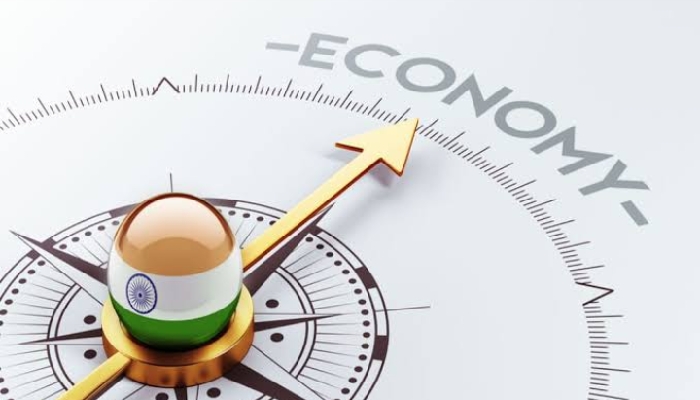
It is symptomatic of a sharp slowdown in the world's fifth-largest economy, with Indians spending less on everything from daily essentials to once-in-a-lifetime celebrations.

Growth has hit a six-year low and unemployment a four-decade high under Prime Minister Narendra Modi. Prices are rising too, squeezing spending on everything from shampoo to mobile data.

Chartered accountant Palak Panchamiya, for example, has already slashed the budget on her upcoming Mumbai nuptials by a third, trimming spending on clothing and the guest list.

"Initially I chose a dress that cost 73,000 rupees ($1,000)," Panchamiya told news agency as she picked through outfits at a recent marriage trade fair.

"But my partner felt it was too expensive, and so now I am here reworking my options and looking for something cheaper."

India's massive wedding industry is worth an estimated $40-50 billion a year, according to research firm KPMG.

The celebrations can last a week and involve several functions, a dazzling variety of cuisines, music and dance performances, and lots of gifts.

Foreigners can even buy tickets to some events.

But these days, except for the super-rich -- a recent Ambani family wedding reportedly cost $100 million -- extravagance is out and frugality is in as families prioritise saving.

"Earlier Indian weddings were like huge concerts, but now things have changed," said Maninder Sethi, founder of Wedding Asia, which organises marriage fairs around the country.

Cracks emerged in 2016 when the Indian wedding season, which runs from September to mid-January, was hit by the government's shock withdrawal of vast amounts of banknotes from circulation in a bid to crack down on undeclared earnings.

Mumbai-based trousseau maker Sapna Designs Studio shut for months as the economy was turned on its head by Modi's move.

"No exhibitions were happening and there were no avenues for us to sell either," said Vishal Hariyani, owner of the clothing studio.

Hopes for a recovery proved short-lived when the cash ban was followed by a botched rollout of a nationwide goods and services tax (GST) in 2017 that saw many small-scale businesses close.

Since then, keeping his studio afloat has been a challenge, with consumers increasingly reluctant to spend too much, says Hariyani.

"We customise our clothes as per their budgets, and now week-long weddings have been converted to just a 36-hour ceremony," he told news agency.

"We have to pay GST, pay workers and even offer discounts to customers," he added.

"The whole economy has slowed down and reduced spending on weddings is a by-product of that. Everyone except the super-rich are affected," Pradip Shah from IndAsia Fund Advisors told news agency.

"It is reflective of how sombre the mood is," he said.

In a country where families traditionally spend heavily on weddings -- including taking on debt in some cases -- the downturn is also a source of sadness and shame, with elaborate celebrations often seen as a measure of social status.

"We haven't even invited our neighbours. It is embarrassing but the current situation doesn't offer us much respite," 52-year-old Tara Shetty said ahead of her son's wedding.

"In my era, we always spent a lot and had thousands of people attending the weddings," she explained.

"My wedding was supremely grand, and now my son's is the polar opposite."

Comments

Add new comment

  • Coastaldigest.com reserves the right to delete or block any comments.
  • Coastaldigset.com is not responsible for its readers’ comments.
  • Comments that are abusive, incendiary or irrelevant are strictly prohibited.
  • Please use a genuine email ID and provide your name to avoid reject.
Agencies
July 30,2020

Mumbai, Jul 30: Counterfeiting incidents have increased 24 per cent in the country in 2019 over the previous year, creating an over Rs 1 lakh crore hole in the economy, according to a report.

The report also said counterfeiters are having a free run due to the pandemic-driven disruptions to organised supply chains and the resultant spike in consumer demand.

According to the report by ASPA, a self-regulated industry body of anti-counterfeiting and traceability solutions providers, counterfeiting has risen steadily in the last few years, and exploiting the pandemic as a cover for their activities.

Between February and April 2020, over 150 incidents of counterfeiting cases were reported, mostly about fake PPE kits, sanitisers and masks taking advantage of the high demand for these products, it noted.

"There was a 24 per cent increase in counterfeiting in 2019 over 2018, leading to the loss of more than Rs 1 lakh crore to the overall economy," said Nakul Pasricha, president of Authentication Solution Providers Association.

The association works with global authorities like the International Hologram Manufacturers Association, Counterfeit Intelligence Bureau of the Interpol, and domestic industry lobbies like Ficci, he said.

Counterfeiting is a universal issue and is 3.3 per cent of global trade, according to the OECD data, impacting social and economic development across the world.

The report lists the currency, FMCG, alcohol, pharma, documents, agriculture, infrastructure, automotive, tobacco, lifestyle and apparel, as the 10 sectors impacted most by counterfeiting.

Among these, currency, alcohol and FMCG continue to be the top three sectors with the highest counterfeiting in the last two years. The FMCG sector is most vulnerable, as counterfeit incidents rose 63 per cent between 2018 (79) and 2019 when the reported cases jumped to 129.

Within the states, the fakers have a free run in Uttar Pradesh, Bihar, Rajasthan, Madhya Pradesh, Bengal, Punjab, Jharkhand, Delhi, Gujarat, and Uttarakhand, calling for urgent actions to frame anti-counterfeiting policy measures.

According to the report, UP continues to be on top followed by Bihar, Rajasthan, and together these three states represent almost 45 per cent of all counterfeiting reported in the last two years.

What is more alarming is that counterfeiting is not limited to high-end luxury items today, as common everyday items as fake cumin seeds, mustard cooking oil, ghee, hair oils, soaps, baby care vaccines and medicines are aplenty in the markets.

"There is an urgent need for building and nurturing authentication ecosystems in the country with the active involvement and active participation of all stakeholders," said Pasricha.

Comments

Add new comment

  • Coastaldigest.com reserves the right to delete or block any comments.
  • Coastaldigset.com is not responsible for its readers’ comments.
  • Comments that are abusive, incendiary or irrelevant are strictly prohibited.
  • Please use a genuine email ID and provide your name to avoid reject.