2 children die in suicide pact, parents critical

[email protected] (CD Network)
October 17, 2016

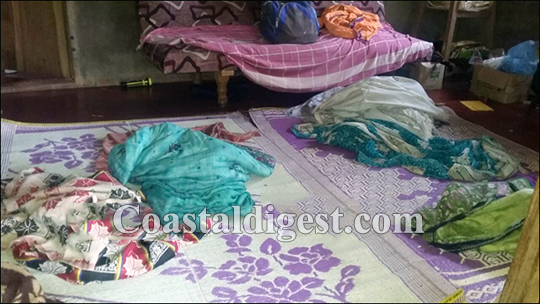
Udupi, Oct 17: Two children died and their parents are battling for life after the four consumed poison, in a suspected suicide pact at Ganganadu village near Byndoor in Udupi district.

FSuicide 5

16-year-old Ashwin Kumar, a Class 10 student and 14-year-old Aishwarya Lakshmi, a Class 8 student are the deceased. Their parents are Shankaranarayana Hebbar (45), a cook by profession and Mahalaxmi (38).

The incident came light on Monday morning. Some neighbours came to the house and found all four unconscious and alerted police.

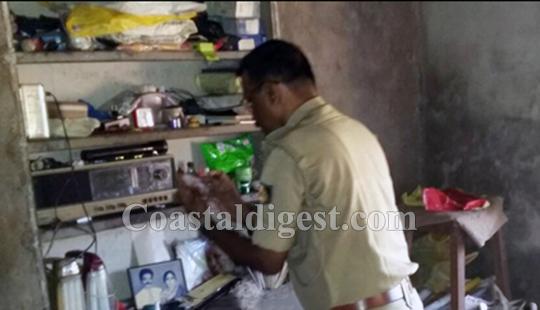
A team rushed to the spot and moved them to hospital where the children were declared brought dead. The parents were put in the intensive care unit where their condition is said to be critical.

A case has been registered at Byndoor police station and investigations are on. Details awaited.

FSuicide 1

FSuicide 2

FSuicide 3

FSuicide 4

Comments

shareef
 - 
Monday, 17 Oct 2016

why they feed poison to innocent children ? innalliha

Add new comment

  • Coastaldigest.com reserves the right to delete or block any comments.
  • Coastaldigset.com is not responsible for its readers’ comments.
  • Comments that are abusive, incendiary or irrelevant are strictly prohibited.
  • Please use a genuine email ID and provide your name to avoid reject.
News Network
August 4,2020

Bengaluru, Aug 4: Police barricades, yellow banners, walls with a fresh coat of paint and the sounds of bhajan mark parts of Ayodhya as the city awaits its big day Wednesday, when the first brick will be laid for the Ram temple.

Ayodhya is decked up for the bhoomi pujan that will be attended at the Ram Janmabhoomi by 175 people, who figure in a select guest list of seers and politicians topped by Prime Minister Narendra Modi.

Concerned over the spread of coronavirus, the authorities are encouraging others not to come to the temple town, asking them to mark the occasion by celebrating at their homes. The groundbreaking ceremony will be telecast live.

Roads leading to Ayodhya display hoardings with the picture of the proposed Ram temple and of Ram Lalla, the infant Ram, the deity now housed in a makeshift temple.

Around the town’s Hanumangarhi area – named after a well-known temple which Modi will visit on Wednesday – both police sirens and ‘bhajans’ in praise of Ram are heard.

Most of the shops in the locality wear a new look, with their fronts painted in bright yellow. A large number of policemen were deployed there on Tuesday. Some sat in the sweet shops, waiting for their next instructions.

Roads leading into the area are barricaded. Yards of yellow cloth and marigold garlands were being hung on poles.

Even on the day before the event, security checks on vehicles heading to Ayodhya begin from adjoining Barabanki district itself on the Lucknow-Ayodhya road. Policemen take down details, including mobile numbers of the travellers.

Senior Superintendent of Police Deepak Kumar said the focus of the force is on maintaining the Covid-19 protocol.

“So we are not going to allow any outsider to enter Ayodhya city,” he said. Prohibitory orders are also in force and not more than four people will be allowed to gather.

“The markets and shops will remain open but with strict adherence to the Covid protocol,” he said. Outsiders will be stopped from entering the city, but Ayodhya residents will be allowed in if they produce any identification document.

“We are also carrying out random checks on people living in Ayodhya to ensure that no outsiders are staying here,” he said.

The city’s temples and mosques will remain open, but no other religious event – except for the bhoomi pujan – will take place on Wednesday.

Pickets have been set up at sensitive points in the city.

Sub-inspector Ram Chandra Yadav and constables Avnish Kumar and Ankit Chaudhary man the Terhi Bazar Chauraha picket near the Ram Janmabhoomi site.

"We are here for the past some days, and were on duty on the Rakshabandhan day. Duty comes first and only after that come other things in life, like festivals," Yadav said.

Mayank Gupta, who runs a restaurant, was handing out food packets to policemen, his customers.

"For the last two months, I have been providing tiffin to them twice a day. There are around 100 policemen to whom I supply tiffin," Gupta said.

Comments

Add new comment

  • Coastaldigest.com reserves the right to delete or block any comments.
  • Coastaldigset.com is not responsible for its readers’ comments.
  • Comments that are abusive, incendiary or irrelevant are strictly prohibited.
  • Please use a genuine email ID and provide your name to avoid reject.
News Network
March 15,2020

While it makes perfect sense for IT employees to work from remote locations via video conferencing and collaboration tools seamlessly - especially in the case of tech giants like Google or Microsoft -- workers from the non-IT companies and small and medium enterprises (SMBs) are the worst-hit in India as most of them have little or no clue about how these messaging and collaboration tools work amid the coronavirus pandemic.

Small companies -- from corporate to education verticals -- are scrambling to get their act together as new coronavirus threat has reached their premises, prompting them to send employees home who have age-old laptops, poor network and connectivity with no UPS backups and little knowledge about how to handle group chat and collaboration software like Zoom, Google Hangouts Meet, Microsoft Teams and Flock etc.

Instead of halting operations, however, businesses can choose to shift towards remote working methods with teaching non-IT staff on how to use the latest digital software to connect and work, say industry experts.

The training will take some time and may hamper productivity in the short run but is a win-win situation for the non-tech companies in the long run, in case any such global emergency arises in the future.

According to a latest report by Gartner, 54 per cent of HR leaders have cited that poor technology and/or infrastructure for remote working is the biggest barrier to effective remote working.

Sandy Shen, Senior Director Analyst, Gartner, says that with COVID-19 disrupting the business landscape, CIOs should relook at the digital fulfillment of market demand.

"The value of digital channels, products and operations is immediately obvious to companies everywhere right now. This is a wake-up call for organisations that have placed too much focus on daily operational needs at the expense of investing in digital business and long-term resilience," warned Shen.

Businesses that can shift technology capacity and investments to digital platforms will mitigate the impact of the outbreak and keep their companies running smoothly now, and over the long term.

"Videoconferencing, messaging, collaboration tools and document sharing are just a few examples of technologies that facilitate remote work. Additional bandwidth and network capacity may also be needed, given the increasing number of users and volume of communications," informed Shen.

The IT industry's apex body Nasscom has asked the government to relax norms for a month to allow work-from-home for technology and back-office employees as a measure to deal with the spread of Covid-19 in India.

Networking giant Cisco said that it has seen "significant growth" in the usage of its web conferencing and video-conferencing service Webex in India.

According to Muneer Ahmad, Business Head, ViewSonic India, due to COVID-19 pandemic, the corporate and educational sector is severely getting affected in the country.

"ViewSonic IFP has a cloud-based software which help teachers and corporates to connect through video conferencing to multiple people at the same time and can split the screen into six screens. It can also connect with various tools like Skype, Cisco WebEx, Zoom, Google Hangouts and GoToMeeting," Ahmad told IANS.

Co-working sector has also taken a hit and the industry is looking at several measures to tackle it -- from ensuring supply of juices rich in Vitamin C to supply of disinfectants and giving work from home facilities.

"The scheduled visits of the clients at our co-working offices have been postponed. Few of our clients have cancelled their outstation meetings and have now started audio/video conferencing for virtual meetings," said Nakul Mathur, MD, Avanta India.

According to reports, India has approximately 1,000 co-working locations (as of September 2019) and is the second-largest market for the co-working industry after China.

As India's first licensed B2B Virtual Network Operator, CloudConnect Communications offers a collaborative platform that allows companies to overcome the COVID-19 threat while maintaining seamless business continuity and optimum employee productivity.

"We offer a secure, robust, reliable, scalable and trackable mobile-first unified communication infrastructure that aids remote teleworking so that businesses can continue operating even under any unforeseen circumstances," said Gokul Tandon, Executive Chairman, CloudConnect Communications.


Comments

Add new comment

  • Coastaldigest.com reserves the right to delete or block any comments.
  • Coastaldigset.com is not responsible for its readers’ comments.
  • Comments that are abusive, incendiary or irrelevant are strictly prohibited.
  • Please use a genuine email ID and provide your name to avoid reject.
coastaldigest.com news network
June 13,2020

Mangaluru, June 13:  The Central Crime Branch of Bengaluru City Police, which is digging up old cases involving underworld gangster Ravi Pujari, has now launched a fresh probe into the murder of human rights lawyer Naushad Kashimji.

Kashimji was gunned down on April 9, 2009 at the basement of his apartment in Falnir in Mangaluru. Ravi Pujari had allegedly ordered the hit. 

As part of investigation, a team from Benglauru CCB has come to Mangaluru. CCB sleuths, who obtained Pujari’s police custody in connection with this case, are tying up the loose ends pertaining to the murder of Kashimji who was representing D-Company hitman Abdul Rashid Hassan Malbari aka Malbari. 

Pujari was said to be unhappy over Kashimji representing Malbari. Pujari had also allegedly issued life threats, directing him to desist from doing so.

Kashimji had reportedly received more than 10 international threat calls from March 30 to April 9 (the day he was murdered). According to a senior police officer, the advocate had not informed the police or his then senior Purushottam Poojary about receiving the threat calls. “This came to light when police went through his call records later,” the officer explained.

“CCB team is primarily focusing on Pujari’s role in the advocate’s sensational murder,” a senior CCB officer handling the investigating said. 

“We have also lined up other cases in which Pujari is allegedly involved, but had filed the chargesheet against him in absentia as he was then a fugitive,” the officer added. The team is now picking up threads of Pujari’s involvement cases in Dakshina Kannada, Udupi and Chikkamagaluru districts.

Pujari, currently in police custody in Bengaluru, is accused in more than 30 cases reported in Mangaluru from 2007 to 2018. Majority of the cases against Pujari pertain to extortion and extending death threats, one relating to murder, three to shootings/ abduction and one where he supplied money to his henchmen in prison. Police have filed ‘C’ report in 17 out of 28 threat call cases and ‘B’ report in one case. Rest are in different stages of trial.

Comments

Add new comment

  • Coastaldigest.com reserves the right to delete or block any comments.
  • Coastaldigset.com is not responsible for its readers’ comments.
  • Comments that are abusive, incendiary or irrelevant are strictly prohibited.
  • Please use a genuine email ID and provide your name to avoid reject.