Washington, Apr 29: A US government panel on Tuesday called for India to be put on a religious freedom blacklist over a "drastic" downturn under Prime Minister Narendra Modi, triggering a sharp rebuttal from New Delhi.
The US Commission on International Religious Freedom recommends but does not set policy, and there is virtually no chance the State Department will follow its lead on India, an increasingly close US ally.
In an annual report, the bipartisan panel narrowly agreed that India should join the ranks of "countries of particular concern" that would be subject to sanctions if they do not improve their records.
"In 2019, religious freedom conditions in India experienced a drastic turn downward, with religious minorities under increasing assault," the report said.
It called on the United States to impose punitive measures, including visa bans, on Indian officials believed responsible and grant funding to civil society groups that monitor hate speech.
The commission said that Modi's Hindu nationalist government, which won a convincing election victory last year, "allowed violence against minorities and their houses of worship to continue with impunity, and also engaged in and tolerated hate speech and incitement to violence."
It pointed to comments by Home Minister Amit Shah, who notoriously referred to mostly Muslim migrants as "termites," and to a citizenship law that has triggered nationwide protests.
It also highlighted the revocation of the autonomy of Kashmir, which was India's only Muslim-majority state, and allegations that Delhi police turned a blind eye to mobs who attacked Muslim neighborhoods in February this year.
Coronavirus state-wise India update: Total number of confirmed cases, deaths on April 29
The Indian government, long irritated by the commission's comments, quickly rejected the report.
"Its biased and tendentious comments against India are not new. But on this occasion, its misrepresentation has reached new levels," foreign ministry spokesman Anurag Srivastava said.
"We regard it as an organization of particular concern and will treat it accordingly," he said in a statement.
The State Department designates nine "countries of particular concern" on religious freedom -- China, Eritrea, Iran, Myanmar, North Korea, Pakistan, Saudi Arabia, Tajikistan and Turkmenistan.
The commission asked that all nine countries remain on the list. In addition to India, it sought the inclusion of four more -- Nigeria, Russia, Syria and Vietnam.
Pakistan, India's historic rival, was added by the State Department in 2018 after years of appeals by the commission.
In its latest report, the commission said that Pakistan "continued to trend negatively," voicing alarm at forced conversions of Hindus and other minorities, abuse of blasphemy prosecutions and a ban on the Ahmadi sect calling itself Muslim.
India's citizenship law fast-tracks naturalization for minorities from neighbouring countries -- but not if they are Muslim.
Modi's government says it is not targeting Muslims but rather providing refuge to persecuted people and should be commended.
But critics consider it a watershed move by Modi to define the world's largest democracy as a Hindu nation and chip away at independent India's founding principle of secularism.
Tony Perkins, the commission's chair, called the law a "tipping point" and voiced concern about a registry in the northeastern state of Assam, under which 1.9 million people failed to produce documentation to prove that they were Indian citizens before 1971 when mostly Muslim migrants flowed in during Bangladesh's bloody war of independence.
"The intentions of the national leaders are to bring this about throughout the entire country," Perkins told an online news conference.
"You could potentially have 100 million people, mostly Muslims, left stateless because of their religion. That would be, obviously, an international issue," said Perkins, a Christian activist known for his opposition to gay rights who is close to President Donald Trump's administration.
Three of the nine commissioners dissented -- including another prominent Christian conservative, Gary Bauer, who voiced alarm about India's direction but said the ally could not be likened to non-democracies such as China.
"I am deeply concerned that this public denunciation risks exactly the opposite outcome than the one we all desire," Bauer said.
Trump, who called for a ban on Muslim immigration to the US when he ran for president, hailed Modi on a February visit to New Delhi.



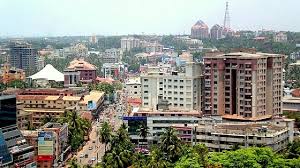 PM Narendra Modi's Lok Sabha constituency Varanasi, Vadodara, Agra, Nagpur, Ajmer, Amritsar, Gwalior, Thane and Thanjavur are some of the other cities that have been named to be developed as smart cities. The 27 cities will require investment of Rs 66,883 crore.
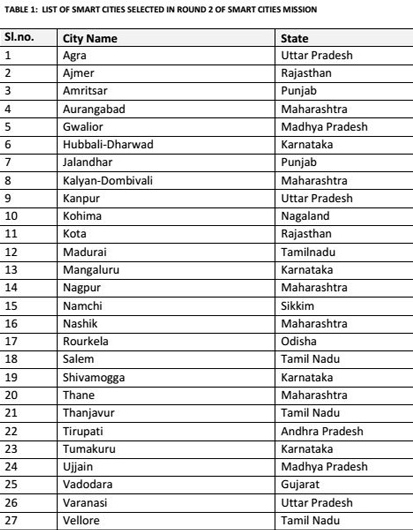 A maximum of five cities from Maharashtra have found place in the list of new cities that was released by Union urban development minister M Venkaiah Naidu on Tuesday. Four cities, each from Tamil Nadu and Karnataka, have made it to the list followed by three from Uttar Pradesh and two each from Madhya Pradesh, Punjab and Rajasthan. One city each from Madhya Pradesh, Andhra Pradesh, Odisha, Gujarat, Sikkim and Nagaland has been selected in this round.

Comments
We need SAFE CITIES before SMART CITIES. Accordingly, we need SAFE MANGALORE before SMART MANGALORE.
Once, the people feel and realise that MANGALORE is SAFE, then definitely Smart projects can follow.
Just projecting Smart Mangalore without SAFETY cannot be justified.
As somebody said, we need smart Ministers and smart government authorities to maintain the SAFETY and WELFARE of the MANGALOREAN people
People like viren kotian. Doesn't fit in the smart city. Send him to thailand again.
Its a great news for Mangaloreans.
No need Smart cities , We need smart ministers who can take care of the problems of the society in a smarter way rather then fooling and lying to the society.
people of these so called smart cities will pay heavily in the form of tax. This govt is creating tax terrorism against common people and feeding the global tycoons.
I read many articles about smart cities and finally came to a conclusion that i cant understand it fully.
Add new comment