


27 new cities including Mangaluru make it to Smart City list

[email protected] (CD Network)
September 20, 2016

Mangaluru, Sep 20: Mangaluru, Hubbali-Dharwad, Shivamogga and Tumkaru cites from south Indian state of Karnataka made it to the list of 27 Smart Cities that was announced on Tuesday.
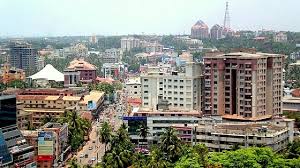
1mangaluruPM Narendra Modi's Lok Sabha constituency Varanasi, Vadodara, Agra, Nagpur, Ajmer, Amritsar, Gwalior, Thane and Thanjavur are some of the other cities that have been named to be developed as smart cities. The 27 cities will require investment of Rs 66,883 crore.

So far, the urban development ministry has selected 60 cities in three rounds and has covered 27 states and Union Territories. Only nine more states and UTs are still to get on board including Uttarakhand and Jammu and Kashmir.
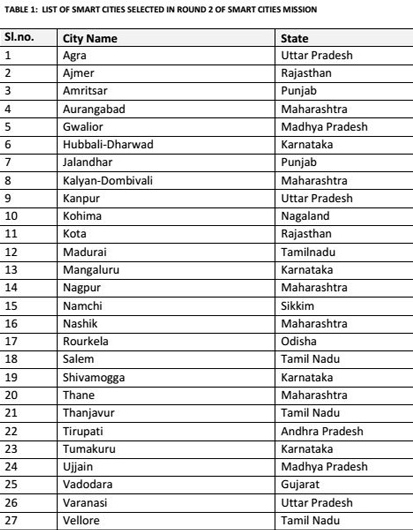
1smartcityA maximum of five cities from Maharashtra have found place in the list of new cities that was released by Union urban development minister M Venkaiah Naidu on Tuesday. Four cities, each from Tamil Nadu and Karnataka, have made it to the list followed by three from Uttar Pradesh and two each from Madhya Pradesh, Punjab and Rajasthan. One city each from Madhya Pradesh, Andhra Pradesh, Odisha, Gujarat, Sikkim and Nagaland has been selected in this round.

According to urban development ministry's estimate, Rs 1.44 lakh crore investment has been proposed by the 60 cities that have been selected so far under their smart city plans. Officials said that 82 projects are already under implementation in the first batch of 20 smart cities and another 113 projects will soon take off the ground. Naidu said in the next one year, one would get to see smart cities taking shape.

Under the Smart City mission, the Central government provides Rs 500 crore for each city over five years with states making matching contribution. The rest of resources will come from loans, public private partnership (PPP), convergence of various schemes of Central and state governments besides own resources of urban local bodies.

So the ministry has tied up multi-lateral lending from agencies DFID of UK and JICA, who have committed $ 500 million each. Similarly, ADB and World Bank have committed $ 1 billion. The New Development Bank (BRICS Bank) has proposed to provide finance for projects up to $ 500 million per city.

Comments

Shantipriya
 - 
Wednesday, 21 Sep 2016

We need SAFE CITIES before SMART CITIES. Accordingly, we need SAFE MANGALORE before SMART MANGALORE.

Once, the people feel and realise that MANGALORE is SAFE, then definitely Smart projects can follow.

Just projecting Smart Mangalore without SAFETY cannot be justified.

As somebody said, we need smart Ministers and smart government authorities to maintain the SAFETY and WELFARE of the MANGALOREAN people

True indian
 - 
Tuesday, 20 Sep 2016

People like viren kotian. Doesn't fit in the smart city. Send him to thailand again.

Rikaz
 - 
Tuesday, 20 Sep 2016

Its a great news for Mangaloreans.

Smarter
 - 
Tuesday, 20 Sep 2016

No need Smart cities , We need smart ministers who can take care of the problems of the society in a smarter way rather then fooling and lying to the society.

Bhageerata Bhaira
 - 
Tuesday, 20 Sep 2016

people of these so called smart cities will pay heavily in the form of tax. This govt is creating tax terrorism against common people and feeding the global tycoons.

Jahnavi
 - 
Tuesday, 20 Sep 2016

I read many articles about smart cities and finally came to a conclusion that i cant understand it fully.

Add new comment

  • Coastaldigest.com reserves the right to delete or block any comments.
  • Coastaldigset.com is not responsible for its readers’ comments.
  • Comments that are abusive, incendiary or irrelevant are strictly prohibited.
  • Please use a genuine email ID and provide your name to avoid reject.
News Network
April 11,2020

Bengaluru, Apr 11:  Amid nationwide lockdown in the wake of COVID-19, former Karnataka Chief Minister HD Kumaraswamy on Saturday urged the state government to announce a relief package for farmers.

Prime Minister Narendra Modi on Saturday held a video conference with Chief Ministers.

Taking to Twitter, Kumaraswamy wrote, "As the lock down continues, what action plan does the government have to tackle the challenges of ensuring marketing channels for farm produce with timely transport and ensuring uninterrupted supply of essential groceries to towns and cities?"

He later asked the government to act "swiftly and effectively".

"On one hand we see farmers throwing their produce in despair and losing their livelihoods. On the other hand supplies to towns are depleting. This is threatening both lives and livelihoods. The government must act swiftly and effectively," Kumaraswamy tweeted.

"I urge the state government to immediately announce relief package to farmers by way of direct benefit transfer mechanism and purchase all the agricultural produce so as to avoid farmer suicides," he added.

With 40 deaths and 1,035 new COVID-19 cases in the last 24 hours, India on Saturday witnessed a sharpest ever increase in coronavirus cases, taking the tally of the infected people in the country to 7,447, according to the Ministry of Health and Family Welfare.

Comments

Add new comment

  • Coastaldigest.com reserves the right to delete or block any comments.
  • Coastaldigset.com is not responsible for its readers’ comments.
  • Comments that are abusive, incendiary or irrelevant are strictly prohibited.
  • Please use a genuine email ID and provide your name to avoid reject.
News Network
February 10,2020

Bengaluru, Feb 10: The Rashtriya Swyamsevak Sangh (RSS) on Sunday conducted a route march (Pathsanchalan) in Ramanagara to express solidarity with the anti-Christian forces protesting against a project to install 114-feet tall Jesus Christ statue atop Kapalabetta in Harobele town in Kanakapura taluk in Ramanagara district.

Hindutva ideologue Kalladka Prabhakara Bhat, who had led a rally in Kanakapura last month against the project, also led the Sunday’s route march and addressed a public meeting following the march.

“The district name is Ramanagara, but they have not nurtured the culture of Ram here. They have developed a strong culture of Ravana, which we pledged to dislodge,” Bhat told the gathering.

He said the Sangh Parivar will never allow the statue to come up as he said it would foment religious conversion that is rampant in Harobele.

“The so called Kapalabetta is of stones, which are revered as Lord Muneswara by the Hindus. This hillock must be named as Muneswara Betta,” he added.

Referring to the ongoing protests against the Citizenship (Amendment) Act (CAA), Bhat said the law was brought in to protect the Hindu minority in Pakistan and Bangla Desh.

“The Muslims living in India hail Pakistan. But when we ask them to go to Pakistan, they will never go,” he took a jibe at the minority community.

Reacting to the RSS route march, senior Congress functionary DK Shivakunar, who represents Kanakapura assembly seat, said the Sangah Parivar is trying to disturb the communal harmony in the district and they will never succeed in it.

“The BJP is operating through the Sangh Parivar in the Ramanagara district. The party has won as may as 26 Lok Sabha seats in Karnataka, still they are doing all these things to keep their support base. People of Ramanagara will never back them,” said Shivakumar.

Comments

Add new comment

  • Coastaldigest.com reserves the right to delete or block any comments.
  • Coastaldigset.com is not responsible for its readers’ comments.
  • Comments that are abusive, incendiary or irrelevant are strictly prohibited.
  • Please use a genuine email ID and provide your name to avoid reject.
Agencies
July 8,2020

The Central Board of Secondary Education (CBSE) has rationalised by up to 30 per cent the syllabus for classes 9 to 12 for the academic year 2020-21 to reduce course load on students amid the COVID-19 crisis, Union HRD Minister Ramesh Pokhriyal 'Nishank' announced on Tuesday.

The curriculum has been rationalised while retaining the core elements, the Human Resource Development said.

Among the chapters dropped after the rationalisation exercise are lessons on democracy and diversity, demonetisation, nationalism, secularism, India's relations with its neighbours and growth of local governments in India, among others.

"Looking at the extraordinary situation prevailing in the country and the world, CBSE was advised to revise the curriculum and reduce course load for the students of classes 9 to 12.

"To aid the decision, a few weeks back I also invited suggestions from all educationists on the reduction of syllabus for students and I am glad to share that we received more than 1.5K suggestions. Thank you, everyone, for the overwhelming response," Nishank tweeted.

"Considering the importance of learning achievement, it has been decided to rationalise syllabus up to 30 per cent by retaining the core concepts," he added.

The Union minister said the changes made in the syllabi have been finalised by the respective course committees with the approval of the curriculum committee and the Governing Body of the Board.

"The heads of schools and teachers have been advised by the board to ensure that the topics that have been reduced are also explained to the students to the extent required to connect different topics. However, the reduced syllabus will not be part of the topics for internal assessment and year-end board examination.

"Alternative academic calendar and inputs from the NCERT on transacting the curriculum using different strategies shall also be part of the teaching pedagogy in the affiliated schools," a senior official of the HRD ministry said.

For classes 1 to 8, the National Council of Education Research and Training (NCERT) has already notified an alternative calendar and learning outcomes.

According to the updated curriculum, among the chapters deleted from class 10 syllabus are-- democracy and diversity, gender, religion and caste, popular struggles and movement, challenges to democracy

For class 11, the deleted portions included chapters on federalism, citizenship, nationalism, secularism, growth of local governments in India.

Similarly, class 12 students will not be required to study chapters on India's relations with its neighbours, changing nature of India's economic development, social movements in India and demonetisation, among others.

Universities and schools across the country have been closed since March 16 when the central government announced a nationwide classroom shutdown as one of the measures to contain the COVID-19 outbreak.

A nationwide lockdown was announced on March 24, which came into effect the next day. While the government has eased several restrictions, schools and colleges continue to remain closed.

Comments

Add new comment

  • Coastaldigest.com reserves the right to delete or block any comments.
  • Coastaldigset.com is not responsible for its readers’ comments.
  • Comments that are abusive, incendiary or irrelevant are strictly prohibited.
  • Please use a genuine email ID and provide your name to avoid reject.