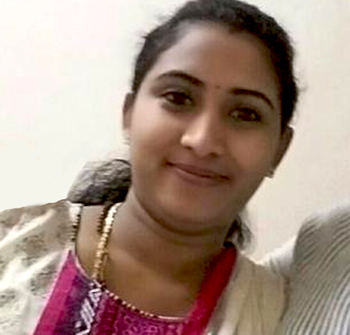
28-year-old pregnant Kerala nurse stabbed to death in Oman

April 22, 2016

Kochi, Apr 22: Chiku, 28, a Malayali nurse working in Badar Al Samaa hospital at Salalah, Oman, for the past three years, was stabbed to death by an unknown assailant in a suspected case of attempted robbery.

OmanChiku, married to Linson Thomas, also working as a male nurse in the same hospital, failed to turn up for work at around 11 pm local time. Mr Thomas, who was on duty at the hospital, went to their apartment and found her dead with grievous injuries. T.I. Varghese, a close relative of the family, told this newspaper that the woman was suspected to be hacked with a sharp edged weapon.

“Relatives of Mr Thomas working in Oman have gone to Salalah and we are waiting for information from them. We are utterly shocked by the incident,” he said.

The body of Chiku is likely to be flown in to Kerala on Sunday or Monday, Mr Varghese said. Chiku was three months pregnant, according to her relatives.

Chiku is the eldest daughter of the Robert-Saby couple. Her younger sister is a student of D.Pharm course in a college in Cherthala.

External Affairs Minister Sushma Swaraj on Thursday said an Indian national working as a nurse in Oman was murdered and has asked the Indian Ambassador there for a report on the matter.

Comments

rosa
 - 
Sunday, 24 Apr 2016

it is clear that the baby was targeted, otherwise there was no need to stab a woman with so many stabs if the reason was only ROBBERY. i trust our dear HM that he will find out the monster, this cannot be an act of a human being. THE EYES OF GOD THE ALMIGHTY OVERLOOKS EACH AND EVERY CREATION OF HIS AND THE CULPRIT WILL NOT ESCAPE THE WRATH OF GOD.
As a mother of 9 year old baby which my GOD blessed me after much trials for 6 years, i only ask \why\""

DEAR JINU
 - 
Saturday, 23 Apr 2016

#5
Either YOU are ignorant of GOD or U are a fool to believe such a way.
God created all that exists in this EARTH and he has proportioned everything. Humans are one of the intelligent creation of ALLAH and as we advance technologically.. Human moral are decreasing and they rely on the advancement of technology. Mobile are good but when people use for BAD it is affecting the society. Everywhere U see evil, we need to stop it rather than ignoring.
When EVIL increases WE should voice out ... which we dont see now a days... it is our job too to voice out the EVIL done in our society.
God is most merciful, the culprit may escape cos of a merciful now , but his life will not get contentment in this world unless he asks forgiveness with the victim & with the creator who gave the LIFE to all.. There is a day when everything thing will be judged in front of THE CREATOR.
He gave us LIFE and he is the one who takes LIFE. Had U ever look what GOD says in his message .. if not please lOOK QURAN and find out what he says in QURAN on the PURPOSE of LIFE, Good and EVIL and HEAVEN and HELL>

First know WHO is ALLAH and then learn more about his messenger like Prophet Muhammd pbuh, jesus, moses, ibrahim, noah and many other... Who conveyed What is LIFE and what is our duties.

Add new comment

  • Coastaldigest.com reserves the right to delete or block any comments.
  • Coastaldigset.com is not responsible for its readers’ comments.
  • Comments that are abusive, incendiary or irrelevant are strictly prohibited.
  • Please use a genuine email ID and provide your name to avoid reject.
News Network
July 25,2020

Dubai, Jul 25: The founder of NMC Health, BR Shetty, has had a worldwide freezing order placed on his assets at the request of a lender that claims he has defaulted on a loan of more than $8 million (Dh29.4m).

The order was granted to Credit Europe Bank (Dubai) last month ahead of a claim filed at the DIFC Courts against Mr Shetty, New Medical Centre Trading and NMC Healthcare.

The lender said in its claim they “are jointly and severally liable” for the repayment of money initially secured through a credit agreement in December 2013 and renegotiated in December last year. Credit Europe Bank is an Amsterdam-headquartered institution specialising in trade and commodities finance with operations in nine countries.

The credit agreement was guaranteed by two security cheques which the bank said in its claim were signed by Mr Shetty – one drawn on his personal account and another on the account of New Medical Centre Trading – that have been "dishonoured upon presentation due to insufficient funds".

The bank claimed Mr Shetty “has now fled the jurisdiction of the UAE to India” and that there was a risk of his “substantial” assets in the Emirates being dissipated.

The assets frozen include properties in Abu Dhabi and Dubai, as well as shares in NMC Health, Finablr, BRS Investment Holdings and other companies. It allows for up to $7,000 per week to be spent on “ordinary living expenses and reasonable sum[s] on legal advice and representation”, a DIFC Courts document granting the freezing order shows.

Credit Europe Bank declined to comment when contacted by The National, stating it does not comment on ongoing litigation proceedings. Representatives for Mr Shetty and for NMC Healthcare, which is now being run by administrators Alvarez & Marsal, also declined to comment.

NMC Healthcare was founded by Mr Shetty in 1975 and grew from a single hospital into the UAE’s biggest privately-owned healthcare operator, which employed 2,000 doctors and 20,000 other staff. The company was listed on the London stock exchange and at its peak was valued at £8.58 billion (Dh40bn). However, its shares slumped after short seller Muddy Waters Research issued a report in December 2019 alleging the company had inflated its cash balances, overpaid for assets and understated its debts. This led to a string of damaging revelations by the company, including the fact that its debt was materially higher – at $6.6bn – than the $2.1bn on its balance sheet. NMC Healthcare was placed into administration in April by its biggest creditor, Abu Dhabi Commercial Bank, but its UAE businesses continue to trade as a going concern.

Mr Shetty said in a statement issued in April that he has been a victim of fraud committed by "a small group of current and former executives” at companies owned by him. He said bank accounts were created in his name and transactions were made without his knowledge, and that loans, cheques and bank transfers were also fraudulently guaranteed in his name using his forged signature.

In response to the claim filed by Credit Europe Bank (Dubai) at the DIFC Courts, Mr Shetty says he did not personally guarantee loans made to NMC Trading or NMC Healthcare and that the signatures used on cheques guaranteeing the loans are forgeries. His defence cites the opinion of “Dr Al Bah, an independent, experienced and qualified forensic document examiner”, that someone other than Mr Shetty signed the lending agreements and cheques.

An application by NMC Trading and NMC Healthcare to the DIFC Courts to have the claim against it heard in private for fear of triggering claims by other lenders – the group owes money to around 80 local, regional and international lenders – was dismissed, given that the appointment of administrators at the group and allegations of fraud at the company are already in the public domain.

Both companies have indicated to DIFC Courts that they intend to contest the claim against them.

Comments

UAE Muslim
 - 
Sunday, 26 Jul 2020

give money to RSS now to kill muslim....GOD will turn the table for moran like you BR,...shamed of tulu guy cheated the UAE govennment...not root in hell

ANONYMOUS
 - 
Saturday, 25 Jul 2020

amount should be 8 billion dollar and not 8 million dollar

Add new comment

  • Coastaldigest.com reserves the right to delete or block any comments.
  • Coastaldigset.com is not responsible for its readers’ comments.
  • Comments that are abusive, incendiary or irrelevant are strictly prohibited.
  • Please use a genuine email ID and provide your name to avoid reject.
News Network
March 15,2020

While it makes perfect sense for IT employees to work from remote locations via video conferencing and collaboration tools seamlessly - especially in the case of tech giants like Google or Microsoft -- workers from the non-IT companies and small and medium enterprises (SMBs) are the worst-hit in India as most of them have little or no clue about how these messaging and collaboration tools work amid the coronavirus pandemic.

Small companies -- from corporate to education verticals -- are scrambling to get their act together as new coronavirus threat has reached their premises, prompting them to send employees home who have age-old laptops, poor network and connectivity with no UPS backups and little knowledge about how to handle group chat and collaboration software like Zoom, Google Hangouts Meet, Microsoft Teams and Flock etc.

Instead of halting operations, however, businesses can choose to shift towards remote working methods with teaching non-IT staff on how to use the latest digital software to connect and work, say industry experts.

The training will take some time and may hamper productivity in the short run but is a win-win situation for the non-tech companies in the long run, in case any such global emergency arises in the future.

According to a latest report by Gartner, 54 per cent of HR leaders have cited that poor technology and/or infrastructure for remote working is the biggest barrier to effective remote working.

Sandy Shen, Senior Director Analyst, Gartner, says that with COVID-19 disrupting the business landscape, CIOs should relook at the digital fulfillment of market demand.

"The value of digital channels, products and operations is immediately obvious to companies everywhere right now. This is a wake-up call for organisations that have placed too much focus on daily operational needs at the expense of investing in digital business and long-term resilience," warned Shen.

Businesses that can shift technology capacity and investments to digital platforms will mitigate the impact of the outbreak and keep their companies running smoothly now, and over the long term.

"Videoconferencing, messaging, collaboration tools and document sharing are just a few examples of technologies that facilitate remote work. Additional bandwidth and network capacity may also be needed, given the increasing number of users and volume of communications," informed Shen.

The IT industry's apex body Nasscom has asked the government to relax norms for a month to allow work-from-home for technology and back-office employees as a measure to deal with the spread of Covid-19 in India.

Networking giant Cisco said that it has seen "significant growth" in the usage of its web conferencing and video-conferencing service Webex in India.

According to Muneer Ahmad, Business Head, ViewSonic India, due to COVID-19 pandemic, the corporate and educational sector is severely getting affected in the country.

"ViewSonic IFP has a cloud-based software which help teachers and corporates to connect through video conferencing to multiple people at the same time and can split the screen into six screens. It can also connect with various tools like Skype, Cisco WebEx, Zoom, Google Hangouts and GoToMeeting," Ahmad told IANS.

Co-working sector has also taken a hit and the industry is looking at several measures to tackle it -- from ensuring supply of juices rich in Vitamin C to supply of disinfectants and giving work from home facilities.

"The scheduled visits of the clients at our co-working offices have been postponed. Few of our clients have cancelled their outstation meetings and have now started audio/video conferencing for virtual meetings," said Nakul Mathur, MD, Avanta India.

According to reports, India has approximately 1,000 co-working locations (as of September 2019) and is the second-largest market for the co-working industry after China.

As India's first licensed B2B Virtual Network Operator, CloudConnect Communications offers a collaborative platform that allows companies to overcome the COVID-19 threat while maintaining seamless business continuity and optimum employee productivity.

"We offer a secure, robust, reliable, scalable and trackable mobile-first unified communication infrastructure that aids remote teleworking so that businesses can continue operating even under any unforeseen circumstances," said Gokul Tandon, Executive Chairman, CloudConnect Communications.


Comments

Add new comment

  • Coastaldigest.com reserves the right to delete or block any comments.
  • Coastaldigset.com is not responsible for its readers’ comments.
  • Comments that are abusive, incendiary or irrelevant are strictly prohibited.
  • Please use a genuine email ID and provide your name to avoid reject.
Agencies
May 8,2020

Washington D.C., May 8: The prime time for brain development in a child's life is the first year, where the infant spends most of the time asleep. It is the time when neural connections form and sensory memories are encoded.

However, when sleep is disrupted, as occurs more often among children with autism, brain development may be affected, too.

New research led by the University of Washington finds that sleep problems in a baby's first 12 months may not only precede an autism diagnosis but also may be associated with altered growth trajectory in a key part of the brain, the hippocampus.

The study, which was published in the American Journal of Psychiatry, researchers report that in a sample of more than 400 taken of 6- to 12-month-old infants, those who were later diagnosed with autism were more likely to have had difficulty falling asleep.

It also states that this sleep difficulty was associated with altered growth trajectories in the hippocampus.

"The hippocampus is critical for learning and memory, and changes in the size of the hippocampus have been associated with poor sleep in adults and older children.

As many as 80 per cent of the children with autism spectrum disorder have sleep problems," said Annette Estes, director of the UW Autism Center and senior author of the study.

"In our clinical experience, parents have a lot of concerns about their children's sleep, and in our work on early autism intervention, we observed that sleep problems were holding children and families back," added Estes, who is also a UW professor of speech and hearing sciences.

"It could be that altered sleep is part-and-parcel of autism for some children. One clue is that behavioural interventions to improve sleep don't work for all children with autism, even when their parents are doing everything just right. This suggests that there may be a biological component to sleep problems for some children with autism," said Estes.

To consider links among sleep, brain development, and autism, researchers at the IBIS Network looked at MRI scans of 432 infants, surveyed parents about sleep patterns, and measured cognitive functioning using a standardized assessment.

At the outset of the study, infants were classified according to their risk for developing autism: Those who were at higher risk of developing autism -- about two-thirds of the study sample -- had an older sibling who had already been diagnosed.

Infant siblings of children with autism have a 20 per cent chance of developing autism spectrum disorder -- a much higher risk than children in the general population.

In the current study, 127 of the 432 infants were identified as "low risk" at the time the MRI scans were taken because they had no family history of autism.

They later evaluated all the participants at 24 months of age to determine whether they had developed autism. Of the roughly 300 children originally considered "high familial risk," 71 were diagnosed with autism spectrum disorder at that age.

Problems with sleep were more common among the infants later diagnosed with an autism spectrum disorder, as were larger hippocampi. No other subcortical brain structures were affected, including the amygdala, which is responsible for certain emotions and aspects of memory, or the thalamus, a signal transmitter from the spinal cord to the cerebral cortex.

The authors note that while parents reported more sleep difficulties among infants who developed autism compared to those who did not, the differences were very subtle and only observed when looking at group averages across hundreds of infants.

Sleep patterns in the first years of life change rapidly as infants transition from sleeping around the clock to a more adult-like sleep/wake cycle. Until further research is completed, Estes said, it is not possible to interpret challenges with sleep as an early sign of increased risk for autism.

Comments

Add new comment

  • Coastaldigest.com reserves the right to delete or block any comments.
  • Coastaldigset.com is not responsible for its readers’ comments.
  • Comments that are abusive, incendiary or irrelevant are strictly prohibited.
  • Please use a genuine email ID and provide your name to avoid reject.