28-yr-old man rapes 8-month-old cousin; girl undergoes three hour surgery

Agencies
January 30, 2018

New Delhi, Jan 30: An eight-month-old baby, who was raped by her 28-year-old cousin in northwest Delhi’s Netaji Subhash Place, needed a three-hour-long surgery for her injuries, after which she is in the Intensive Care Unit (ICU). Doctors said she is stable.

The baby was rushed to a local hospital on Sunday evening with severe wounds and bleeding. The surgery took place on Monday.

The baby was assaulted when both her parents were out for work, according to the police.

"I left for duty and later my wife also had to leave for about an hour," said the baby's father, a labourer. The child was left with her aunt who stays in the same building.

Since it was a Sunday, the son of the relative was at home.

When the accused saw that his mother was not around, he allegedly forced himself on the baby, police said.

When the girl’s mother, who works as a domestic help, returned home at around 12:30 pm, she found the baby crying on a bed that was covered in blood. She immediately informed her husband.

The baby was rushed to a hospital, where it was confirmed that she was sexually assaulted, police said.

The family told the police that they suspected the child's cousin -- also a father of a boy -- who was missing.

The victim was arrested on Monday evening. According to police, the 28-year-old also confessed to raping the baby under the influence of alcohol, said a senior police officer.

According to reports, he had allegedly taken away the baby saying he wanted to play with her.

"This man puts humanity to shame. Despite being a father he did this," Delhi Commission for Women, Swati Maliwal said.

Attacking the police in a series of tweets, she raged: "This is not the rape of an eight -month-old child but the rape of the Delhi Women's Commission."

The accused man has been charged with offences for which he could face life term.

Laws on rape were made stringent after a young medical student was gangraped on a moving bus in the national capital in December 2012.

Comments

abbu
 - 
Thursday, 1 Feb 2018

very sad.. but even sadest thing will be when this bastard come out on bail after few days or months. for our govt. triple talaq is more important than the girls rape... there is no single rule for rapist.

Add new comment

  • Coastaldigest.com reserves the right to delete or block any comments.
  • Coastaldigset.com is not responsible for its readers’ comments.
  • Comments that are abusive, incendiary or irrelevant are strictly prohibited.
  • Please use a genuine email ID and provide your name to avoid reject.
Agencies
July 29,2020

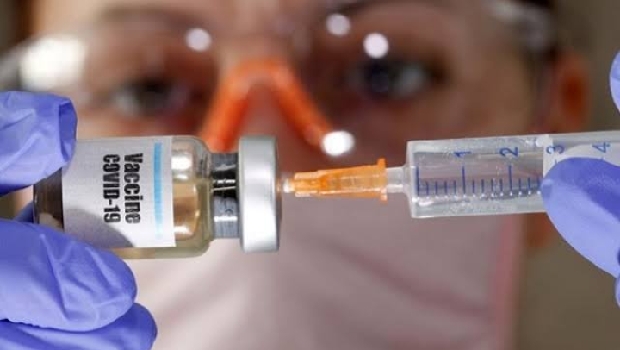
If everything goes as Russia’s expectation, it will be world’s first country to approve a coronavirus vaccine for widespread in the second week of August despite safety and efficacy concerns, according to a report. The adenoviral vector-based vaccine developed by Russian military and government researchers is currently in phase 2 trials.

According to a report from CNN, Russian officials are hoping to get approval for the COVID-19 vaccine developed by the Moscow-based Gamaleya Institute on Agust 10 or even before that. The officials told the outlet that the vaccine will be approved for public use with frontline healthcare workers receiving it first.

“It’s a Sputnik moment,” said Kirill Dmitriev, head of Russia’s sovereign wealth fund, which is financing Russian vaccine research, referring to the successful 1957 launch of the world’s first satellite by the Soviet Union, according to CNN.

“Americans were surprised when they heard Sputnik’s beeping. It’s the same with this vaccine. Russia will have got there first,” he was quoted as saying.

However, Russia is yet to release the scientific data on its coronavirus vaccine trials, hence, questions remain about the safety and efficacy of the vaccine, said the report. The vaccine is in the second phase of testing with developers planning to launch the phase 3 trials sometime after August 3.

Earlier, Interfax reported, citing Health Minister Mikhail Murashko, that the vaccine will be widely used in parallel with phase 3 trials. He said the country plans to vaccinate medics who are at high-risk for COVID-19 next month before clinical trials are completed.

Murashko added that individuals at higher risk of getting infected with the coronavirus such as older people or those with health conditions will also be prioritised for the vaccine, although he did not estimate or reveal when that would happen. The minister added 800 people will be recruited for the phase 3 trials.

Meanwhile, health officials were more cautious considering the fact that human testing of the vaccine is incomplete, and the state registration is expected to begin after August 3, reported The Moscow Times.

On Monday, Moderna and Pfizer announced the commencement of the final phase 3 trials of their candidate vaccines against the SARS-CoV-2 virus, which has so far claimed at least 654,477 lives and infected 16,514,500 people worldwide. 

Researchers will recruit up to 30,000 volunteers in separate trials both backed by the US government. India's first indigenous coronavirus vaccine, COVAXIN, is undergoing phase 1 human clinical trials across the country. More than 150 COVID-19 vaccines are being developed all over the world with at least six candidates already in late-stage clinical trials.

Comments

Add new comment

  • Coastaldigest.com reserves the right to delete or block any comments.
  • Coastaldigset.com is not responsible for its readers’ comments.
  • Comments that are abusive, incendiary or irrelevant are strictly prohibited.
  • Please use a genuine email ID and provide your name to avoid reject.
News Network
July 2,2020

Jul 2: Democratic presidential candidate and former US vice-president Joe Biden has said that if he wins the November elections, strengthening the relationship with India which is America’s "natural partner", will be a high priority for his administration.

"India needs to be a partner in the region for our safety's sake and quite frankly for theirs," he said in response to a question on India-US relationship during a virtual fundraiser event on Wednesday.

At the fundraiser hosted by Chairman and CEO of Beacon Capital Partners Alan Leventhal, the former vice president said that India and the United States were natural partners.

"That partnership, a strategic partnership, is necessary and important in our security," Biden said when asked by an attendee whether India is critical to the US' national security.

Referring to his eight years as the vice president, he said, "In our administration, I was proud to play a role more than a decade ago in securing Congressional approval for the US-India Civil Nuclear Agreement, which is a big deal".

"Helping open the door to great progress in our relationship and strengthening our strategic partnership with India was a high priority in the Obama-Biden administration and will be a high priority if I'm elected president,” Biden said.

Both as the vice president and a senator from Delaware, he was a big supporter of India-US relationship.

About the November polls, Biden said that the character of the country is on the ballot. The upcoming election is the most important poll of a lifetime and that the country is currently engaged in a battle for its soul, he claimed.

Biden also slammed President Donald Trump and his administration over the handling of the coronavirus pandemic.

"Trump ignored warnings from the very beginning, refused to prepare and failed to protect the country. Not just now but throughout his presidency, undermining the very core pillars of ours, what I would argue, moral and economic strength.

"I really do believe that our country is crying out for leadership and maybe even more important, some healing. Today, we have an enormous opportunity not only to rebuild but to build back better than before. To build a better future. That's what America does," he added.

Comments

Add new comment

  • Coastaldigest.com reserves the right to delete or block any comments.
  • Coastaldigset.com is not responsible for its readers’ comments.
  • Comments that are abusive, incendiary or irrelevant are strictly prohibited.
  • Please use a genuine email ID and provide your name to avoid reject.
News Network
May 7,2020

United Nations, May 7: An average of 80,000 COVID-19 cases were reported each day in April to the World Health Organization, the top UN health agency has said, noting that South Asian nations like India and Bangladesh are seeing a spike in the infections while the numbers are declining in regions such as Western Europe.

WHO Director-General Tedros Adhanom Ghebreyesus said on Wednesday that countries must also be able to manage any risk of the disease being imported into their territories, and communities should be fully educated to adjust to what will be a "new norm".

He said as the countries press forward in the common fight against COVID-19, they should also lay the groundwork for resilient health systems globally.

"More than 3.5 million cases of COVID-19 and almost 250,000 deaths have now been reported to the WHO. Since the beginning of April, an average of around 80,000 new cases have been reported to the WHO every day," Ghebreyesus said in Geneva yesterday.

Asserting that the virus cases were not just numbers, he said: "every single case is a mother, a father, a son, a daughter, a brother, sister or friend".

He said while the numbers are declining in Western Europe, more cases are being reported every day from Eastern Europe, Africa, South-East Asia, the Eastern Mediterranean and the Americas. Even within regions and within countries, there are divergent trends, the agency added.

While some countries are reporting an increase in COVID-19 cases over time, many have seen caseloads rise because they have ramped up testing, the WHO official said.

"We've also seen in Europe and Western Europe a fundamental decrease in the number of cases, but we have seen an associated increase in the number of cases reported in places like the Russian Federation. Southeast, the Western Pacific areas are relatively on the downward trend like Korea and others, but then we do see in South Asia, in places like Bangladesh, in India, some trends towards increase.

"So it's very difficult to say that any particular region is improving or (not improving). There are individual countries within each region that are having difficulties getting on top of this disease and I am particularly concerned about those countries that have (an) ongoing humanitarian crisis," WHO's Executive Director Michael Ryan said.

The death toll due to COVID-19 in India rose to 1,783 while the number of cases climbed to 52,952 on Thursday, registering an increase of 89 deaths and 3,561 cases in the last 24 hours, the Union Health Ministry said.

The number of active COVID-19 cases stood at 35,902 while 15,266 people have recovered, it said.

Noting that while seeing an increase in the number of cases is not good in terms of transmission, WHO's Emerging Diseases and Zoonoses Unit head Maria Van Kerkhove said: "but I don't want to equate that with something (being) wrong".

"I want to equate that with countries are working very hard to increase their ability to find the virus, to find people with the virus, to have testing in place to identify who has COVID-19, and putting into place what they need to do to care for those patients," Kerkhove said.

With more countries considering easing restrictions implemented to curb the spread of the coronavirus, the WHO has again reminded the authorities of the need to maintain vigilance.

"The risk of returning to lockdown remains very real if countries do not manage the transition extremely carefully, and in a phased approach," Ghebreyesus said.

He urged countries to consider the UN agency's six criteria for lifting stay-at-home measures.

That advice includes ensuring surveillance is strong, cases are declining and transmission is controlled. Health systems also must be able to detect, isolate, test and treat cases, and to trace all contacts.

Additionally, the risk of outbreak in settings such as health facilities and nursing homes needs to be minimised, while schools, workplaces and other public locations should have preventive measures in place.

"The COVID-19 pandemic will eventually recede, but there can be no going back to business as usual. We cannot continue to rush to fund panic but let preparedness go by the wayside," he said.

He said the crisis has highlighted the importance of strong national health systems as the foundation of global health security: not only against pandemics but also against the multitude of health threats that people across the world face every day.

"If we learn anything from COVID-19, it must be that investing in health now will save lives later," Ghebreyesus said.

While the world currently spends around USD 7.5 trillion on health annually, the WHO believes the best investments are in promoting health and preventing disease.

"Prevention is not only better than cure, it's cheaper, and the smartest thing to do," he said.

The deadly coronavirus, which originated from the Chinese city of Wuhan in December last year, has infected over 3.7 million people and killed 263,831 people globally, according to a tally by Johns Hopkins University.


Comments

Add new comment

  • Coastaldigest.com reserves the right to delete or block any comments.
  • Coastaldigset.com is not responsible for its readers’ comments.
  • Comments that are abusive, incendiary or irrelevant are strictly prohibited.
  • Please use a genuine email ID and provide your name to avoid reject.