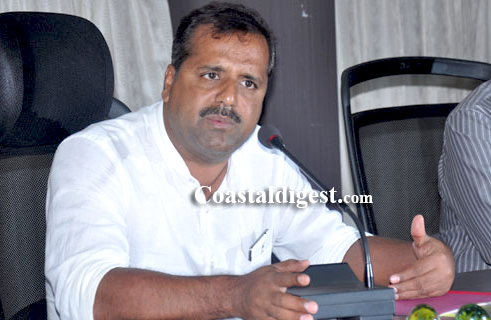
280 hospitals in Karnataka to provide free treatment to accident victims

March 3, 2016

Bengaluru, Mar 3: The State government is all set to launch the Mukhyamantri Santwana Yojana, that will provide free relief to accident victims, on March 8, Minister for Health and Family Welfare U?T?Khader said here on Wednesday

utkhader

Speaking at an event organised by the Federation of Karnataka Chambers of Commerce and Industry (FKCCI), Khader said that the State government will provide Rs 25,000 relief to the accident victims for the first 48 hours under the scheme.

“It is not just the people of this State, others too are eligible to avail treatment. Even if an outsider meets with an accident in the State, he will also be eligible to avail the benefits under this scheme,” he added.

A total of 280 hospitals across the State have been identified to offer the scheme. Apart from taluk-level hospitals, district-level hospitals and medical college hospitals, 80 private hospitals have been empanelled under the scheme.

Khader added that fully equipped blood banks would be set up in all districts and blood collection centres would be set up in all talkus across the State. However, the minister did not divulge details on the amount set aside for these under the State budget.

Following recommendations by the FKCCI for more dialysis centres in rural areas, Khader said that the State would soon have dialysis centres set up on a public-private-partnership model basis at all taluks.

“The government can have several dialysis centres but finding manpower has remained a challenge. Hence, to address this, we will partner with NGOs,” he said.

Garbage crisis

When representatives of the FKCCI spoke about the garbage crisis in Bengaluru, the minister said that until a solution is found to address the garbage issue, there can be no end to communicable diseases.

“There are so many lakes in the City. How many of them are cleaned at regular intervals? Not even 40 per cent of what we consume as drinking water is fit for human consumption. Even the civic body has to do its bit,” he remarked.

Meanwhile, P?S?Ramkumar, member, FKCCI urged the government to improve tele-medicine to save the a patient's travel cost and time. “On an average, if people in Bengaluru have to avail treatment, Rs 5 crore is spent on travel alone. If tele-medicine can be improved, at least 80 per cent of the travel can be cut down,” he said.

Comments

Haneef Ullal
 - 
Thursday, 3 Mar 2016

very well done sir, your have done a very good move in this, it will save our youngsters lives.

Add new comment

  • Coastaldigest.com reserves the right to delete or block any comments.
  • Coastaldigset.com is not responsible for its readers’ comments.
  • Comments that are abusive, incendiary or irrelevant are strictly prohibited.
  • Please use a genuine email ID and provide your name to avoid reject.
Agencies
February 20,2020

India ranked 77th on a sustainability index that takes into account per capita carbon emissions and ability of children in a nation to live healthy lives and secures 131st spot on a flourishing ranking that measures the best chance at survival and well-being for children, according to a UN-backed report.

The report was released on Wednesday by a commission of over 40 child and adolescent health experts from around the world. It was commissioned by the World Health Organization (WHO), UN Children's Fund (UNICEF) and The Lancet medical journal.

In the report assessing the capacity of 180 countries to ensure that their youngsters can survive and thrive, India ranks 77th on the Sustainability Index and 131 on the Flourishing Index, it said.

Flourishing is the geometric mean of Surviving and Thriving. For Surviving, the authors selected maternal survival, survival in children younger than 5 years old, suicide, access to maternal and child health services, basic hygiene and sanitation, and lack of extreme poverty.

For Thriving, the domains were educational achievement, growth and nutrition, reproductive freedom, and protection from violence.

Under the Sustainability Index, the authors noted that promoting today's national conditions for children to survive and thrive must not come at the cost of eroding future global conditions for children's ability to flourish.

The Sustainability Index ranks countries on excess carbon emissions compared with the 2030 target. This provides a convenient and available proxy for a country's contribution to sustainability in future.

The report noted that under realistic assumptions about possible trajectories towards sustainable greenhouse gas emissions, models predict that global carbon emissions need to be reduced from 39·7 giga­ tonnes to 22·8 gigatonnes per year by 2030 to maintain even a 66 per cent chance of keeping global warming below 1·5°C.

It said that the world's survival depended on children being able to flourish, but no country is doing enough to give them a sustainable future.

"No country in the world is currently providing the conditions we need to support every child to grow up and have a healthy future," said Anthony Costello, Professor of Global Health and Sustainability at University College London, one of the lead authors of the report.

"Especially, they're under immediate threat from climate change and from commercial marketing, which has grown hugely in the last decade," said Costello – former WHO Director of Mother, Child and Adolescent health.

Norway leads the table for survival, health, education and nutrition rates - followed by South Korea and the Netherlands. Central African Republic, Chad and Somalia come at the bottom.

However, when taking into account per capita CO2 emissions, these top countries trail behind, with Norway 156th, the Republic of Korea 166th and the Netherlands 160th.

Each of the three emits 210 per cent more CO2 per capita than their 2030 target, the data shows, while the US, Australia, and Saudi Arabia are among the 10 worst emitters. The lowest emitters are Burundi, Chad and Somalia.

According to the report, the only countries on track to beat CO2 emission per capita targets by 2030, while also performing fairly – within the top 70 – on child flourishing measures are: Albania, Armenia, Grenada, Jordan, Moldova, Sri Lanka, Tunisia, Uruguay and Vietnam.

"More than 2 billion people live in countries where development is hampered by humanitarian crises, conflicts, and natural disasters, problems increasingly linked with climate change," said Minister Awa Coll-Seck from Senegal, Co-Chair of the commission.

The report also highlights the distinct threat posed to children from harmful marketing.

Evidence suggests that children in some countries see as many as 30,000 advertisements on television alone in a single year, while youth exposure to vaping (e-cigarettes) advertisements increased by more than 250 per cent in the US over two years, reaching more than 24 million young people.

Studies in Australia, Canada, Mexico, New Zealand and the US – among many others – have shown that self-regulation has not hampered commercial ability to advertise to children.

Children's exposure to commercial marketing of junk food and sugary beverages is associated with purchase of unhealthy foods and overweight and obesity, linking predatory marketing to the alarming rise in childhood obesity, it said.

The number of obese children and adolescents increased from 11 million in 1975 to 124 million in 2016 – an 11-fold increase, with dire individual and societal costs, the report said.

To protect children, the authors call for a new global movement driven by and for children.

Specific recommendations include stopping CO2 emissions with the utmost urgency, to ensure children have a future on this planet; placing children and adolescents at the centre of global efforts to achieve sustainable development, the report said.

New policies and investment in all sectors to work towards child health and rights; incorporating children's voices into policy decisions and tightening national regulation of harmful commercial marketing, supported by a new Optional Protocol to the UN Convention on the Rights of the Child, it said.


Comments

Add new comment

  • Coastaldigest.com reserves the right to delete or block any comments.
  • Coastaldigset.com is not responsible for its readers’ comments.
  • Comments that are abusive, incendiary or irrelevant are strictly prohibited.
  • Please use a genuine email ID and provide your name to avoid reject.
News Network
June 25,2020

Mangaluru, Jun 25: Teacher-turned-serial rapist-cum-killer Cyanide Mohan Kumar was sentenced to life imprisonment in the 20th and final case by Sixth Additional District and Sessions Judge Sayeedunnisa on Wednesday.

Cyanide Mohan Kumar (57) was declared guilty in the 20th rape and murder case on Saturday and the judge had pronounced the order before a small group of advocates in the court hall. Cyanide Mohan who appeared in the court hall via video conferencing facility from Hindalga central jail in Belagavi did not show any emotions.

The 25-year-old victim from Kasaragod was working as a cook in a hostel and met Mohan, serving as a teacher in 2009. He had met her at her home on many occasions and had promised to marry her.

On July 8, 2009, she left home on the pretext of visiting a temple in Sullia and

did not return. When her family tried to reach her on phone, Cyanide Mohan had told they were married and would return home soon.

Mohan took her to a toilet in a bus stand in Bengaluru on July 15, 2009, and had left with her jewels after ascertaining that she had died by consuming Cyanide. No sooner Mohan was arrested in October 2009, the family of the victim had recognised him from the newspapers. The police also recovered the victim’s jewellery from the house of Mohan’s second wife.

Sixth Additional District and Session Court convicted Mohan under sections of IPC 302 for murder with life sentence and Rs 25,000 fine, IPC 366 for kidnapping with ten years of rigorous imprisonment and Rs 5000 fine, IPC 376 for rape with seven years of rigorous imprisonment and Rs 5000 fine, IPC 328 for poisoning with ten years of imprisonment, IPC 394 for causing hurt while robbing with 10 years of imprisonment and Rs 5000 fine, IPC 392 for theft with five years of imprisonment, IPC 201 for destroying evidence with seven years of rigorous imprisonment and Rs 5000 fine, IPC 417 cheating and one year of imprisonment.

Comments

Add new comment

  • Coastaldigest.com reserves the right to delete or block any comments.
  • Coastaldigset.com is not responsible for its readers’ comments.
  • Comments that are abusive, incendiary or irrelevant are strictly prohibited.
  • Please use a genuine email ID and provide your name to avoid reject.
News Network
July 14,2020

Bengaluru, July 14: The Karnataka government has allowed some relaxations during the week-long lockdown in Bengaluru urban and rural districts. The lockdown will commence from 8p.m. today (July 14) and end at 5a.m. on July 22.  The government has released the guidelines for lockdown.

Restrictions

*No new flights or trains will be permitted; only flights and trains already scheduled will continue to operate. Flight and train tickets shall serve as passes for movement by taxis/cab aggregators/auto rickshaws.

* Metro rail services prohibited

* Taxis and services of cab aggregators will be prohibited except for emergency and as permitted in guidelines.

* Schools, colleges, educational/training/coaching institutions etc. will remain closed. Online/distance learning shall continue to be permitted. Examination already scheduled shall be permitted

* Hotels, restaurants, and hospitality services, prohibited except those meant for health/police/government officials/healthcare workers. Hotels and restaurants shall be permitted to operate kitchens for takeaway/home delivery of food items only.

* All cinema halls, shopping malls, gymnasiums, sports complexes, stadia, swimming pools, entertainment parks, theatres, bars and auditoriums, assembly halls and similar places.

* All social/political/sports/entertainment/academic/cultural religious functions/other gatherings and large congregations.

* All religious places/places of worship shall be closed for public. Religious congregations are strictly prohibited. Commercial and private establishment shall be closed down

Relaxations (outside containment zone)

* Shops including ration shops (PDS), dealing with food, groceries, fruits and vegetables, etc. to open only from 5 am to 12 noon. Home delivery of essential items shall be encouraged.

* All facilities in the supply chain of essential goods, whether involved in manufacturing, wholesale or retail of such goods through local stores, large brick and mortar stores or e-commerce companies.

* All food processing and related industries.

* Banks, insurance offices and ATM.

* Print and electronic media.

* Telecommunication, internet services, broadcasting and cable services, IT and IT-enabled services with minimum staff for essential purposes. As far as possible, work from home should be encouraged.

* Delivery of essential items such as food, medicines, pharmaceuticals, medical equipment through e-commerce.

* Power generation, transmission and distribution units and services.

* Capital and debt market services and notified by the Securities and Exchange Board of India (Sebi)

* Cold storage and warehousing services.

* Private security services.

* Delivery of goods by E-Commerce companies. Industries/industrial establishments as listed below will be allowed to operate (outside containment zones):

i. Production units which require continuous process, and their supply chain.

ii. Food processing industries, manufacturing of essential goods, including drugs, pharmaceuticals, medical devices, their raw material and intermediates.

iii. Manufacturing of packing materials.

iv. Manufacturing and other industrial establishment with access control in Special Economic Zones (SEZs) or outside municipal limits and Export Oriented Units (EoUs), Industrial townships. Construction activities will be allowed in continuation of works in construction projects, where workers are available on site.

Comments

Add new comment

  • Coastaldigest.com reserves the right to delete or block any comments.
  • Coastaldigset.com is not responsible for its readers’ comments.
  • Comments that are abusive, incendiary or irrelevant are strictly prohibited.
  • Please use a genuine email ID and provide your name to avoid reject.