


280 hospitals in Karnataka to provide free treatment to accident victims

March 3, 2016

Bengaluru, Mar 3: The State government is all set to launch the Mukhyamantri Santwana Yojana, that will provide free relief to accident victims, on March 8, Minister for Health and Family Welfare U?T?Khader said here on Wednesday
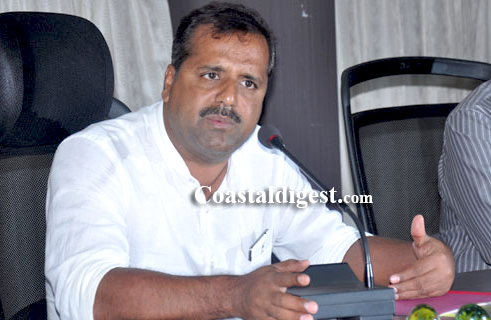
utkhader

Speaking at an event organised by the Federation of Karnataka Chambers of Commerce and Industry (FKCCI), Khader said that the State government will provide Rs 25,000 relief to the accident victims for the first 48 hours under the scheme.

“It is not just the people of this State, others too are eligible to avail treatment. Even if an outsider meets with an accident in the State, he will also be eligible to avail the benefits under this scheme,” he added.

A total of 280 hospitals across the State have been identified to offer the scheme. Apart from taluk-level hospitals, district-level hospitals and medical college hospitals, 80 private hospitals have been empanelled under the scheme.

Khader added that fully equipped blood banks would be set up in all districts and blood collection centres would be set up in all talkus across the State. However, the minister did not divulge details on the amount set aside for these under the State budget.

Following recommendations by the FKCCI for more dialysis centres in rural areas, Khader said that the State would soon have dialysis centres set up on a public-private-partnership model basis at all taluks.

“The government can have several dialysis centres but finding manpower has remained a challenge. Hence, to address this, we will partner with NGOs,” he said.

Garbage crisis

When representatives of the FKCCI spoke about the garbage crisis in Bengaluru, the minister said that until a solution is found to address the garbage issue, there can be no end to communicable diseases.

“There are so many lakes in the City. How many of them are cleaned at regular intervals? Not even 40 per cent of what we consume as drinking water is fit for human consumption. Even the civic body has to do its bit,” he remarked.

Meanwhile, P?S?Ramkumar, member, FKCCI urged the government to improve tele-medicine to save the a patient's travel cost and time. “On an average, if people in Bengaluru have to avail treatment, Rs 5 crore is spent on travel alone. If tele-medicine can be improved, at least 80 per cent of the travel can be cut down,” he said.

Comments

Haneef Ullal
 - 
Thursday, 3 Mar 2016

very well done sir, your have done a very good move in this, it will save our youngsters lives.

Add new comment

  • Coastaldigest.com reserves the right to delete or block any comments.
  • Coastaldigset.com is not responsible for its readers’ comments.
  • Comments that are abusive, incendiary or irrelevant are strictly prohibited.
  • Please use a genuine email ID and provide your name to avoid reject.
Agencies
January 12,2020

New Delhi, Jan 12: In a shocking revelation, one unemployed person committed suicide every hour during 2018 when a total of 1,34,516 suicides, including 92,114 male and 42,391 female, were reported in the country, NCRB's "Suicide in India 2018" says.

The latest data, issued by the National Crime Records Bureau (NCRB), which comes under Ministry of Home Affairs, last week reveals that a total of 12,936 unemployed persons committed suicide in 2018, which accounted for 9.6 per cent of the total suicides, and were of aged below 18 years to above 60 years.

Those below 18 years include 31 males and nine females while those between 18 and 30 years comprise 1,240 male and 180 female. A total of 868 male and 95 female were aged between 30 and 45 years. A number of 237 males and 21 females were aged between 45 and 60 years while 2,431 males and 310 females were above 60 years.

Of the total suicides by unemployed persons, males are 10,687 while the females are 2,249.

The highest number of suicides - 12.3 per cent - committed by unemployed persons were in Kerala (1,585 out of 12,936 suicides), 12.2 per cent in Tamil Nadu (1,579), 9.7 per cent in Maharashtra (1,260 suicides), 8.5 per cent in Karnataka (1,094 suicides) and 7 per cent in Uttar Pradesh (902 suicides).

"Each suicide is a personal tragedy that prematurely takes the life of an individual and has a continuing ripple effect, dramatically affecting the lives of families, friends and communities. Every year, more than 1 lakh people commit suicide in our country. There are various causes of suicides like professional/career problems, sense of isolation, abuse, violence, family problems, mental disorders, addiction to alcohol, financial loss, chronic pain etc," says the NCRB adding it collects data on suicides from police recorded suicide cases.

As per the NCRB, rate of suicides has been calculated using projected population for the non-census years whereas for 2011, the population of the Population Census 2011 was used.

The NCRB data says that a total of 1,34,516 suicides were reported in the country during 2018 showing an increase of 3.6 per cent in comparison to 2017 and the rate of suicides has increased by 0.3 during 2018 over 2017.

Government servants accounted for 1.3 per cent (1,707 out of 1,34,516) of the total suicide victims as compared to 6.1 per cent (8,246 out of 1,34,516) of total victims from Private Sector Enterprises.

Employees from Public Sector Undertakings formed 1.5 per cent (2,022 out of 1,34,516) of the total suicide victims, whereas students and unemployed victims accounted for 7.6 per (10,159 victims) of total suicides. Self-employed category accounted for 9.8 per cent of total suicide victims (13,149 out of 1,34,516).

A total of 10,349 persons involved in farming sector (consisting of 5,763 farmers and cultivators and 4,586 agricultural labourers) have committed suicide during 2018, accounting for 7.7 per cent of total suicides victims (1,34,516) in the country.

A total of 11 transgenders have committed suicide in which three were daily wage earners, one each were 'professionals and salaried persons' and 'unemployed persons' while six falls under 'Other Persons'.

Comments

Add new comment

  • Coastaldigest.com reserves the right to delete or block any comments.
  • Coastaldigset.com is not responsible for its readers’ comments.
  • Comments that are abusive, incendiary or irrelevant are strictly prohibited.
  • Please use a genuine email ID and provide your name to avoid reject.
News Network
August 4,2020

Bengaluru, Aug 4: The Central Crime Branch-Bengaluru conducted raids at 35 locations in Hennur and Banaswadi areas on Tuesday morning and arrested seven foreign nationals without valid passports and visas.

The Crime Branch also recovered fake currency during the raid, which is currently underway, informed the police.

"Central Crime Branch-Bengaluru conducted raids at 35 locations in Hennur and Banaswadi area today morning and arrested seven foreign nationals without valid passports and visa, fake currency also recovered," Sandeep Patil, Joint Commissioner of Police, Crime, Bengaluru said.

Comments

Add new comment

  • Coastaldigest.com reserves the right to delete or block any comments.
  • Coastaldigset.com is not responsible for its readers’ comments.
  • Comments that are abusive, incendiary or irrelevant are strictly prohibited.
  • Please use a genuine email ID and provide your name to avoid reject.
Ram Puniyani
July 20,2020

As Covid 19 has created havoc all rounds, the rulers of certain countries are using it to further intensify their set agendas. The democratic freedoms are being curtailed in certain forms, the reaction to which has come in America in the form of a campaign, which is opposing “stifling” cultural climate that is imposing “ideological conformity” and weakening “norms of open debate and toleration of differences”. In India similar intimidations have been intensified. In addition the occasion has been used by the sectarian forces first to link the spread of Corona to Muslim community and now in the name of reducing the burden of curriculum certain chapters on core concepts related to Indian nationalism are being deleted from the text books.

It has been reported that chapters on federalism, citizenship, nationalism, secularism, Human Rights, Legal Aid and Local Self Government and the like are being dropped. Education has been an important area for communal forces and they constantly keep saying that leftists have dominated the curriculum content, it suffers from the impact of Macaulay, Marx and Mohammad and so needs to be Indianized. The first such attempt was done when BJP came to power in 1998 as NDA and had Murli Manohar Joshi as the MHRD minister. He brought the changes which were termed as ‘saffronization of education’. Their focus is more on social science. Some of the highlights of this were introduction of subjects like Astrology and Paurohitya, and chapters defending caste system, nationalism of the type of Hitler was praised.

With defeat of NDA in 2004, the UPA did try to rectify some of these distortions. Again after 2014 the RSS affiliates working in the area of education have been active, interacting with MHRD officials to impress upon them the need to change the curriculum matching with their Hindu nationalist agenda. Its ‘Shiksha Sanskriti Utthan Nyas’ has been asking for removal of English, Urdu words in the texts. It has asked for removal of thoughts of Rabindranath Tagore on Nationalism, extracts of autobiography of M F Husain, references to benevolence of Muslim rulers, references to BJP being Hindu party, apology of Dr. Manmohan Singh for anti Sikh pogrom of 1984, the reference to killings of Gujarat carnage in 2002 among others. This they call as Bhartiykaran of syllabus.

As RSS is a multithreaded hydra one of its pracharak Dinanath Batra has set up ‘Shiksha Bachao Abhiyan Samiti’ which has been pressurizing various publishers to drop the books which are not conforming to their ideology. One recalls their pressuring withdrawal of Wendy Doniger’s ‘The Hindus’, as it does present the ancient India through the concerns of dalits and women. Mr. Batra has already come out with a set of nine books for school curriculum, giving the RSS view of the past and RSS understanding of social sciences. These have already been translated into Gujarati and thousands of the sets of these books are being used in Gujarat Schools.

The present step of deleting parts of curriculum which gives the basics of Indian Nationalism, secularism and human rights is a further step in the same direction. These are the topics which have made the Hindu nationalists uncomfortable during last few years. They have been defaming secularism. They removed it from the preamble of Indian constitution, when they put out an ad on the eve of Republic day in 2015. From last few decades since the Ram Temple movement was brought up, simultaneously the secular ethos of India’s freedom movement and secular values of Indian constitution have been constantly criticized. Many an RSS ideologues and BJP leaders have been asking for change of Indian Constitution for this very reason.

Secularism is part of the concept of Indian nationalism. In the name of religious nationalism, sectarian divisive nationalism they have been attacking various student leaders in particular. When we study Nationalism, the very genesis of Indian nationalism tells us the plurality of our freedom movement with its anti colonial roots. The struggle was for Indian nationalism and so the Muslims and Hindu communalists kept aloof from this great struggle against colonial masters, it was this struggle which built the Indian nation with all its diversity.

Similarly as we have equal rights as citizens the chapters on citizenship are being dropped. Federalism has been the core part of India’s administrative and political structure. As the dictatorial tendencies are becoming stronger, federalism is bound to suffer and that explains the dropping of this subject. Democracy is decentralization of power. Power reaching the lowermost part of the system, the villages and average citizens. This got reflected in Local self Government. The power is distributed among villages, cities, state and center. By removing chapters on federalism and local self government, the indications of the ideology of ruling party are on display.

While we are not dealing with all the portents of the planned omissions, one more aspect that related to dropping of chapter on Human rights needs our attention. The concept of Human rights and dignity are interlinked. This concept of Human rights also has international ramifications. India is signatory to many an UN covenants related to Human rights. The indications are clear that now rights will be for the few elite and ‘duties’ for the large deprived sections will be put on the forefront.

In a way this incidental ‘Corona gifted opportunity’ to the ruling Government is being fully used to enhance the agenda of ruling party in the arena of Educational Curriculum. The part of curriculum with which the ruling party is uncomfortable is being removed. This act of omission does supplement their other acts of commission in changing the shape of educational curriculum, which are reflected in RSS affiliates’ suggestions to MHRD regarding Bhartiyakaran of contents of syllabus. As per this the things like regarding the great epics like Ramayana and Mahabharata as History, the things like India having all the stem cell technology, plastic surgery, aviation science etc. will have a place in the changes planned by communal forces!

Comments

Add new comment

  • Coastaldigest.com reserves the right to delete or block any comments.
  • Coastaldigset.com is not responsible for its readers’ comments.
  • Comments that are abusive, incendiary or irrelevant are strictly prohibited.
  • Please use a genuine email ID and provide your name to avoid reject.