


3 youths held for kidnapping, trafficking 2-month-old baby

[email protected] (CD Network)
November 30, 2016

Mangaluru, Nov 30: Three youths have been arrested by Dakshina Kannada district police on charge of kidnapping and trafficking a two-month old baby under the limits of Uppinangadi police station, Tuesday.
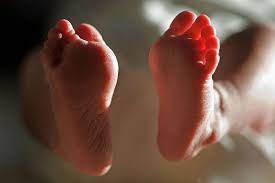
babyThe arrested have been identified as Muhammed Udaif (28), from Bengaluru, Siyab (24) from Hirebandady, and Sameer (21). Police said that locals in Perne had complained that three young men were seen with a newborn and had hired a house. They suspected that the baby could have been kidnapped.

Based on their complaint, police went to the house. During questioning, the youngsters said that they had agreed to look after the baby as the father, hailing from Bengaluru, had told them that soon after giving birth, the baby's mother had left for Nepal.

Police are investigating whether their claims are true. "We have asked the parents of the child to come to Puttur for verification. There will be a DNA test conducted to ascertain the real parents," police added. Parents of the child are expected to come on Wednesday evening to Puttur.

The baby is in the care of the Child Welfare Department in Puttur. A case has been registered at Uppinangadi police station.

Comments

shaji
 - 
Wednesday, 30 Nov 2016

None should jump to conclusion that baby was kidnapped unless thorough investigation is done. May be the parents sold the baby to others. Let us wait and see.

Add new comment

  • Coastaldigest.com reserves the right to delete or block any comments.
  • Coastaldigset.com is not responsible for its readers’ comments.
  • Comments that are abusive, incendiary or irrelevant are strictly prohibited.
  • Please use a genuine email ID and provide your name to avoid reject.
News Network
March 2,2020

Bengaluru, Feb 2: The monthlong budget session beginning on Monday, which will mark BS Yediyurappa’s maiden budget in his fourth term as chief minister, is expected to be a fiery one.

The opposition JD(S) and Congress have already threatened to stall proceeding until BJP legislator Basangouda Patil Yatnal apologises for his controversial remarks against freedom fighter and centenarian HS Doreswamy. Yatnal had called him a fake and a Pakistani agent.

Disruptions are also likely to pose a threat to speaker Vishweshwar Hegde Kageri’s novel idea of having a two-day discussion on the Constitution of India to commemorate 70 years of the country’s Independence.

Both opposition parties have scheduled legislature party meetings early on Monday and they could coordinate on issues on the floor of the house to put the BJP — especially Yediyurappa — on the backfoot.

Yatnal is not known as a “hardliner”, but his attack on Doreswamy has garnered support from several ministers including CT Ravi, KS Eshwarappa and V Somanna. Yediyurappa may have a hard time defending his party’s line.

The BJP is yet to schedule its legislature party meeting, but MLAs suggest the party will allow the issue to be raised and debated in the legislature. “Both have expressed their point of view. Let there be a discussion on the matter, but not allowing the house to function will only be a waste of the state’s time and money,” said deputy chief minister CN Ashwath Narayan.

Besides the Doreswamy issue, Yediyurappa will also deliver his reply — postponed from February 20 — to the debate on the governor’s address. The issue of student Amulya Leona Narona’s arrest on a charge of sedition, the Bidar sedition case involving a parent of a school student, pro-Pakistan writings on walls in places in north Karnataka, introduction of NPR and the anti-CAA stir is also likely to feature during the lengthy session.

Comments

Add new comment

  • Coastaldigest.com reserves the right to delete or block any comments.
  • Coastaldigset.com is not responsible for its readers’ comments.
  • Comments that are abusive, incendiary or irrelevant are strictly prohibited.
  • Please use a genuine email ID and provide your name to avoid reject.
News Network
June 20,2020

Bengaluru, Jun 20: The Karnataka Health Department has issued guidelines on the admission of COVID-19 patients in private hospitals after clinical assessment, mandating that the district surveillance officer (DSO) should be first informed to initiate further procedures, an official said on Friday.

"A health team sent by the DSO should visit the home or hospital where the patient is staying. The team should conduct a rapid assessment of his or her health condition," said Karnataka's Additional Chief Secretary Jawaid Akhtar.

In the rapid health condition assessment, the team should first check the patient's body temperature, followed by SpO2 (oxygen saturation) level and confirm if there are any comorbidities such as hypertension, diabetes, tuberculosis, HIV, cancer, stroke etc.

Depending on the health condition of patients, Akhtar said, two categories have been made.

"Those who have body temperature greater than 37.5 degrees Celsius, SpO2 level below 94 percent, elderly (above 60 years) and suffering from known comorbid conditions should be taken to a dedicated Covid hospital (DCH)," he said.

"All other patients, even if older but not suffering from co-morbidities, those below 60 and suffering from co-morbidities and asymptomatic cases should be taken to a dedicated Covid health centre (DCHC) or a private hospital as opted by the patient," he added.

Private hospitals have been asked to pitch in due to the rising number of cases in Karnataka. Currently, there are 2943 active cases in the state after 337 cases were reported on Friday.

"The patients are assessed clinically and evaluated at DCHCs or private hospitals with appropriate diagnostic tests. After evaluation, if the patients are asymptomatic, they are shifted to a COVID Care Centre (CCC) for further management," said Akhtar.

CCCs are expected to be equipped with ventilated rooms, pulse oximeters, handheld thermal scanners and blood pressure apparatus.

A nurse has to be present round the clock for every 50 patients and should visit each patient twice a day for assessment whereas the medical officer has to visit the CCC once a day. He should also be available on call in case of an emergency.

Staff serving food and others should wear personal protective equipment and an N-95 mask. Explaining the procedures at DCHCs, Akhtar said general examinations for medical conditions like body temperature, BP, pulse, oxygen saturation and urine output should be in place.

Investigations such as complete blood count, fasting blood sugar, random blood sugar, liver function tests, renal function tests, ECG and chest X-ray facilities should be available.

"DCHCs should ensure that above examinations are over in an orderly timeline of 24 hours and depending on the examination, the patient is continued to be lodged at the DCHC or sent to DCH or CCC," said the senior officer.

Likewise, the discharge policy should be done as per the protocols issued by the Health Department from time to time.

The Karnataka government is yet to fix an upper limit on the cost of treating COVID-19 patients in private hospitals. While reports indicated that this could be capped at Rs 5200 per day, health officials are yet to specify this is the case. Private hospitals in the state have asked the government to take a collaborative approach in deciding the fixed cap on treatment cost.

Comments

Add new comment

  • Coastaldigest.com reserves the right to delete or block any comments.
  • Coastaldigset.com is not responsible for its readers’ comments.
  • Comments that are abusive, incendiary or irrelevant are strictly prohibited.
  • Please use a genuine email ID and provide your name to avoid reject.
News Network
February 24,2020

Bengaluru, Feb 24: Census authorities in Karnataka have requested deputy commissioners in the state’s districts to hold outreach and awareness campaigns about the National Population Register (NPR), as they fear misgivings about the exercise could hurt the forthcoming enumeration of population.

The house-listing phase of the Census and updating of NPR will be rolled out simultaneously by mid-April in the BJP-ruled state.

About 1,50,000 enumerators will handle the massive exercise.

Officials believe widespread awareness will help address concerns about the NPR data-gathering process and make people cooperate with enumerators when they visit houses for both NPR and census work.

“Sensing the kind of questions that enumerators may face when they do house visits, in all video conferences with deputy commissioners of districts, we have requested to establish contact with local representatives,” SB Vijay Kumar, director of Census Operations in Karnataka told news agency. “We have asked them to organise outreach programmes to ensure that people’s doubts are resolved before the information gathering work begins,” he added.

Census operations are handled by the Union home ministry. Several district officials are said to have raised concerns about the possibility of people refusing to share information when the work on the census and NPR begins in two months. This would affect the quality of the census work, making the exercise incomplete.

news channel earlier reported that people in parts of Karnataka had declined to share personal information with officials visiting households in connection with government programmes, suspecting them of gathering data for the yet-to-be unveiled National Register of Citizens, following enactment of the Citizenship Amendment Act (CAA) recently.

Kumar said district authorities will train and sensitise enumerators to tread carefully while gathering information. Enumerators will be told not to demand information but seek it gently.

“We will tell enumerators to proactively engage with people. For instance, if an old man in a village does not know his exact date or place of birth, the enumerator may engage in a conversation with the person that may elicit some anecdotes and roughly establish the year and the place of birth,” the census director said.

As of now, the NPR questionnaire has 21queries, but officials say it has not yet been finalised.

With most of the census and NPR data gathering and storage happening digitally this time, the challenge before census officials is to convince people that the data would remain safe.

“Individual data is sealed and all that we can see is collective data. The information is consolidated and tailor-made. We are telling district officials to create awareness about data safety as well,” Kumar said.

Comments

Add new comment

  • Coastaldigest.com reserves the right to delete or block any comments.
  • Coastaldigset.com is not responsible for its readers’ comments.
  • Comments that are abusive, incendiary or irrelevant are strictly prohibited.
  • Please use a genuine email ID and provide your name to avoid reject.