4 Indian-origin women in Forbes top tech moguls' list

Agencies
November 30, 2018

New York, Nov 30: Four Indian-origin women have been named by Forbes among America's top 50 female technology moguls, a list that includes tech heavyweights IBM CEO Ginni Rometty and Netflix executive Anne Aaron.

Padmasree Warrior, former chief technology officer (CTO) of Cisco; Komal Mangtani, senior director at app-cab aggregator Uber; Neha Narkhede, chief technology officer and co-founder of streaming platform Confluent; and Kamakshi Sivaramakrishnan, CEO and founder of identity-management company Drawbrige; are in the list.

"Women don't wait for the future. The 2018 Inaugural Top 50 Women In Technology list identifies three generations of forward-thinking technologists leading more than a dozen tech sectors across the globe," Forbes said in its 'America's Top 50 Women in Tech 2018'.

Warrior (58) served in executive positions at both Motorola and Cisco and is now the US CEO of the Chinese electric-autonomous-vehicle startup, NIO.

At the USD 138-billion Cisco Systems, she had helped the tech giant grow in influence through acquisitions. She is also on the boards of Microsoft and Spotify.

"Warrior still finds the time to mentor other women in the tech industry, stay in touch with her 1.6 million Twitter followers and follow a nightly meditation routine," the business magazine said.

Mangtani, an alumnus of Dharmsinh Desai Institute of Technology in Gujarat, heads business intelligence at Uber. Currently, she serves on the board of nonprofit organisation Women Who Code and led Uber's USD 1.2-billion donation and partnership with Girls Who Code to increase access to computer science.

Narkhede, who studied at Pune university, had as a software engineer at LinkedIn helped develop Apache Kafka -- which can process the huge influx of data coming from the site in real time. The data-processing software has become the heart of Confluent, an enterprise Narkhede founded with her LinkedIn co-workers to build tools for companies using Apache Kafka, Forbes said.

The 32-year-old's firm counts Goldman Sachs, Netflix and Uber as customers.

Forty-three-year-old Sivaramakrishnan's company, Drawbridge, uses large-scale artificial intelligence and machine learning to identify the different devices people.

"As the number of devices people use on a daily basis -- computers, laptops and smartphones -- increase, advertisers need a way to show ads to a person across all their devices. Facebook and Google already offer these services to advertisers, but now they have a competitor with Kamakshi Sivaramakrishnan's Drawbridge," Forbes added.

Comments

Add new comment

  • Coastaldigest.com reserves the right to delete or block any comments.
  • Coastaldigset.com is not responsible for its readers’ comments.
  • Comments that are abusive, incendiary or irrelevant are strictly prohibited.
  • Please use a genuine email ID and provide your name to avoid reject.
Agencies
February 20,2020

Tokyo, Feb 20: One more Indian on board the cruise ship Diamond Princess quarantined off the coast of Japan was tested positive for novel coronavirus, the Indian Embassy in Tokyo said on Wednesday, adding that all seven Indian nationals infected with the virus have been shifted to hospitals in Japan for treatment.

"1 Indian crew who tested positive for #COVID19 among 88 new cases yesterday on #DiamondPrincess taken to hospital for treatment. Indians receiving treatment responding well. From today, the disembarkation of passengers only started, likely to continue till 21 Feb," the embassy tweeted.

"As of 2100 JST, altogether 7 Indian nationals (crew members on board #DiamondPrincess) are receiving treatment in hospitals in Japan, after testing positive for #COVID19 over last few days. Their health conditions are improving. 
@MEAIndia," the following tweet read.

A total of 138 Indians, including 132 crew and 6 passengers, were among the 3,711 people on board the luxury cruise ship which was quarantine off Japan on February 5 after it emerged that a former passenger had tested positive for the virus.

Comments

Add new comment

  • Coastaldigest.com reserves the right to delete or block any comments.
  • Coastaldigset.com is not responsible for its readers’ comments.
  • Comments that are abusive, incendiary or irrelevant are strictly prohibited.
  • Please use a genuine email ID and provide your name to avoid reject.
Agencies
January 20,2020

New Delhi, Jan 20: The BJP has got a brand new President in the form of JP Nadda. At around 2.30 pm, the announcement was made, bringing an end to the Amit Shah era in BJP. The party's Working President Jagat Prakash Nadda won unopposed, sparking celebrations outside the BJP headquarters here on Monday. 

Amit Shah himself was among the people who proposed Nadda's name along with Nitin Gadkari and Rajnath Singh. Soon after his annointment, BJP election returning officer Radha Mohan Singh told the media, "I announce JP Nadda as the new BJP President." Shah was also seen hugging Nadda.

The nomination process for the post of the BJP President began at 10 am and went on till 12.30 pm. For the next hour, the filed nomination paper, which was just one, was examined. Party members waitied till 2.30 pm for the candidate to withdraw if he wished to. It was after this that Nadda was declared as the man who would step into the shoes of Amit Shah.

Many in the BJP believe that although Nadda is the BJP chief now, Shah would still make all macro-level decisions like pre poll alliances or top organisational appointments. Nadda would be in charge of monitoring the day-to-day needs of the organisation. BJP sources say that Amit Shah himself wanted an arrangement like this one and personally wanted Nadda to take over. as he helped Shah formulate legislations like Triple Talaq and Citizenship Amendment Act.

The party constitution mandates completion of election of at least 50 per cent of state Presidents for the election of national President to happen. In the last few days, the BJP has completed the election of a slew of state Presidents like in West Bengal, Nagaland among others.

The process of election of the national BJP President is quite elaborate and has been described in detail in the party constitution, which says that the national president shall be elected by an electoral college, comprising members of the national council and the state councils.

"Any 20 members of the electoral college of a state can jointly propose the name of a person, who has been an active member for four terms and has 15 years of membership, for the post of national president. Such joint proposal should come from not less than five states where elections have been completed for the national council. The consent of the candidate is necessary," it says.

Who is JP Nadda?

Jagat Prakash Nadda, 59, who has his roots in the Rashtriya Swayamsevak Sangh (RSS) and its affiliates, was appointed the Bharatiya Janata Party (BJP) national President on Monday, replacing his 'mentor' and Union Home Minister Amit Shah.

Former environment, health and law minister from Himachal Pradesh, which has just four of the Lok Sabha's 543 seats, Nadda has tried to carve out his own space in national politics with his low profile and astute organisational skills, believe his party leaders.

He rose through the ranks from the Akhil Bharatiya Vidyarthi Parishad (ABVP), the student wing of the RSS, from where he has managed to build inroads from university to the state politics.

Nadda has been active on the national political scene since 2010 when he was picked by then BJP chief Nitin Gadkari to join his new team. He was made the party's national general secretary.

Born on December 2, 1960, Nadda did his graduation from Patna and holds a post-graduate degree in political science and Bachelor of Legislative Law (LL.B) from Himachal Pradesh University in Shimla.

Starting his political career as a student leader of the ABVP in 1978, Nadda had also worked both with Gadkari and Shah even in the party's youth wing -- the Bharatiya Yuva Morcha -- from 1991 to 1994.

His wife Mallika Nadda, who teaches history at the Himachal Pradesh University and is currently posted in university's campus in Delhi, was an ABVP activist too, and its national general secretary from 1988 to 1999.

In the previous BJP government (2007-12) in the state, Nadda was forced to resign as Forest Minister in 2010 owing to differences between him and then chief minister Prem Kumar Dhumal.

He was elected to the Rajya Sabha in 2012.

Nadda won his first Assembly election from Bilaspur (Sadar) in Himachal in 1993. In 1998, he again won from that seat and became the state Health Minister.

He lost the Assembly elections in 2003, but again won in 2007 and was appointed the Forest Minister in the Himachal Pradesh.

Nadda, as a forest minister, was the brain behind opening forest police stations to check forest crimes, launching community-driven plantation, setting up forest ponds and the massive plantation of deodars to boost the depleting green cover of the 'Queen of Hills', as Shimla was fondly called by the British.

A close confidant of Prime Minister Narendra Modi, Nadda was among those who were mentioned as likely aspirants to the BJP top post after Rajnath Singh was inducted into the Central government as the Home Minister in 2014.

Later, Nadda was inducted into the union cabinet in its first expansion in 2014 as the Health Minister.

Hailing Nadda's appointment, Chief Minister Jai Ram Thakur told IANS it is a proud moment that a leader belonging to a small state in the national politics is today the leader of the country's biggest national party.

His father N.L. Nadda, who was a Vice-Chancellor of the Ranchi University, resides in Bilaspur town.


Comments

Add new comment

  • Coastaldigest.com reserves the right to delete or block any comments.
  • Coastaldigset.com is not responsible for its readers’ comments.
  • Comments that are abusive, incendiary or irrelevant are strictly prohibited.
  • Please use a genuine email ID and provide your name to avoid reject.
Agencies
July 30,2020

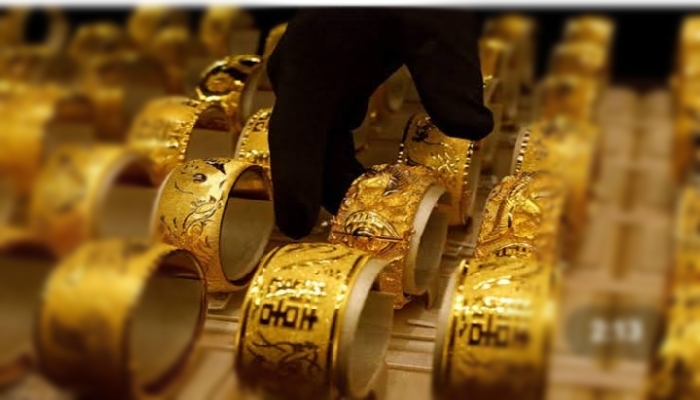
New Delhi, Jul 30: India's gold demand in 2020 is expected to fall to the lowest level in 26 years with domestic bullion prices hitting a record high and as falling disposable incomes could curtail retail purchases, the World Gold Council (WGC) said on Thursday.

Lower demand by the world's second-biggest bullion consumer could limit a rally in global prices, which hit a record high earlier this month, although it could also reduce India's trade deficit and support the ailing rupee.

"Fast rising gold prices could act as headwinds," said Somasundaram PR, the managing director of WGC's Indian operations.

Local gold futures have jumped 35% so far this year after rising a quarter in 2019.

India's gold consumption in the first half of 2020 plunged 56% on-year to 165.6 tonnes. Meanwhile, the coronavirus-triggered lockdown also slashed demand by 70% in the June quarter to 63.7 tonnes, the lowest in more than a decade, the WGC said in a report published on Thursday.

Millions of Indians have lost their jobs or taken a pay cut after the country imposed a lockdown on its 1.3 billion people to curb the spread of the virus that has infected more than 1.5 million Indians.

Consumption is generally high during the June quarter due to weddings and key festivals such as Akshaya Tritiya, but lockdown restrictions kept shoppers indoors this year.

The weak demand in the first half could drag down India's gold consumption in 2020 to the lowest since 1994, when demand stood at 415 tonnes, Somasundaram said, adding that it is still difficult to provide an estimate for full-year demand as the coronavirus crisis is still unfolding.

"Indian demand has previously jumped as much as 300 tonnes in a quarter. Latent demand could come out in the second half," Somasundaram said.

Comments

Add new comment

  • Coastaldigest.com reserves the right to delete or block any comments.
  • Coastaldigset.com is not responsible for its readers’ comments.
  • Comments that are abusive, incendiary or irrelevant are strictly prohibited.
  • Please use a genuine email ID and provide your name to avoid reject.