


4 Kashmiri students beaten up in Mewar University over beef rumours

March 16, 2016

New Delhi, Mar 16: A mob beat up four Kashmiri students at a private university in Rajasthan over rumours that they were cooking beef inside their hostel rooms in a campus that is vegetarian by policy.
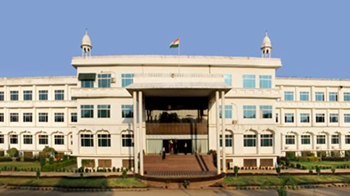
beefruThe incident led to scuffles with Kashmiri students at Mewar University in Chittorgarh. There are around 800 Kashmiri students on campus.

“Some mischief mongers spread rumours that the students were cooking beef. But prima facie it didn't look like beef. We have sent it for forensic testing just to be sure,” Chittorgarh superintendent of police Prasanna Khamesara said.

Some Hindu religious groups protested outside the campus and shouted slogans against the institute's administration but the police arrived soon after.

The incident comes days after reports that Kolkata police wrote to city college authorities, asking for details of Kashmiri students enrolled there.

The Mewar University administration said the issue was “blown out of proportion” by fringe elements.

“We have students from all over the country…from 23 states. It is like a mini India. Sometimes, these small scuffles happen because people are from different socio-cultural backgrounds,” University media liaison officer Harish Gurnani said.

Comments

Clear
 - 
Thursday, 17 Mar 2016

Mr. Bopanna Saudi is a Kingdom so the rules and regulation of king should be followed, India is republic country a democrartic country. our constitution doesnot stop from eating beef. This is the self interest of politicians.

Bopanna
 - 
Wednesday, 16 Mar 2016

will you allow a Hindu to eat pork in Saudi ? Then why try to eat beef in Hindustan ?

Curious
 - 
Wednesday, 16 Mar 2016

what ;;; sending gravy to forensic test? send beja of that goondas to us we will make beja fry. Its Time for muslims to stay united from kashmir to kanyakumari, any one is touched its like they are touching all muslims in india.

SK
 - 
Wednesday, 16 Mar 2016

The hooligans do not have any other work...... Use AK - 47 at the right time, all dogs will wag their tails.....

saleem
 - 
Wednesday, 16 Mar 2016

this is called Intolerance... we have the rights to eat whatever we want to eat in this freedom country.

Mootharapathi
 - 
Wednesday, 16 Mar 2016

As KASHMIR Not in INDIA

we INDIANS are double standards.......we treat KSHMIRI Indians as NON INDIANS....but we claim KASHMIR is is an integral part of INDIA

first clear your stand in Hindu scripture as it is allowed to have Beef....and same time you deny the truth ...what happened to innocent Hindus ....is they blindly follow RSS idealogy

Add new comment

  • Coastaldigest.com reserves the right to delete or block any comments.
  • Coastaldigset.com is not responsible for its readers’ comments.
  • Comments that are abusive, incendiary or irrelevant are strictly prohibited.
  • Please use a genuine email ID and provide your name to avoid reject.
coastaldigest.com news network
May 13,2020

Mangaluru, May 13: Karnataka revised its standard operating procedure (SOP) for international passengers to allow pregnant women, children and senior citizens to entre home quarantine if they test negative for covid-19. 

The development comes after former minister and Mangaluru MLA U T Khader urged the government to follow the Kerala model in handling the repatriates and take extra care of pregnant women and senior citizens at Mangaluru and Bengaluru Airports.

Passengers will be initially dived into two categories. Category A includes passengers symptomatic on arrival while Category B passengers are those asymptomatic on arrival. 

While category A passengers will be directly shifted to covid-19 hospital, category B passengers will be sent to 14-day institutional quarantine.

If there are pregnant women, children below 10 years of age and senior citizens in category B, they will remain in institutional quarantine until they obtain a negative report (after throat swab testing for covid-19). It may take one or two days to get the throat swab testing report. 

Comments

Add new comment

  • Coastaldigest.com reserves the right to delete or block any comments.
  • Coastaldigset.com is not responsible for its readers’ comments.
  • Comments that are abusive, incendiary or irrelevant are strictly prohibited.
  • Please use a genuine email ID and provide your name to avoid reject.
News Network
April 17,2020

Madikeri, Apr 17: A person who had returned from Spain in March was subjected to home quarantine on Thursday in Sowarpet in Kodagu district.

The person had arrived at Bengaluru on March 16 and went to Balele. Yesterday, he came to his estate house in Kumburu village in Somwarpet.

Availing the information, Tahsildar Govindaraju, police officials and health department staff visited the spot and gathered the necessary information.

Comments

Add new comment

  • Coastaldigest.com reserves the right to delete or block any comments.
  • Coastaldigset.com is not responsible for its readers’ comments.
  • Comments that are abusive, incendiary or irrelevant are strictly prohibited.
  • Please use a genuine email ID and provide your name to avoid reject.
News Network
February 28,2020

Bengaluru, Feb 28: Historian S. Shettar, 85, breathed his last early on February 28 in Bengaluru. He was suffering from respiratory problems and was hospitalised for over a week.

Shettar was known for his multi-disciplinary work, encompassing linguistics, epigraphy, anthropology, the study of religions and art history. He had extensively worked on the Jain practice of ritual death in Karnataka and Asoka edicts. He had studied and compiled early edicts in Kannada and worked extensively on the growth of Kannada language down the ages.

Born in 1935 at Hampasagara, Ballari district, he went on to study at Cambridge University and started his career as a Professor of History at Karnatak University, Dharwad, his alma mater. He later headed the National Museum Institute of the History of Art, Conservation and Museology in 1978 and Indian Council for Historical Research in 1996. He was also a visiting professor at the National Institute of Advanced Studies, Bengaluru.

He was a bilingual historian who wrote in English for most of his career, but started writing in Kannada in later years. In the last two decades, he developed a keen interest in linguistics and wrote multiple books on classical Kannada and Prakrit. His 2007 book “Shangam Tamilagam” is considered a seminal work in the study of the early period of Dravidian languages. It won him Bhasha Samman from Central Sahitya Akademi. He later wrote two works on Halegannada, classical Kannada. His most recent work was “Prakrita Jagadvalaya” in 2018.

Comments

Add new comment

  • Coastaldigest.com reserves the right to delete or block any comments.
  • Coastaldigset.com is not responsible for its readers’ comments.
  • Comments that are abusive, incendiary or irrelevant are strictly prohibited.
  • Please use a genuine email ID and provide your name to avoid reject.