


4 Kashmiri students beaten up in Mewar University over beef rumours

March 16, 2016

New Delhi, Mar 16: A mob beat up four Kashmiri students at a private university in Rajasthan over rumours that they were cooking beef inside their hostel rooms in a campus that is vegetarian by policy.
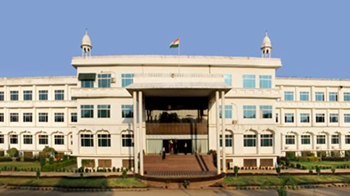
beefruThe incident led to scuffles with Kashmiri students at Mewar University in Chittorgarh. There are around 800 Kashmiri students on campus.

“Some mischief mongers spread rumours that the students were cooking beef. But prima facie it didn't look like beef. We have sent it for forensic testing just to be sure,” Chittorgarh superintendent of police Prasanna Khamesara said.

Some Hindu religious groups protested outside the campus and shouted slogans against the institute's administration but the police arrived soon after.

The incident comes days after reports that Kolkata police wrote to city college authorities, asking for details of Kashmiri students enrolled there.

The Mewar University administration said the issue was “blown out of proportion” by fringe elements.

“We have students from all over the country…from 23 states. It is like a mini India. Sometimes, these small scuffles happen because people are from different socio-cultural backgrounds,” University media liaison officer Harish Gurnani said.

Comments

Clear
 - 
Thursday, 17 Mar 2016

Mr. Bopanna Saudi is a Kingdom so the rules and regulation of king should be followed, India is republic country a democrartic country. our constitution doesnot stop from eating beef. This is the self interest of politicians.

Bopanna
 - 
Wednesday, 16 Mar 2016

will you allow a Hindu to eat pork in Saudi ? Then why try to eat beef in Hindustan ?

Curious
 - 
Wednesday, 16 Mar 2016

what ;;; sending gravy to forensic test? send beja of that goondas to us we will make beja fry. Its Time for muslims to stay united from kashmir to kanyakumari, any one is touched its like they are touching all muslims in india.

SK
 - 
Wednesday, 16 Mar 2016

The hooligans do not have any other work...... Use AK - 47 at the right time, all dogs will wag their tails.....

saleem
 - 
Wednesday, 16 Mar 2016

this is called Intolerance... we have the rights to eat whatever we want to eat in this freedom country.

Mootharapathi
 - 
Wednesday, 16 Mar 2016

As KASHMIR Not in INDIA

we INDIANS are double standards.......we treat KSHMIRI Indians as NON INDIANS....but we claim KASHMIR is is an integral part of INDIA

first clear your stand in Hindu scripture as it is allowed to have Beef....and same time you deny the truth ...what happened to innocent Hindus ....is they blindly follow RSS idealogy

Add new comment

  • Coastaldigest.com reserves the right to delete or block any comments.
  • Coastaldigset.com is not responsible for its readers’ comments.
  • Comments that are abusive, incendiary or irrelevant are strictly prohibited.
  • Please use a genuine email ID and provide your name to avoid reject.
News Network
July 13,2020

Bengaluru, Jul 13: The Bruhat Bengaluru Mahanagara Palike (BBMP) has initiated the process of recruiting 1,700 medical professionals, doctors, staff nurses and support staff to scale up its workforce to set up 30,000 COVID-19 care beds, an official said on Sunday.

According to the official, to establish and run 30,000 COVID care beds, 1,800 doctors and 3,600 nurses are required. A 10,100-bed facility was set up last week in the Bengaluru International Exhibition centre (BIEC) on Tumkur road.

The Health Department has calculated that one doctor per shift is needed for every 100 patients and one staff nurse for every 50 patients. Similarly, two supporting staff and three Group D employees are needed per shift for every 100 patients. Generally, a day is divided into three shifts of eight hours each.

According to the director of medical education, there are 25,000 nursing students who have completed GNM and BSc Nursing courses and are pursuing higher education.

Likewise, there are 3,231 medical, dental and Aayush interns, while MD and MS postgraduate students have been identified to be 1,613 in Bengaluru colleges.

"The department plans to actively utilise the services of interns and postgraduate students for the COVID Care Centre (CCC) operations," said the official.

Currently, there are 2,100 CCC beds operational under the civic body in Bengaluru with a pool of 503 doctors, 167 ayush doctors, 128 nursing and paramedical staff.

Earlier in May, the civic body also notified the recruitment of 380 microbiologists, technicians and data entry operators for six months. In June, the civic body again notified the recruitment of 637 doctors, nurses, technicians and group d employees to strengthen its fight against the pandemic.

Bengaluru has recently seen a spike in COVID-19 in Karnataka, accounting for 61% of all active cases in the state.

On Saturday, the city reported 1,533 new cases, taking its total tally to 16,862, of which 12,793 are active.

Karnataka recorded 2,798 more coronavirus cases and 70 more casualties on Saturday evening, raising the state's total cases to 36,216 and the death toll to 613.

Comments

Add new comment

  • Coastaldigest.com reserves the right to delete or block any comments.
  • Coastaldigset.com is not responsible for its readers’ comments.
  • Comments that are abusive, incendiary or irrelevant are strictly prohibited.
  • Please use a genuine email ID and provide your name to avoid reject.
News Network
May 4,2020

Bengaluru, May 4: First year Pre-University results of Karnataka Department of Pre-University Education will be released soon.

According to a report, the first year PU result will be released on the registered mobile numbers of students or parents on May 5. The report also asked the colleges which offers PU course that the PU results should not be released on the notice boards.

This measure has been taken keeping in view to avoid gatherings in and around the institutions to prevent the spread of coronavirus.

The Deccan Herald report also said the students who are not able to clear the exams after the PU results are declared will be given a chance to appear for supplementary examinations in college level and further details on this will be shared with the institutes by the department in due course.

"After the declaration of results, colleges can conduct online classes for students who are eligible to attend second year PU classes," the report added.

The state is yet to complete the SSLC (class 10) and PU second year (higher secondary or class 12) examinations as the spread of coronavirus and subsequent lockdown announced by the government has put the whole academic activities out of gear in the state.

Recently, the education minister has said the SSLC examinations in the state will be conducted as it is a "crucial stage in a student's life".

"We will consider it (SSLC examinations) when the situation becomes normal," The New Indian Express quoted the minister as saying.

The Karnataka SSLC exam was scheduled to be held between March 27 and April 9, and over eight lakh students had registered for the exam.

Updates on the date and other decisions regarding PU second year exams are awaited.

Earlier, the school education department had decided to promote class 7 and 8 students without any exams in the wake of lockdown aimed at controlling the spread of COVID-19.

Comments

Add new comment

  • Coastaldigest.com reserves the right to delete or block any comments.
  • Coastaldigset.com is not responsible for its readers’ comments.
  • Comments that are abusive, incendiary or irrelevant are strictly prohibited.
  • Please use a genuine email ID and provide your name to avoid reject.
Agencies
June 30,2020

Washington, Jun 30: Researchers in China have discovered a new type of swine flu that is capable of triggering a pandemic, according to a study published Monday in the US science journal PNAS.

Named G4, it is genetically descended from the H1N1 strain that caused a pandemic in 2009.

It possesses "all the essential hallmarks of being highly adapted to infect humans," say the authors, scientists at Chinese universities and China's Center for Disease Control and Prevention.

The researchers then carried out various experiments including on ferrets, which are widely used in flu studies because they experience similar symptoms to humans -- principally fever, coughing and sneezing. 

G4 was observed to be highly infectious, replicating in human cells and causing more serious symptoms in ferrets than other viruses.

Tests also showed that any immunity humans gain from exposure to seasonal flu does not provide protection from G4.

According to blood tests which showed up antibodies created by exposure to the virus, 10.4 percent of swine workers had already been infected.

The tests showed that as many as 4.4 percent of the general population also appeared to have been exposed.

The virus has therefore already passed from animals to humans but there is no evidence yet that it can be passed from human to human -- the scientists' main worry.

"It is of concern that human infection of G4 virus will further human adaptation and increase the risk of a human pandemic," the researchers wrote.

The authors called for urgent measures to monitor people working with pigs.

"The work comes as a salutary reminder that we are constantly at risk of new emergence of zoonotic pathogens and that farmed animals, with which humans have greater contact than with wildlife, may act as the source for important pandemic viruses," said James Wood, head of the department of veterinary medicine at Cambridge University.

A zoonotic infection is caused by a pathogen that has jumped from a non-human animal into a human.

Comments

Add new comment

  • Coastaldigest.com reserves the right to delete or block any comments.
  • Coastaldigset.com is not responsible for its readers’ comments.
  • Comments that are abusive, incendiary or irrelevant are strictly prohibited.
  • Please use a genuine email ID and provide your name to avoid reject.