439 new Gram Panchayats to be formed in Karnataka ahead of 2015 polls

[email protected] (CD Network)
October 29, 2014

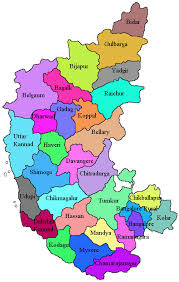
karnatakaBangalore, Oct 29: As many as 439 new Gram Panchayats may be formed in Karnataka by the time the government will hold elections Gram Panchayat election in the state in May 2015. With this the number of Gram Panchayats in Karnataka will go up to 6,068 from 5,629.

A committee appointed by the government to study the relevance of the Karnataka Panchayat Raj Act, 1993, headed by S.G. Nanjayyanamath, in its report submitted on Tuesday recommended for the formation of 439 new GPs. Each one of these will have an approximate population of 6,175.

Accepting the report, Chief Minister Siddaramaiah said the recommendations would be implemented by the next elections to GPs, which is due in May 2015.

Another committee, headed by K. Narasimhamurty, identified over 3,351 Lambani and Banjara tandas (settlements) in the State, against 1,334 in revenue records, and recommended for converting them into revenue villages.

Comments

Add new comment

  • Coastaldigest.com reserves the right to delete or block any comments.
  • Coastaldigset.com is not responsible for its readers’ comments.
  • Comments that are abusive, incendiary or irrelevant are strictly prohibited.
  • Please use a genuine email ID and provide your name to avoid reject.
News Network
July 25,2020

Chennai, Jul 25: Two weeks after a 62-year-old widow accused him of harassment, including urinating outside her house, the Chennai Police on Saturday registered an FIR against ABVP national president Dr Subbiah Shanmugam.

Dr Shanmugam, Professor and HOD, Department of Surgical Oncology, Kilpauk Medical College and Government Royapettah Hospital, has been booked under sections 271 (disobedience to quarantine rule) and 427 (mischief causing damage) under the Indian Penal Code (IPC) and Tamil Nadu Women Harassment Prevention Act.

The FIR was lodged exactly two weeks after the woman’s relative Balaji Vijayaraghavan filed a complaint with the Adambakkam police accusing Dr Shanmugam of harassing his aunt, who is living alone in her apartment following her husband’s death last year, following an argument over a parking slot. 

The action came after Vijayaraghavan alleged that the police were not filing an FIR due to the ABVP functionary’s “political connections.”

Dr Shanmugam and the woman were living in the same apartment complex in Nanganallur and an argument broke between them over a parking slot.

“He wanted to use our parking lot. We agreed but demanded a nominal charge for using it. He was outraged by our demand and even broke our signboard at the parking lot,” Vijayaraghavan wrote in his complaint.

He also alleged that Dr Shanmugam began harassing her by throwing “pieces of chicken” outside her apartment despite knowing she is a vegetarian.

CCTV footage corroborates with the allegations of urinating outside the residence of the widow. However, the ABVP called the incident as a “malicious and derogatory propaganda” by the Congress’ student wing of NSUI.

"The video shared by NSUI with an allegation of harassment is tampered with and is being used with malafide intentions. The two families have discussed this within their housing society and have already concluded that the harassment allegations were caused due to misunderstandings and are untrue,” ABVP National General secretary Nidhi Tripathi said.

Vijayaraghavan also alleged in his two-page written complaint that the ABVP national president had urinated outside the woman’s apartment gate and had been throwing garbage and used masks at her gate.

In his complaint, Vijayaraghavan also said the family was “concerned about her safety” while asking police to take action against Dr Shanmugam, who he says, “has a bad track record in maintaining rapport with neighbours.”

Also Read: ABVP national president accused of harassing woman, urinating at her doorstep

Comments

Add new comment

  • Coastaldigest.com reserves the right to delete or block any comments.
  • Coastaldigset.com is not responsible for its readers’ comments.
  • Comments that are abusive, incendiary or irrelevant are strictly prohibited.
  • Please use a genuine email ID and provide your name to avoid reject.
Media Release
February 14,2020

Veteran journalist P. Sainath has said that the nation is in a crisis. And this crisis is not limited to just the rural area. It has become a national crisis at various areas such as agriculture, education, economy, job creation etc.

He was delivering the endowment lecture on the topic ‘Indian democracy at the post-liberalization and post-truth era’ at Media Manthan 2020 organized by the PG department of journalism and mass communication at St Aloysius College (Autonomous). 

Mr Sainath said that the many policies adopted in the 90s led to India becoming unusually unequal. Referring to the speech Ambedkar had made at the Constituent Assembly while handing over the draft of the Constitution, Mr Sainath said, “Ambedkar had warned about the weakness of Indian democracy that liberty without equality allows the supremacy of a few over the multitude. Liberty, equality and fraternity must be kept together as we cannot have one without the other.” 

Mr Sainath stated that the agrarian crisis was no longer about the loss of productivity, employment or about farmer suicide; it was a societal, civilizational crisis. Commenting on the lopsided policies such as cow-slaughter ban, he explained how cow slaughter ban had adversely affected many industries due to their interdependency. While Muslims who slaughtered cows were rendered helpless, the cattle traders who were mostly OBCs lost their earnings as the cattle prices crashed. An important industry like Kolhapur sandals industry in Maharashtra went bankrupt as a result of the cow slaughter ban in Maharashtra. He said the policymakers had no idea how the rural industries were interconnected. Demonetisation too devastated the rural economy as 98 percent of rural transactions happen through cash. 

Mr Sainath also spoke about the crisis of inequality which affects the Dalits and the Adivasis far more than anyone else as 90 percent of the rural households take home less than Rs 10,000/- per month. “Women are yet another group whose labour is never counted in the gross domestic product. Women and girls globally do unpaid work which amounts to about 12.5 billion working hours per year. Monetarily speaking, this is worth 10.8 trillion dollars,” Mr Sainath added. 

Speaking about the crisis of jobs Mr Sainath said that major companies were laying off employees just to create more profits for the investors and the adoption of artificial intelligence in the industry would further destroy millions of jobs.

Rector of St Aloysius College Institutions Fr Dionysius Vaz SJ, Principal Dr (Fr) Praveen Martis SJ, HOD of Journalism and Mass Communication department Dr (Fr) Melwyn Pinto SJ were present.

‘Veerappan and Vijay Mallya’s business models are interesting!’

Addressing the gathering during his endowment lecture on Friday, Mr Sainath made an interesting comment on the so called ‘revenue model’. “Whenever I visit IIMs and IITs for lectures on my PARI project, the students there ask me what my revenue model for my project is. I tell them that I do not have a revenue model. In fact, journalism does not begin with a revenue model. Gandhiji, Ambedkar, Bhagat Singh were all great journalists. But they did not have a revenue model,” Mr Sainath said.

On a lighter note, he said that the best revenue model that he liked was that of forest brigand Veerappan and liquor baron Vijay Mallya. “Veerappan ruled the forest for forty years and from the top ministers to the villagers he could dictate terms and liver royally. Similarly, Mallya’s revenue model was to steal the banks and run away abroad and live like a king,” Mr Sainath added.

Journalism is not and can never be a business. It is a calling, he opined. While newspaper can be a business, television can be a business, journalism per se cannot be reduced to a business. “Unfortunately today, journalists are recruited on a contract basis and they have no bargaining power; and there are no unions to fight for their cause. Hence, they are at the mercy of the corporate media houses for their survival and are made to write stories that cannot be called journalism,” Mr Sainath said.

Answering a question as to the pressures he faced as a journalist, he said that external pressures from the government or others could be very well handled. It is the internal pressures from once own media house that journalists find it difficult to manage.


 

Comments

Add new comment

  • Coastaldigest.com reserves the right to delete or block any comments.
  • Coastaldigset.com is not responsible for its readers’ comments.
  • Comments that are abusive, incendiary or irrelevant are strictly prohibited.
  • Please use a genuine email ID and provide your name to avoid reject.
News Network
February 28,2020

Bengaluru, Feb 28: The Liquefied Petroleum Gas penetration in Karnataka is 'absolutely 100 per cent' due to the Prime Minister Ujjwala Yojana, Indian Oil Corporation Karnataka Executive Director D L Pramodh said here on Friday.

In 2014, LPG penetration in the State was only 68 per cent, but after the PMUY, massive number of gas connections were given in the last five years, he said, adding, "It is absolutely 100 per cent today."

"There are 1.6 crore LPG connections out of which around 31.5 lakh -- or around 20 per cent -- come under the PMUY. The 100 per cent LPG penetration in the state will help women in rural areas to make their kitchens smokeless. Against the national average of 2.88 cylinders per family per PMUY annually, the figure is Karnataka 3.4 cylinders in Karnataka," Pramodh told reporters.

On the initiative of blending ethanol with petrol, he said it's 8.6 per cent in Karnataka, the highest comparedto other states, where it's five per cent to 5.5 per cent. The state aims to increase it to 10 per cent. By March 31, the IOC would commission the Rs 10 crore Vapour Recovery System at the Devanagonthi terminal on the city outskirts which would ensure that vapour does not go out in the air when tankers are being filled with fuel. "This is an important measure taken tominimise pollution", he said.

Pramodh also said the IOC has started mobile fuel dispensers, delivering fuels at the doorsteps.

Regarding the IOC's preparedness for Electric Vehicle charging stations, Pramodh said the Ministry of Power has given the company a target to set up 500 charging stations across India in the first phase. The IOC has already signed MoUs with NTPC, Power Grid Corporation Limited, Hyundai Motors, Tech Mahindra and Tata Power in this regard.

In Karnataka, 58 sites have been identified for setting up charging and battery swapping stations.

"Total electric vehicle charging facilities planned by IOC in Karnataka by March 31 is 34, out of which 26 will be EVcharging sites and eight battery swapping stations," Pramodh said.

Comments

Add new comment

  • Coastaldigest.com reserves the right to delete or block any comments.
  • Coastaldigset.com is not responsible for its readers’ comments.
  • Comments that are abusive, incendiary or irrelevant are strictly prohibited.
  • Please use a genuine email ID and provide your name to avoid reject.