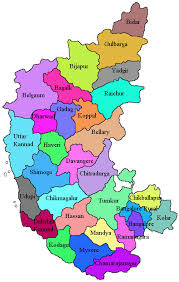
439 new Gram Panchayats to be formed in Karnataka ahead of 2015 polls

[email protected] (CD Network)
October 29, 2014

karnatakaBangalore, Oct 29: As many as 439 new Gram Panchayats may be formed in Karnataka by the time the government will hold elections Gram Panchayat election in the state in May 2015. With this the number of Gram Panchayats in Karnataka will go up to 6,068 from 5,629.

A committee appointed by the government to study the relevance of the Karnataka Panchayat Raj Act, 1993, headed by S.G. Nanjayyanamath, in its report submitted on Tuesday recommended for the formation of 439 new GPs. Each one of these will have an approximate population of 6,175.

Accepting the report, Chief Minister Siddaramaiah said the recommendations would be implemented by the next elections to GPs, which is due in May 2015.

Another committee, headed by K. Narasimhamurty, identified over 3,351 Lambani and Banjara tandas (settlements) in the State, against 1,334 in revenue records, and recommended for converting them into revenue villages.

Comments

Add new comment

  • Coastaldigest.com reserves the right to delete or block any comments.
  • Coastaldigset.com is not responsible for its readers’ comments.
  • Comments that are abusive, incendiary or irrelevant are strictly prohibited.
  • Please use a genuine email ID and provide your name to avoid reject.
News Network
April 2,2020

The current physical distancing guidelines provided by the World Health Organisation (WHO) and by the US Centers for Disease Control and Prevention (CDC) may not be adequate to curb the coronavirus spread, according to a research which says the gas cloud from a cough or sneeze may help virus particles travel up to 8 metres. The research, published in the Journal of the American Medical Association, noted that the the current guidelines issued by the WHO and CDC are based on outdated models from the 1930s of how gas clouds from a cough, sneeze, or exhalation spread.

Study author, MIT associate professor Lydia Bourouiba, warned that droplets of all sizes can travel 23 to 27 feet, or 7-8 metres, carrying the pathogen.

According to Bourouiba, the current guidelines are based on "arbitrary" assumptions of droplet size, "overly simplified", and "may limit the effectiveness of the proposed interventions" against the deadly pandemic.

 She explained that the old guidelines assume droplets to be one of two categories, small or large, taking short-range semi-ballistic trajectories when a person exhales, coughs, or sneezes.

However based on more recent discoveries, the MIT scientist said, sneezes and coughs are made of a puff cloud that carries ambient air, transporting within it clusters of droplets of a wide range of sizes.

Bourouiba warned that this puff cloud, with ambient air entrapped in it, can offer the droplets moisture and warmth that can prevent it from evaporation in the outer environment.

"The locally moist and warm atmosphere within the turbulent gas cloud allows the contained droplets to evade evaporation for much longer than occurs with isolated droplets," she said.

"Under these conditions, the lifetime of a droplet could be considerably extended by a factor of up to 1000, from a fraction of a second to minutes," the researcher explained in the study.

The MIT scientist, who has researched the dynamics of coughs and sneezes for years, added that these droplets settle along the trajectory of a cough or sneeze contaminating surfaces, with their residues staying suspended in the air for hours.

"Even when maximum containment policies were enforced, the rapid international spread of COVID-19 suggests that using arbitrary droplet size cutoffs may not accurately reflect what actually occurs with respiratory emissions, possibly contributing to the ineffectiveness of some procedures used to limit the spread of respiratory disease," Bourouiba wrote in the study


Comments

Add new comment

  • Coastaldigest.com reserves the right to delete or block any comments.
  • Coastaldigset.com is not responsible for its readers’ comments.
  • Comments that are abusive, incendiary or irrelevant are strictly prohibited.
  • Please use a genuine email ID and provide your name to avoid reject.
News Network
May 24,2020

Bengaluru, May 24: In an effort to protect passengers and staff from the risk of COVID-19 transmission, the Bangalore International Airport Limited (BIAL) has introduced a parking-to-boarding contactless journey at the airport.

With a greater emphasis on minimum touch and minimum exposure between passengers and airport personnel, BIAL aims to minimise all physical contact at the airport. The technology will continue to enable a seamless airport journey, with greater emphasis on health and safety.

"As the gateway to a new India, BLR Airport has a key role to play in helping passengers through this global health crisis by reassuring them that their safety is our top priority. We have introduced innovative contactless procedures to minimise exposure at the airport," said Hari Marar, MD and CEO, BIAL.

"These enhancements demonstrate our continued commitment to keep our passengers safe in this environment. We believe our new measures will boost confidence among passengers," continued Marar.

"BLR Airport is all geared up to welcome our passengers back and - working with various government departments - we're committed to offering them a safe experience by implementing the best-in-class standards, procedures and practices," Marar added.

Earlier, Civil Aviation Minister Hardeep Singh Puri said that domestic flight operations will resume from May 25 noting that all airlines and airports were ready but it is not viable to keep the middle seat vacant as it will lead to hike in the ticket price and prescribed social distancing norms would still not be met. 

Comments

Add new comment

  • Coastaldigest.com reserves the right to delete or block any comments.
  • Coastaldigset.com is not responsible for its readers’ comments.
  • Comments that are abusive, incendiary or irrelevant are strictly prohibited.
  • Please use a genuine email ID and provide your name to avoid reject.
News Network
May 2,2020

Hubli, May 2: Around 1400 migrant workers from neighbouring districts, working at brick manufacturing factories in Hubli were sent to their respective districts on buses, amid coronavirus lockdown on Friday.

Dr Purushottam, Nodal Officer, COVID-19 task force said, "Total 1473 labourers from eight neighbouring districts, working in the brick manufacturing units of our district were sent by 74 buses. 876 labourers are from Kalburgi where we are sending 44 buses, 350 labourers are from Vijaypura where we are sending 27 buses."

He continued saying that 20 persons will be accommodated in a bus while maintaining social distancing.

"Before the labourers boarded, the buses were disinfected. NWKRTC officials took a special interest in doing so. The District Collector has written letters to the concerned DCs regarding shifting of labourers in every bus, one Nodal Officer will handover them to the local officials," Dr Purushottam added.

On Friday, the buses were sent to seven districts and one bus will be sent today.

Comments

Add new comment

  • Coastaldigest.com reserves the right to delete or block any comments.
  • Coastaldigset.com is not responsible for its readers’ comments.
  • Comments that are abusive, incendiary or irrelevant are strictly prohibited.
  • Please use a genuine email ID and provide your name to avoid reject.