


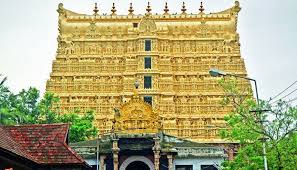
769 gold pots worth Rs 186 crore missing from Kerala temple

August 16, 2016

url

Thiruvananthapuram, Aug 16: A report submitted to the Supreme Court shows that 769 gold pots, valued approximately at Rs 186 crore, are missing from Sree Padmanabhaswamy temple in Thiruvananthapuram, Kerala.

A report submitted by former Comptroller and Auditor General of India Vinod Rai said the disappearance of the gold pots weighing 776 kg from the vast treasures found in the vaults of the Kerala temple needed a “detailed probe”, reported The Hindu.

The apex court had asked Rai in October 2015 to submit the audit report.

A bench led by Chief Justice of India TS Thakur will shortly hear Rai.

 As per the report, gold worth Rs 186 crore in the form of 769 gold pots is not traceable. It added that 30 percent of the gold sent for melting and purification was lost.

“Gold worth Rs 2.50 crore was lost because of change in ratio adopted for purification. Moreover, the residual quantity of gold was not recovered from the contractor which lead to a loss of Rs 59 lakhs,” The New Indian Express quoted sources as saying.

“There was a lack of transparency in Kanikka counting. Gold and silver worth Rs 14.18 lakh had not been entered in the Nadavarav register, which is illegal,” as per the report.

“Silver bar with the value of Rs 14 lakh was found to be missing,” the report added.

Rai has suggested changes in the temple's security arrangements. “Priceless items in the temple should be housed in a modern museum and security installments need to be altered a bit.”

He has also suggested the appointment of a new committee led by a retired All India Service Officer.

Comments

Satyameva jayate
 - 
Tuesday, 16 Aug 2016

That is why they don't allow anyone to interfere into this temple's assets....even when govt tried...all looters.....take it out and distribute to the poor.....

Ahmed K. C.
 - 
Tuesday, 16 Aug 2016

When god allowed them to take it away, it is for them to enjoy that gold, god is not in need of gold anyway.

PK
 - 
Tuesday, 16 Aug 2016

What is the purpose of keeping large amount of Gold inside the temple... Y cant it be used in the society and to the poor people of that area?
God doesnt want Gold but he like acts of charity. So give the Gold to the poor rather than keeping in the locker. use it for the welfare of the society... It would helpful in the society ...

Karthik
 - 
Tuesday, 16 Aug 2016

god give them peace of mind,

Mohan
 - 
Tuesday, 16 Aug 2016

ohh god no crime here. robber looted prasada.

pran
 - 
Tuesday, 16 Aug 2016

not only this all about 90% of the wealth already looted this is looting of remaining 10% simply this temple authority fooling people to make money,. but people will never understand.

Add new comment

  • Coastaldigest.com reserves the right to delete or block any comments.
  • Coastaldigset.com is not responsible for its readers’ comments.
  • Comments that are abusive, incendiary or irrelevant are strictly prohibited.
  • Please use a genuine email ID and provide your name to avoid reject.
News Network
March 4,2020

Bengaluru, Mar 4: With the number of Coronavirus positive cases in India increasing, health department officials in Karnataka are working round the clock to keep citizens safe.

But citizens are already panicking with 97 people in Bengaluru rushing to the government-run Rajiv Gandhi Institute for Chest Diseases (RGICD) on Tuesday with symptoms matching the coronavirus.

Karnataka Chief Minister BS Yediyurappa has now appealed for calm saying there is no coronavirus in the state.

"There is a difference in what appears in the media and what is on the ground. No need to panic. PM Modi is also looking into this. My health minister addressed the media and no one needs to panic. We are ready to tackle the situation," he added.

Dr. Nagaraj, director of RGICD, said the screening process began at the hospital on January 22 and they would see some 15-20 patients and take 5-6 swabs.

"Because of apprehensions, we saw 978 patients and took 27 swabs. We have also admitted 4 patients in the isolation ward," he added.

As of today, there are 5 patients admitted in the isolation ward of RGICD. Two came in close contact with the infected techie in Telengana and three foreign nationals from Japan, Saudi Arabia, and Iran.

Tech parks on high alert

At the Manyata Tech Park in the city, a company sent out a circular regarding one of their associates who had travelled from a Level 3 country to India and had flu-like symptoms.

It says that the associate was advised to receive necessary screening and observation as mandated by the Karnataka State Health Department. The associate was screened by an authorized medical agency and determined to be asymptomatic.

As of Wednesday, the company located in the G3 campus of Manyata Tech Park has begun disinfecting and sanitizing the work location and all associates working out of this location have been advised to work from home until March 6.

A statement issued by Embassy spokesperson on March 4 to India Today TV indicated the authorities have activated their response plan.

"As of March 4, we are not aware of a single positive case for the virus in more than 2,00,000 people who work in our business parks. We do understand that one employee of a company at one of our parks who had travelled from a Level 3 country was screened in the last 36 hours and determined to be asymptomatic.

As a precaution, the premises are being disinfected and sanitized. The fact remains, we are not aware of a single confirmed case within over 15 business parks across India," the statement said.

Comments

Add new comment

  • Coastaldigest.com reserves the right to delete or block any comments.
  • Coastaldigset.com is not responsible for its readers’ comments.
  • Comments that are abusive, incendiary or irrelevant are strictly prohibited.
  • Please use a genuine email ID and provide your name to avoid reject.
News Network
January 21,2020

Bengaluru, Jan 21: A private hospital in Bengaluru, the capital of Karnataka, on Tuesday claimed that it has successfully performed a live liver transplant on a Jehovah's Witness from Nigeria, by not using blood or blood products, in order to protect the patient's religious beliefs.

It is said that Jehovah's Witnesses are followers of a Christian faith that prohibits the use of blood or blood products during their treatment. Gehojadak (37), a Jehovah's Witness follower, had developed decompensated liver disease and visited more than three countries seeking treatment over the last four years but was turned away by most doctors due to the highly risky nature of surgery, Aster CMI Hospital said.

The surgery was challenging compared to a normal liver transplant because in order to protect the patient's religious beliefs, the medical team could not use blood or blood products (Fresh frozen plasma, Cryoprecipitate, Platelets etc), it said in a release, adding that very few such surgeries have been successfully conducted worldwide.

The patient's brother was the donor, the hospital said, adding, without a liver transplant, Gehojadak's chances of survival were less than 10 per cent over the next two years. A team of liver specialists from the Hospital thoroughly reviewed the patient's medical history before recommending a bloodless liver transplant and charted out a feasible pathway to make the surgery a success.

"This transplant was especially challenging as we did not have the safety net (of using blood) even if the patient's life was at risk due to their advance directive. We have performed other non-transplant liver surgeries in Jehovah's Witnesses and this gave us the confidence to take on Gehojadak's transplant," Dr Rajiv Lochan, Consultant Liver Transplant Surgeon, said.

The critical surgery took a 12-hour period to complete where two teams of specialists with close to 25 doctors including anaesthetists, intensivists worked in absolute sync with each other and Gehojadak finally received a life-saving liver transplant, the Hospital said. In a period of two weeks, the patient and his brother were fit enough to go home and were discharged from the hospital.

"Even if their haemoglobin levels dropped to life-threatening levels, the patients were clear that they would not accept a blood transfusion. Keeping the limitations in mind, the most effective treatment path was planned, and we spent close to two months preparing the patients for surgery," Arun V, Consultant Anesthesiologist said. The hospital arranged customised artificial products like synthetic drug molecules, to conduct a bloodless liver transplant, he added.

Comments

Add new comment

  • Coastaldigest.com reserves the right to delete or block any comments.
  • Coastaldigset.com is not responsible for its readers’ comments.
  • Comments that are abusive, incendiary or irrelevant are strictly prohibited.
  • Please use a genuine email ID and provide your name to avoid reject.
News Network
February 23,2020

The euphoria over the claim that around 3,000 tonnes of gold reserves, worth Rs 12 trillion, have been discovered in Uttar Pradesh’s Sonbhadra district could not last even 24 hours, with the Geological Survey of India (GSI) clarifying on Saturday there had been no such discovery.

The GSI, headquartered in Kolkata, rebutted the claims of the Uttar Pradesh Directorate of Geology and Mining (UPDGM), and said “miscommunication” must have led to the wrong reporting of facts.

M Sridhar, director general of the GSI, said nobody in the agency gave any such data. He said 52,806 tonnes of gold ore was found in Sonbhadra district during the exploration work in 1998-2000. From this reserve, only 160 kg of gold can be extracted.

“There must have been some miscommunication of facts because of which the gold ore deposits have been overestimated. We have written a letter to Uttar Pradesh (UPDGM), stating the facts. The GSI has not estimated such kind of vast resource of gold deposits in Sonbhadra,” Sridhar said.

ALSO READ: 2,900-tonne gold mine found in Sonbhadra, 4 times that of India's reserves

The UPDGM had said on Friday that gold deposits were found in Son Pahadi and Hardi areas of the district. Sridhar said while gold ore was found in the area during the GSI’s exploration work in 1998-2000, it had told the state government about the discovery in November last year.

Under the new regulation, which came into effect from 2015, the GSI has to inform the state government when ore deposits are discovered. Earlier, no such action was mandatory. In its report, the GSI estimated that only 3.03 gm of gold can be extracted from a tonne of ore. It also clarified that even the extraction amount was tentative and could not be established for certain.

Moreover, Sridhar said the deposits were spread across only 0.5 sq km in forest land, which made the mining of ore economically unviable. “When there are several mines nearby, we can club it into a block and then it makes sense to mine the ore. But in this case, the deposits are too small to make it viable for any company to mine it,” he said. The GSI usually prioritises its exploration work based on the needs of the Centre. While strategic minerals like tin, cobalt, lithium, beryllium, germanium, gallium, indium, tantalum, niobium, selenium, and bismuth are atop the list in GSI exploration, gold is another commodity on its priority list.

According to the World Gold Council, India has reserves of 630 tonnes of gold.

Comments

Add new comment

  • Coastaldigest.com reserves the right to delete or block any comments.
  • Coastaldigset.com is not responsible for its readers’ comments.
  • Comments that are abusive, incendiary or irrelevant are strictly prohibited.
  • Please use a genuine email ID and provide your name to avoid reject.