769 gold pots worth Rs 186 crore missing from Kerala temple

August 16, 2016

url

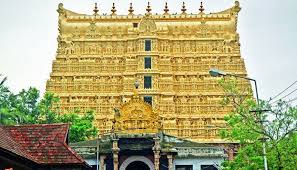
Thiruvananthapuram, Aug 16: A report submitted to the Supreme Court shows that 769 gold pots, valued approximately at Rs 186 crore, are missing from Sree Padmanabhaswamy temple in Thiruvananthapuram, Kerala.

A report submitted by former Comptroller and Auditor General of India Vinod Rai said the disappearance of the gold pots weighing 776 kg from the vast treasures found in the vaults of the Kerala temple needed a “detailed probe”, reported The Hindu.

The apex court had asked Rai in October 2015 to submit the audit report.

A bench led by Chief Justice of India TS Thakur will shortly hear Rai.

 As per the report, gold worth Rs 186 crore in the form of 769 gold pots is not traceable. It added that 30 percent of the gold sent for melting and purification was lost.

“Gold worth Rs 2.50 crore was lost because of change in ratio adopted for purification. Moreover, the residual quantity of gold was not recovered from the contractor which lead to a loss of Rs 59 lakhs,” The New Indian Express quoted sources as saying.

“There was a lack of transparency in Kanikka counting. Gold and silver worth Rs 14.18 lakh had not been entered in the Nadavarav register, which is illegal,” as per the report.

“Silver bar with the value of Rs 14 lakh was found to be missing,” the report added.

Rai has suggested changes in the temple's security arrangements. “Priceless items in the temple should be housed in a modern museum and security installments need to be altered a bit.”

He has also suggested the appointment of a new committee led by a retired All India Service Officer.

Comments

Satyameva jayate
 - 
Tuesday, 16 Aug 2016

That is why they don't allow anyone to interfere into this temple's assets....even when govt tried...all looters.....take it out and distribute to the poor.....

Ahmed K. C.
 - 
Tuesday, 16 Aug 2016

When god allowed them to take it away, it is for them to enjoy that gold, god is not in need of gold anyway.

PK
 - 
Tuesday, 16 Aug 2016

What is the purpose of keeping large amount of Gold inside the temple... Y cant it be used in the society and to the poor people of that area?
God doesnt want Gold but he like acts of charity. So give the Gold to the poor rather than keeping in the locker. use it for the welfare of the society... It would helpful in the society ...

Karthik
 - 
Tuesday, 16 Aug 2016

god give them peace of mind,

Mohan
 - 
Tuesday, 16 Aug 2016

ohh god no crime here. robber looted prasada.

pran
 - 
Tuesday, 16 Aug 2016

not only this all about 90% of the wealth already looted this is looting of remaining 10% simply this temple authority fooling people to make money,. but people will never understand.

Add new comment

  • Coastaldigest.com reserves the right to delete or block any comments.
  • Coastaldigset.com is not responsible for its readers’ comments.
  • Comments that are abusive, incendiary or irrelevant are strictly prohibited.
  • Please use a genuine email ID and provide your name to avoid reject.
coastaldigest.com news network
August 4,2020

Mangaluru, Aug 4: The Karnataka Beary Sahitya Academy has announced the names of the winners of its annual honorary awards (Gaurava Prashasti and Gaurava Puraskara) for the years 2019 and 2020.

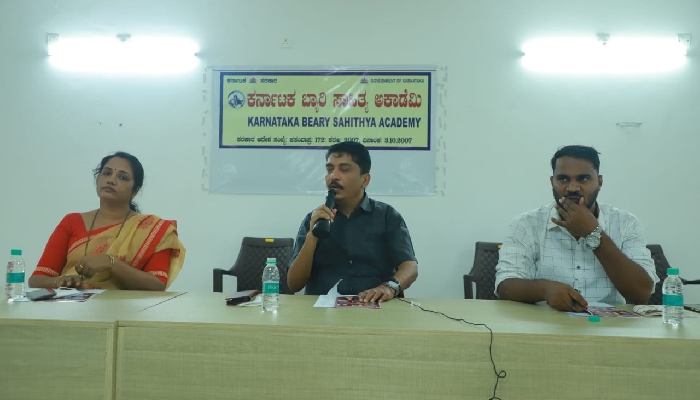
Rahim Uchil, the president of the Academy announced the names at a press conference in the city today. Beary Academy registrar Poornima and member Shamsheer Budoli were also present in the press meet. 

Gaurava Prasasthi-2020 winners are: Basheer Ahmed Kinya (Beary literature), Veena Mangaluru (Beary cinema, drama and art) and Siddique Manjeshwara (Beary organisation and social service) 

Gaurava Puraskara-2020 winners are: Dr Mohammed Ismail (medicine), T A Mohammed Asif (education), Iliyas Mangaluru (social service), Abdul Rasheed aka Rash Beary (Beary organisation) and Safwan Shah Bahrain (young talent). 

Gaurava Prashasti-2019 winners are: Abdul Rehman Kutthethur (Beary literature), Ismail Tannirbhavi (Beary art) and M Ahmed Bava Moidin (Beary organisation and social service).

Gaurava Puraskara-2019 winners are: Abdul Razzak Ananthady (Beary education), T S Hussain (Beary literature), Abdul Majeed Suralpady (General), Asif Karnad (social service) and Ali Kunhi Paare (Beary organisation). 

The Academy’s "Gaurava Prashasti consists of Rs 50,000 cash prize, shawl, garland and citation, while "Gaurava Puraskara" consists of Rs 10,000 cash prize, shawl, garland and citation.

Mr Uchil said that the awards will be conferred in a formal function after discussing the dates with chief minister once the covid-19 situation comes under control. Even though the winners for the year 2018 were announced, they weren’t conferred on the achievers. Hence those awards also will be conferred in the same ceremony, he said.

About the winners:

Basheer Ahmed Kinya: He has been involved with the Beary music sector since the last 21 years in the form of singer, and poet. He has provided lyrics for over 150 Beary audio cassettes and also sang them. His first audio cassette, Maskattoru Kallas' had created a record by getting sold out within four to five days. He has also created several non-stop cassettes and Duf songs. 
 
Veena Mangaluru: She has acted in the first Beary cinema. She has acted in over a thousand plays in different languages. 'Mami Marmolu', Kurfat Katte/Amadakaro Chiri, and Shamimarabal are some of the plays she has acted in. 
 
Siddique Manjeshwar: A social worker and activist. Through social media, he led a blood donation campaign and thereby helped thousands of people.  There are over 10,000 members in his 54 WhatsApp groups who are ready for blood donation. His ‘Blood Donate Mangaluru’ drive has been able to collect over 26,000 units of blood and conducting over 250 blood donation camps so far. He was honoured with a special award of the chief minister of Kerala. 

Dr Muhammed Ismail: Dr Muhammed Ismail completed his medical education in 1989 and has been serving different hospitals since the last 30 years being a highly respected doctor. He also is an honorary medical officer of the Wenlock Hospital Mangaluru. He has served as an office-bearer of Indian Medical Association, Karnataka Medico-legal Society etc.
 
T A Mohammed Asif: He has been providing education to over 360 students from LKG to the eighth standard through Adarsh Group of educational institutions. He is also active in the social sector and has distributed school bags and books to poor students. During the lockdown, he distributed free food items worth about Rs 10 lac.
 
Ilyas Mangaluru: He had fought against the menace of dowry. He has got over 500 girls married through an organization, 'Dowry Free Nikah'. He has also created an app, Free Nikah, which helps boys and girls to find suitable matches. 
 
Rash Beary: Abdul Rasheed aka Rash Beary is known for using social media to help the people. By establishing 'Beary Nikah Helpline' he has helped several poor Beary women to get married. He also provides free counselling services to couples from all religions. With the help of donors, he keeps distributing clothes and food among needy.

Safwan Shah Bahrain: A well-known Beary singer, he has sung several songs in past one decade. He has been organizing various Beary programmes in Bahrain for past eight years. He had undertaken the adventure of jumping from the air from a height of 13,000 feet with the Indian flag in hand. 

Abdul Razack Ananantady: A PU college lecturer by profession, he has conducted over 500 pre-exam training camps and functioned as a resource person in leadership and personality development training. He has been conducting training and lectures for students and their parents on learning nutrition, and life values. His addresses on education and cultural aspects have been aired by Akashvani.

Abdul Rahiman Kuthethur: He was the co-editor or Beary Kannada - English dictionary and editor of the first-ever Beary grammar book released in 2019. He also is a member of the experts' committee on the Beary language textbook. He has translated Panchatantra stories, Sarvajna Vachanas etc into Beary language and published collection of poems.

Ismail Tannirbavi: He is known as a Beary theatre personality, who started acting at the age of 17. He has acted in over 300 plays including Beary, Tulu and Kannada. He has been in the theatre since the last 55 year and his plays have been presented in countries like Muscat and Kuwait. 
 
Ahmed Bawa Moidin: A social worker and member of the Beary Study chair. He also is the life member of Beary Sahitya Parishad and member of Human Ethical Committee of Mangalore University. He was the founder vice president of Mangalore Merchant Associate and member of divisional railway users consultative/committee. He has donated blood 53 times. 

 T S Hussain: Hussain is a veteran Beary writer who has defied blindness. He faced many difficulties and challenges in life and also met with an accident in 2008. Because of this accident, his eyesight had become very weak. He continued with the creation of works with determination in spite of failing eyesight with help from friends. He has authored two works and was appreciated for their content. Thereafter, he authored two more works. In 2018, he wrote another work.
 
Abdul Majeed Suralpady: A social worker and activist, he has served in various organizations. He served as the president of Suralpady government higher primary school for 21 years. He also served as the president of the educational committee of South Karnataka Sunni Centre's Al Ihsan English Medium School and got government recognition for the school. He set up PU college for girls and laid two-way road at Kaikamba besides bus shelter, toilet, drinking water system and building for police check post.
 
Apatbandhava Asif Karnad: He has been serving as an ambulance driver for the last ten years. He readily carries dead bodies and performs funeral. and done so for over a thousand bodies so far. Whenever he comes across mentally unsound people on the road, he gives them a wash and admits them to Ashrams. He has also been maintaining Maimoon Foundation Apatbhandhava Sycho Rehabilitation Centre.
 
Alikunhi Pare: He is the founder president of 'Melthene', a forum of Beary writers and artists. He has also served social, literary, organizational and religious sectors. He has been identified with several organizations including Mangaluru taluk Yuvajana Okkota and Dakshina Kannada and Udupi Muslim Central Committee.

Comments

Add new comment

  • Coastaldigest.com reserves the right to delete or block any comments.
  • Coastaldigset.com is not responsible for its readers’ comments.
  • Comments that are abusive, incendiary or irrelevant are strictly prohibited.
  • Please use a genuine email ID and provide your name to avoid reject.
News Network
April 20,2020

Thiruvananthapuram, Apr 20: The Kerala government announced the relaxation of COVID-19 lockdown restrictions in two zones, allowing among other private vehicles movement in an odd-even basis and dine-in services at hotels from Monday.

State police chief Loknath Behera said the relaxations of restrictions imposed would come into effect in the Green and Orange-B zones in the state from Monday,an official release said.

Earlier, the Left government had colour-coded 14 districts of the state into four zones-- Red, Green, Orange-A and Orange-B, for containing the Covid-19 pandemic. Red zone comprises Kasaragod, Kannur, Kozhikode and Malappuram districts. In this zone, a complete lockdown will be in place until May 3 while two entry and exit points are allowed for carrying essential commodities to coronavirus hotspots. Orange-A zone comprises Pathanamthitta, Ernakulam and Kollam while orange-B zone comprises Alappuzha, Thiruvananthapuram, Palakkad, Thrissur and Wayanad.

The lockdown will be in effect until April 24 in this zone and then partial relaxation will be allowed. Kottayam and Idukki come under the Green zone, in which lockdown will be in effect until April 20 and then regulations will be eased. However, large gatherings, the functioning of educational institutions, religious functions, celebrations and travel outside the district will not be allowed in this zone.

Not more than 20 people are allowed to take part in weddings and funerals, according to government instructions. On the functioning of courts, the release said, "Courts in the Green and Orange-B zones will re-open on April 21 while that in Orange-A zone will start functioning from April 25. The courts will function with 33 per cent of staff. The cases will be heard via video conferencing."

Meanwhile, the Bankers' Council has announced that banks will function as per the usual timings from Monday in the state except four districts falling under the Red zone. The Transport Ministry has clarifiedthat public transport won't be allowed to ply in the state during the lockdown period. "Inter-district travel will not be allowed despite relaxations in the state, but essential services such as medical services, food supplies will not be stopped. However, in case of emergency, inter-district travel will be allowed with an affidavit prepared by the traveller," Behra said in a release.

On the implementation of the odd-even scheme for private vehicles, the police said, "Vehicles with odd numbers will be permitted on Mondays, Wednesdays and Fridays. Those with even numbers will be allowed on Tuesdays, Thursdays and Saturdays." Woman drivers travelling solo or with dependants are also exempted from it, police said. On Sundays, only those working for essential services are allowed to use their vehicles.

All education institutions, cinema halls, shopping malls, public parks, bars, places of worship will remain closed in all zones of the state. The health department and local administration, which carry out sanitation work before the monsoon, are allowed to operate. Four-wheelers are permitted to carry two passengers besides the driver and in case of a two-wheeler, only the driver will be allowed while the pillion rider is allowed in case the person is a family member.

On Dine-in services, a government order said it is allowed at hotels and restaurants until 7 PM in Green and Orange-B zone from Monday and in Orange-A zone from April 24. However, take-away counters can function until 8 PM, it said. Kerala on Sunday reported two positive cases of Covid-19 in the state taking the total number of affected to 401 while the health department announced that 13 people were cured.

Comments

Add new comment

  • Coastaldigest.com reserves the right to delete or block any comments.
  • Coastaldigset.com is not responsible for its readers’ comments.
  • Comments that are abusive, incendiary or irrelevant are strictly prohibited.
  • Please use a genuine email ID and provide your name to avoid reject.
News Network
February 28,2020

Bengaluru, Feb 28: Historian S. Shettar, 85, breathed his last early on February 28 in Bengaluru. He was suffering from respiratory problems and was hospitalised for over a week.

Shettar was known for his multi-disciplinary work, encompassing linguistics, epigraphy, anthropology, the study of religions and art history. He had extensively worked on the Jain practice of ritual death in Karnataka and Asoka edicts. He had studied and compiled early edicts in Kannada and worked extensively on the growth of Kannada language down the ages.

Born in 1935 at Hampasagara, Ballari district, he went on to study at Cambridge University and started his career as a Professor of History at Karnatak University, Dharwad, his alma mater. He later headed the National Museum Institute of the History of Art, Conservation and Museology in 1978 and Indian Council for Historical Research in 1996. He was also a visiting professor at the National Institute of Advanced Studies, Bengaluru.

He was a bilingual historian who wrote in English for most of his career, but started writing in Kannada in later years. In the last two decades, he developed a keen interest in linguistics and wrote multiple books on classical Kannada and Prakrit. His 2007 book “Shangam Tamilagam” is considered a seminal work in the study of the early period of Dravidian languages. It won him Bhasha Samman from Central Sahitya Akademi. He later wrote two works on Halegannada, classical Kannada. His most recent work was “Prakrita Jagadvalaya” in 2018.

Comments

Add new comment

  • Coastaldigest.com reserves the right to delete or block any comments.
  • Coastaldigset.com is not responsible for its readers’ comments.
  • Comments that are abusive, incendiary or irrelevant are strictly prohibited.
  • Please use a genuine email ID and provide your name to avoid reject.