AAP to expand network in Saudi Arabia, other Gulf countries

February 29, 2016

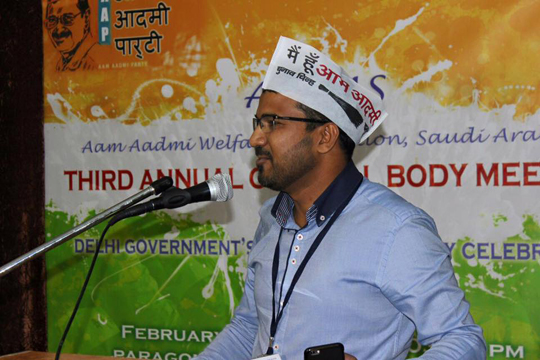
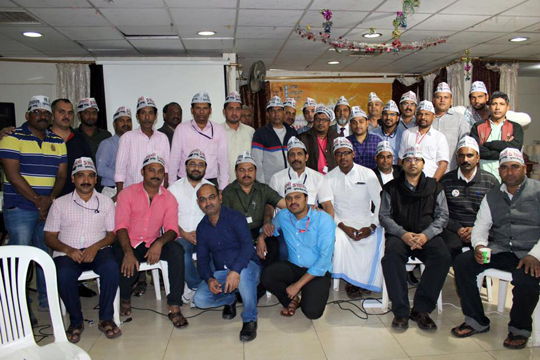
Riyadh, Feb 29: Indians here held a function to observe Aam Aadmi Party's (AAP) completion of one year in office in Riyadh.
aap 3

The event marked AAP's historic decision to expand its network globally including in the Gulf countries, where nearly seven million Indian expats are currently working.

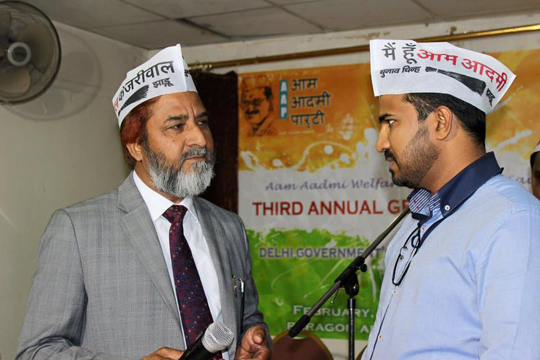
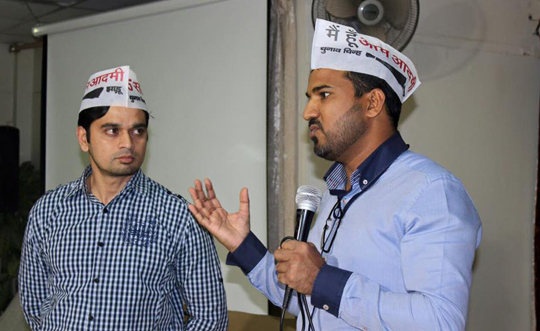
Speaking on the occasion, a legislator of Delhi's ruling party and the party's co-convener of its Overseas Chapter, Adarsh Shastri, said the party provides an alternative system of good governance.

“India's deep rooted corruption and dynastic political system will be transformed to non-corrupt, development- and issue-based governance by AAP,” he said and hailed Arvind Kejriwal's leadership.

The event, attended by a large number of expatriates, also provided an opportunity to take stock of the situation of India, which has been marred by several controversies and movements in recent times.

Shastri said the mood of the country toward the political system has changed after path-breaking initiatives taken by the AAP government after it came to power in Delhi in early 2014.
Social infrastructure like education, health, social welfare have been given top priority while free water, electricity, abolition of VIP status, completion of public projects were ensured to be completed within stipulated time.

Besides, citizens participation in administration through mohalla sabha, passing the janalokpaal bill, taking strict action against corrupt officials have restored people's confidence in government and party, he said.

Kerala State Convener C. R. Neelakandan also spoke on the occasion, which was presided over by Basheer Aramboor. Mansoor welcomed the audience while Abdul Azees proposed the vote of thanks. Shameem conducted the program.

During the interactive session that followed, a number of questions about AAP including poor attention given to senior citizens in government hospitals, poor health infrastructure, corruption, unauthorized constructions, adulteration in food items, turning Yamuna shores into spots for tourist attraction, participation of public in decision-making process and other issues were discussed. AAP has developed a strong support base in India as well as among the Indian expatriates community across the globe. Party supporters and well-wishers from the different parts of the country participated in the event.
aap 1

aap 2

aap 5

Comments

Basheer Aramboor
 - 
Monday, 29 Feb 2016

Thank you for the wider coverage of the event and positive comments. AAP is expanding its support base drastically, common man looking for progressive political change. Hope AAP will deliver the peoples expectations n with their support.

- Basheer Aramboor, Convener AAP Riyadh

Hasan unun
 - 
Monday, 29 Feb 2016

Supply of free water, electrify, wifi, if it is true it will boost their image in other states also. Same way reduce house tax also. This is because it is being increase consistently. Sami irritations like paid Parking in cities if removed will make the citizens have a breath of relief. Politicians hardly understand this. Since Arvind may grasp the seriousness of the points raised, who will inform him or bring this to his attention. These are issues people are suffering worth attending to if u really care for the aam aadmi instead of tall claims. Difference will declare itself in th next general election .

Zubair Nandar Yanbu
 - 
Monday, 29 Feb 2016

Insha allah if allah wills we will open one AAP branch in Yanbu And Jubail soon.

Add new comment

  • Coastaldigest.com reserves the right to delete or block any comments.
  • Coastaldigset.com is not responsible for its readers’ comments.
  • Comments that are abusive, incendiary or irrelevant are strictly prohibited.
  • Please use a genuine email ID and provide your name to avoid reject.
Agencies
May 8,2020

Washington D.C., May 8: The prime time for brain development in a child's life is the first year, where the infant spends most of the time asleep. It is the time when neural connections form and sensory memories are encoded.

However, when sleep is disrupted, as occurs more often among children with autism, brain development may be affected, too.

New research led by the University of Washington finds that sleep problems in a baby's first 12 months may not only precede an autism diagnosis but also may be associated with altered growth trajectory in a key part of the brain, the hippocampus.

The study, which was published in the American Journal of Psychiatry, researchers report that in a sample of more than 400 taken of 6- to 12-month-old infants, those who were later diagnosed with autism were more likely to have had difficulty falling asleep.

It also states that this sleep difficulty was associated with altered growth trajectories in the hippocampus.

"The hippocampus is critical for learning and memory, and changes in the size of the hippocampus have been associated with poor sleep in adults and older children.

As many as 80 per cent of the children with autism spectrum disorder have sleep problems," said Annette Estes, director of the UW Autism Center and senior author of the study.

"In our clinical experience, parents have a lot of concerns about their children's sleep, and in our work on early autism intervention, we observed that sleep problems were holding children and families back," added Estes, who is also a UW professor of speech and hearing sciences.

"It could be that altered sleep is part-and-parcel of autism for some children. One clue is that behavioural interventions to improve sleep don't work for all children with autism, even when their parents are doing everything just right. This suggests that there may be a biological component to sleep problems for some children with autism," said Estes.

To consider links among sleep, brain development, and autism, researchers at the IBIS Network looked at MRI scans of 432 infants, surveyed parents about sleep patterns, and measured cognitive functioning using a standardized assessment.

At the outset of the study, infants were classified according to their risk for developing autism: Those who were at higher risk of developing autism -- about two-thirds of the study sample -- had an older sibling who had already been diagnosed.

Infant siblings of children with autism have a 20 per cent chance of developing autism spectrum disorder -- a much higher risk than children in the general population.

In the current study, 127 of the 432 infants were identified as "low risk" at the time the MRI scans were taken because they had no family history of autism.

They later evaluated all the participants at 24 months of age to determine whether they had developed autism. Of the roughly 300 children originally considered "high familial risk," 71 were diagnosed with autism spectrum disorder at that age.

Problems with sleep were more common among the infants later diagnosed with an autism spectrum disorder, as were larger hippocampi. No other subcortical brain structures were affected, including the amygdala, which is responsible for certain emotions and aspects of memory, or the thalamus, a signal transmitter from the spinal cord to the cerebral cortex.

The authors note that while parents reported more sleep difficulties among infants who developed autism compared to those who did not, the differences were very subtle and only observed when looking at group averages across hundreds of infants.

Sleep patterns in the first years of life change rapidly as infants transition from sleeping around the clock to a more adult-like sleep/wake cycle. Until further research is completed, Estes said, it is not possible to interpret challenges with sleep as an early sign of increased risk for autism.

Comments

Add new comment

  • Coastaldigest.com reserves the right to delete or block any comments.
  • Coastaldigset.com is not responsible for its readers’ comments.
  • Comments that are abusive, incendiary or irrelevant are strictly prohibited.
  • Please use a genuine email ID and provide your name to avoid reject.
News Network
June 11,2020

Mangaluru, Jun 11: City police on Thursday filed a 700-page chargesheet in connection with the arrest of Aditya Rao, 36, accused of planting an IED at Mangaluru International Airport on January 20.

The chargesheet said the bag placed near MIA entrance had a real bomb, as per the FSL report. The IED in the tin box was made of sulphur, ammonium nitrate, potassium chlorate and charcoal.

Rao, an engineer, who learnt bomb-making through online videos, had also placed a timer along with it and sharp objects such as nails and metals. However, he had not fixed wires to trigger a blast. “His intention was not to cause a blast but only to create a scare,” said sources.

The bomb was made in less than two weeks. However, it had taken Rao several days to procure raw materials. Police had completed the chargesheet process in April.

Comments

Add new comment

  • Coastaldigest.com reserves the right to delete or block any comments.
  • Coastaldigset.com is not responsible for its readers’ comments.
  • Comments that are abusive, incendiary or irrelevant are strictly prohibited.
  • Please use a genuine email ID and provide your name to avoid reject.
coastaldigest.com web desk
July 25,2020

Chennai, July 25: A widow living alone in her apartment in Chennai city suburbs has filed a police complaint against ABVP national president Dr Subbiah Shanmugam, accusing him of harassment, including urinating and throwing used surgical masks at her doorstep.

Shockingly, no action has been taken so far by the police, even though the complaint against Dr Shanmugam, who is in government service, was filed on July 11 at the Adambakkam Police Station here by the widow’s relative Balaji Vijayaraghavan. 

Dr Shanmugam and the 62-year-old widow were living in the same apartment complex in Nanganallur and an argument broke between them over a parking slot. “He wanted to use our parking lot. We agreed but demanded a nominal charge for using it. He was outraged by our demand and even broke our signboard at the parking lot,” Vijayaraghavan wrote in his complaint.

He also alleged that Dr Shanmugam began harassing her by throwing “pieces of chicken” outside her apartment despite knowing she is a vegetarian. Vijayaraghavan also alleged in his two-page written complaint that the ABVP National President had urinated outside the woman’s apartment gate and had been throwing garbage and used masks at her gate.

The 62-year-old woman has been living alone in her apartment for the last year following her husband’s death. In his complaint, Vijayaraghavan also said the family was “concerned about her safety”, while asking police to take action against Dr Shanmugam, who he says, “has a bad track record in maintaining rapport with neighbours.”

CCTV footage corroborates with the allegations of urinating outside the residence of the widow. However, the ABVP claimed the incident as a “malicious and derogatory propaganda” by the Congress’ student wing of NSUI.

Also Read: Finally FIR registered against ABVP national president for allegedly harassing widow

Comments

Add new comment

  • Coastaldigest.com reserves the right to delete or block any comments.
  • Coastaldigset.com is not responsible for its readers’ comments.
  • Comments that are abusive, incendiary or irrelevant are strictly prohibited.
  • Please use a genuine email ID and provide your name to avoid reject.