Abu Dhabi: BWF’s iftar meet attracts hundreds of NRIs from across UAE

CD Network
June 19, 2017

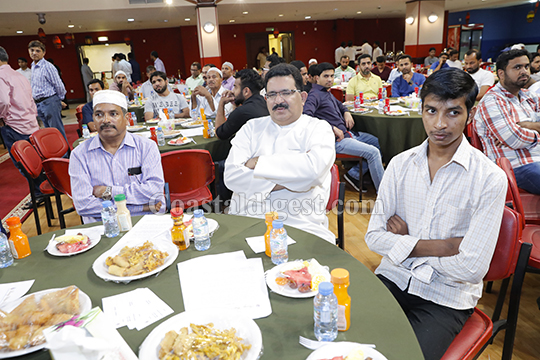
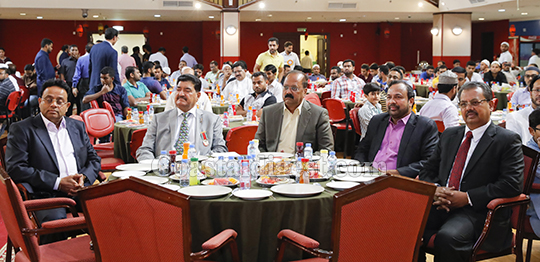
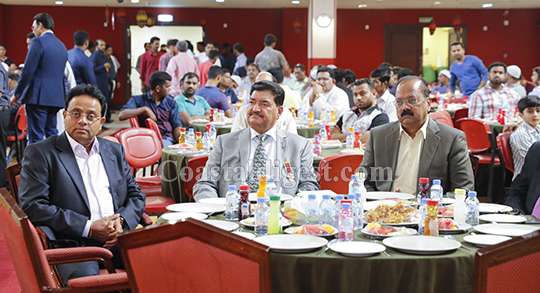
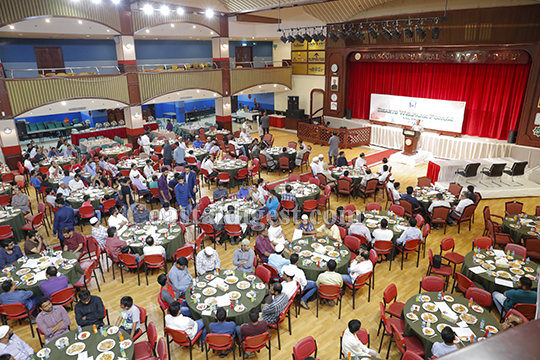
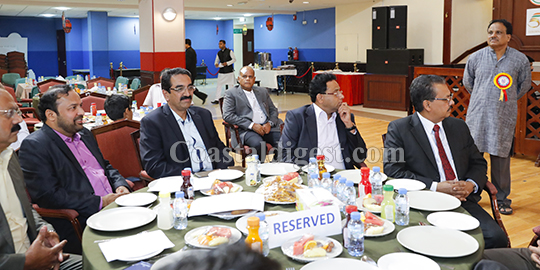
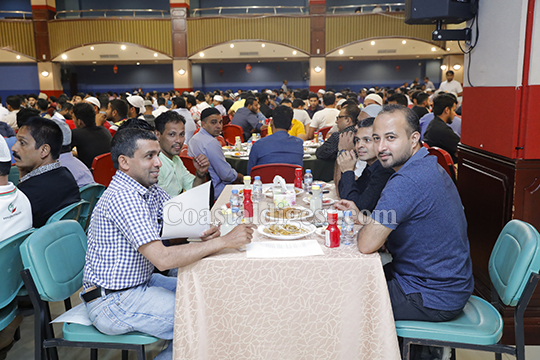
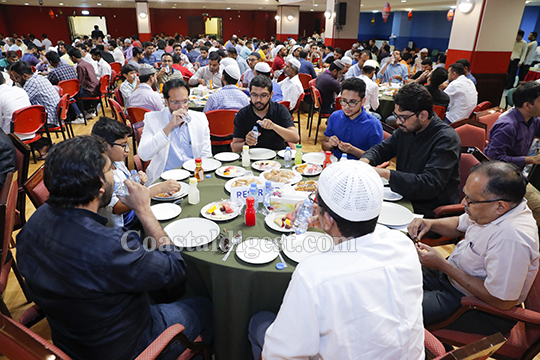
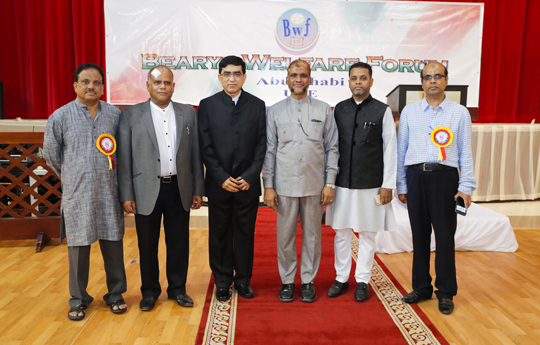
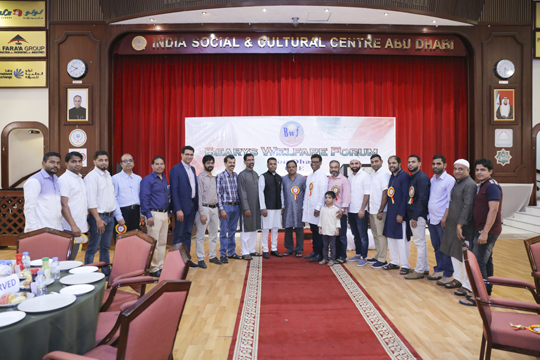
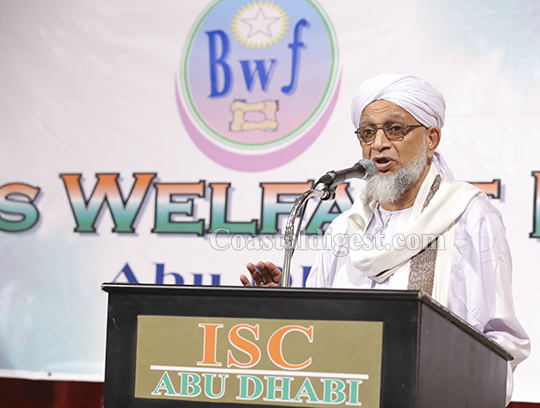
Abu Dhabi: The Bearys Welfare Forum (BWF) - Abu Dhbai, an organization of NRIs in the UAE known for its philanthropic and charitable works, recently organized an ‘Iftar’ get-together at the India Social and Cultural Centre, wherein nearly 700 NRIs from across Abu Dhabi, Dubai, Sharjah and Fujairah took part.

iftarr 1

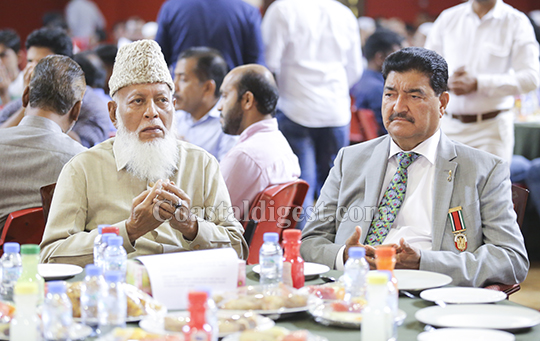
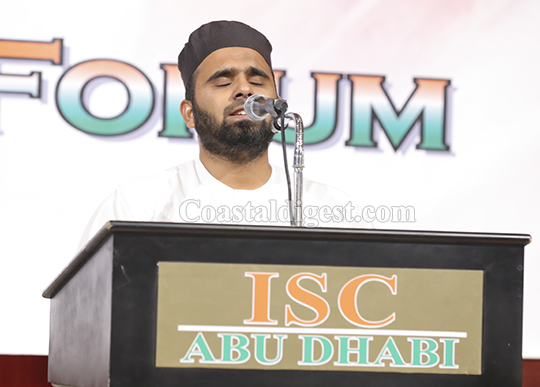
Abdul Salam Uppinangadi, delivered a lecture on Ramadan. Shaikh Twaka Ahmed Musliar Al Azhari, Khazi of Dakshina Kannada performed dua.

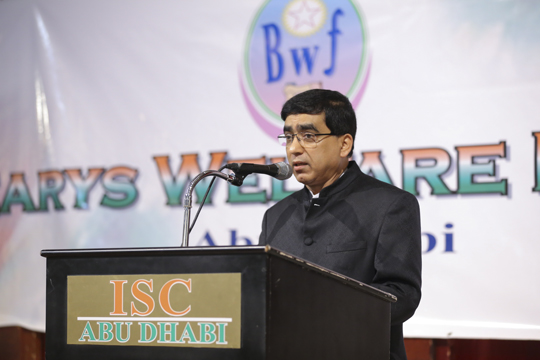
After iftar and magrib prayers, a formal stage programme was held. President Mohammed Ali Uchil, president of BWF, after welcoming the guests put forward the charitable causes initiated by BWF targeting Mangaluru, and appealed for generous help from members to conduct these successfully.

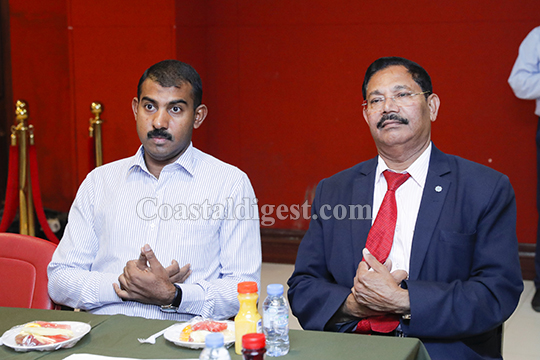
He thanked all those who donated for various causes which helped many under-privileged people to live a dignified life in the society. He expressed his gratitude to the Chief Guest of the day- Twaka Ahmed Musliar Al Azhari, Khazi of Dakshina Kannada, KS Mohammed Masood, President, Muslim Central Committee, DK and Udupi, Padmashree Dr B R Shetty, Chairman & MD, NMC Group, Sudheer Shetty President, UAE Exchange Global operations, Dr Shanawaj of Universal Hospital, Fakruddin Bhat, Adia and other donors for their constant support from the beginning of BWF.

He thanked BWF-executive committee members for their hard work, dedication and effort to organize this function and bring in to its complete success and spirit. “It’s an incredible achievement for BWF, which managed to accomplish so many tasks to its utmost goal set, and God willing all of its project will be a complete success.”

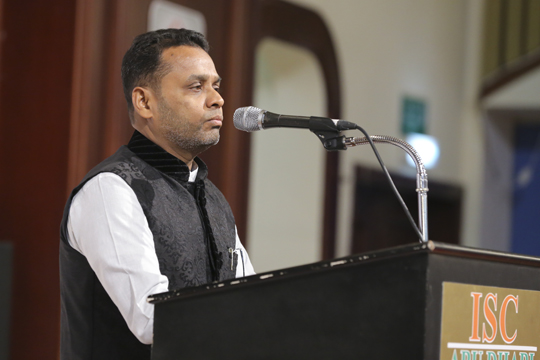
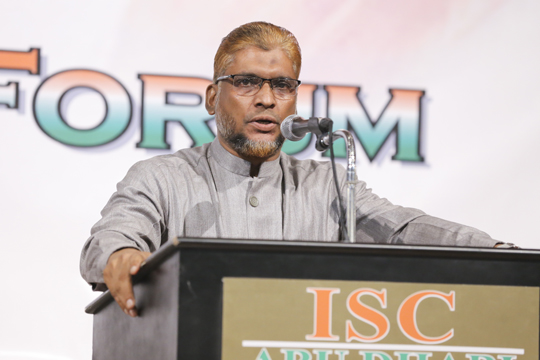
Abdulla Madumoole, G.Secretary, BWF, briefed about the activities of the BWF such as marriages of 100 poor girls, and appealed for generous help from members to conduct these successfully. He highlighted BWF projects like distribution of wheel chairs, and empathized on the BWF pilot project – Shouchalaya, a unique project, through which BWF constructed 135 toilets in various parts of twin districts. BWF plan to construct another 100 toilets for the poor in the society irrespective of caste and religion in the various parts of the twin districts.

He highlighted BWF projects like distribution of wheel chairs, and empathized on the BWF pilot project – Shouchalaya, a unique project to construct 100 toilets for the poor in the society irrespective of caste and religion in the various parts of the twin districts. He requested donors to support our forth coming office project in Mangalore to coordinate the BWF charity works.

Dr B R Shetty conveyed his Ramadan wishes to all and praised BWF for arranging the huge gathering of community members and for its charitable work. He addressed the gathering with highly advisable words and declared his full support for all BWF Charity projects.

Mohammed Masood also lauded BWF for the community service and selfless work towards the common people and under-privileged.

Imran Ahmed, co-coordinator of BWF delivered the vote of thanks. The programme was coordinated by Mohamed Siddik (Kaup- Treasurer BWF), and  Siddik Uchil along with Abdul Majeed A.G.  Mohd Kallapu Abdul Rauf,Vice President,Hamza Khader and Hameeed Gurupur-G.Secretary,  Basheer Bajpe along with ,Mujeeb Uchil, Abdul Salim and Nazeer Ubar took care of the floor management and managed the event with a professional touch. Nawaz Uchil , Haneef Ullal,  Mohideen Handel, Majeed Athoor, Irfan Ahmed, Rasheed Bijai, Rasheed V.K, Altaf takreer, Basheer Uchil,Abbobakkar Ubar, Imran along with other BWF youth volunteers  were instrumental in the success of program.

Rafeeq Krishnapur, vice president along with Jaleel Gurpur, compered the programme. The program started with the recitation of the holy Quran by Aitham Hameed and translation by Jaleel Gurpur. Rafeeq Krishnapur, Vice President along with Jaleel Gurpur, compered the programme. The program started with the recitation of the holy Quran by Aitham Hameed and translation by Jaleel Gurpur.

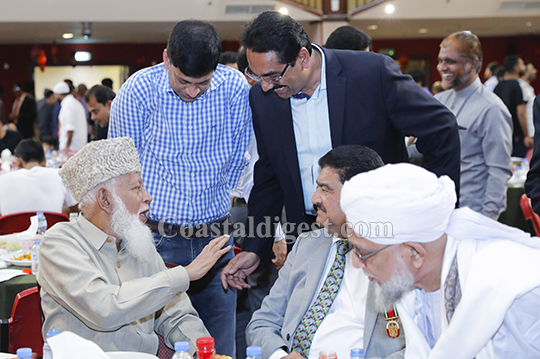
Mohammed Asif, Mohammed Akram, Altaf, Suhail Kudroli, Althaf Ahmed, Younus, Saleem and Nayeem baiji of Sahebaan Abu Dhabi, Sarvothama Shetty, Jayaram Alva and Sundar Shetty of Abu Dhabi Karnataka Sangha, Moidin Kutty Kakkinge, KIC, Nasir of KNRI Forum, Basheer B.M., KKMA, Altaf Farangipet, Badruddin Henthar and other office Bearers of Darulnoor- M.E.Moolur, Dr.Kaup Mohammed and Latheef Mulki of BCF, Mohammed Hakim and Kabeer of KCF, Abdul Khader and Hanif Arimoole of KIC were present among others.

bwf 2

iftarr 13

iftarr 5

iftarr 7

iftarr 8

iftarr 9

iftarr 10

iftarr 11

iftarr 12

iftarr 14

iftarr 15

iftarr 16

iftarr 17

iftarr 18

iftarr 19

iftarr 20

bcf

bwf 1

iftarr 6

iftarr 3

iftarr 4

iftarr 2

bwf 1 copy

bwf 2 copy

bwf 3

bwf 4

Comments

Asif Ahmed
 - 
Monday, 19 Jun 2017

Masha Allah,great function,great people.team BWF-your concern for
community is highly laudable.

Shaan Mohamed
 - 
Monday, 19 Jun 2017

amazing Iftar,keep it up

kumar
 - 
Monday, 19 Jun 2017

Nice work by BWF. May God bless you. Everyone should support BWF for their noble work.

Kareem Adgas
 - 
Monday, 19 Jun 2017

congrats beary forum,nice and super Iftar

Muniyandi
 - 
Monday, 19 Jun 2017

Being a Hindu ,i enjoyed this Iftar very much.Their hospitality,arrangements ,food all are super.

Brotherly atmosphere

H. K
 - 
Monday, 19 Jun 2017

Why aren't there any women participating in the programme?

Salam b
 - 
Tuesday, 20 Jun 2017

Nice program, it is always a pleasure to attend BWF Iftar
Their charity projects are amazing,their honesty is commendable
Congrats team of Beary Forum
Proud to be a Beary

Ifam K.
 - 
Tuesday, 20 Jun 2017

Masha Allah,thanks BWF guys for arranging a beautiful Iftar evening

Kudos!

Hameed.A.K.
 - 
Wednesday, 21 Jun 2017

Masha Allah, congrats ,get going guys.May Allah bless you.
Nice to see people from all faiths and all walks of life
( BADAVA & BALLIDA)

Ali Kutty
 - 
Wednesday, 21 Jun 2017

Well prepared,super Iftar. May God reward you

Add new comment

  • Coastaldigest.com reserves the right to delete or block any comments.
  • Coastaldigset.com is not responsible for its readers’ comments.
  • Comments that are abusive, incendiary or irrelevant are strictly prohibited.
  • Please use a genuine email ID and provide your name to avoid reject.
News Network
June 11,2020

Bengaluru, Jun 11: A love triangle took a violent turn when a final-year engineering student was assaulted by both her current and former lovers. She's now battling for her life in the ICU, police said. 

For the 22-year-old woman, who lives in Sidedahalli, it was a case of fast-changing relationships. She broke up with a fellow student Babith, 21, a few months ago after having dated him for four years. Four months ago, she started seeing another collegemate named Rahul, 22, and everything seemed fine. 

On June 7, she went to Rahul's house, ostensibly for his birthday party, after informing her parents. Babith got wind of it and barged into Rahul's house. The trio got into an argument, and Rahul abused and assaulted her. 

The woman decided to leave him, and went with Babith to his house in Chikkabanavara, North Bengaluru. But things didn't end there. Babith picked an argument with her. Things became so bad that he attacked her with a helmet. 

He then panicked and called her parents, asking them to take her home. When her parents arrived, they found only Babith, his mother and sister in the house. Babith's family directed them to a bedroom where she was lying motionless, with her face being badly wounded. 

When her parents demanded to know what had happened, nobody responded. They took her to a hospital where her condition remains serious. A while later, Babith came to the hospital and gave her parents the key of her scooter. He told them what had happened and allegedly warned them against filing a police complaint. 

Her mother, however, filed a complaint with the jurisdictional Soladevanahalli police. According to her, Babith had fought with her daughter at their house for not taking his phone calls six months ago. 

Shashikumar N, Deputy Commissioner of Police (North), said both the men had been arrested and that further investigations are underway. 

Comments

Add new comment

  • Coastaldigest.com reserves the right to delete or block any comments.
  • Coastaldigset.com is not responsible for its readers’ comments.
  • Comments that are abusive, incendiary or irrelevant are strictly prohibited.
  • Please use a genuine email ID and provide your name to avoid reject.
News Network
April 20,2020

Hubballi, Apr 20: Dejected over failure to get alcohol for almost one month, a forty-five year old man and his sister died after consuming hand sanitizer in Kalghatgi taluk of Dharwad district on Sunday.

The deceased persons, identified as Basavaraj Venkappa Kuruvinkoppa and Jambavva Kattimani (50) of little hamlet Gambyapur, died at Karnataka Institute of Medical Sciences (KIMS).

The wife of the deceased person has lodged a complaint at Kalghatgi police station stating that her husband had been addicted to alcohol since the last 10-12 years.

Basavaraj and his sister have reportedly consumed hand sanitizer several times since the last 2-3 days, severely deteriorating their health as they felt it is replacement for liquor and has high levels of spirit content.

They were admitted to KIMS only by Sunday early morning after complaining of serious pain in the stomach. The KIMS director Dr Ramalingappa Anthartani said that the deceased appears to have consumed too much sanitizer and the doctors couldn't save their life as they approached the hospital very late.

He also claimed that he is awaiting the postmortem report to know how much quantity of hand sanitizer the deceased had consumed.

"Condition of the patients was very critical when they were admitted to KIMS hospital. It seems that they had drunk too much hand sanitizer for non-availability of liquor. Consumption of hand sanitizer could prove fatal as it has high chemical contents" KIMS director Dr Ramalingappa Anthartani said

The Karnataka government has prohibited the sale of liquor ever since the Centre declared lockdown to control the spread of Coronavirus. This has prompted the alcohol addicts to buy liquor by paying hefty prices in the black market.

But, many poor people in villages have started consuming cheaper hooch and this trade has recently flourished in the rural areas.

Hooch trade has also prompted officials of the excise department to conduct raids in several villages of North Karnataka region. The many theft cases of liquor shops are reported in Karnataka as drunkards have become desperate to get alcohol.

The Karnataka government was planning to allow the sale of liquor after the end of the first phase of lockdown. But, the rising cases of Corona positive cases has prompted it to extend the ban on liquor sale until May 3.

Comments

Add new comment

  • Coastaldigest.com reserves the right to delete or block any comments.
  • Coastaldigset.com is not responsible for its readers’ comments.
  • Comments that are abusive, incendiary or irrelevant are strictly prohibited.
  • Please use a genuine email ID and provide your name to avoid reject.
News Network
July 28,2020

Hounde, Jul 28: Coronavirus and its restrictions are pushing already hungry communities over the edge, killing an estimated 10,000 more young children a month as meager farms are cut off from markets and villages are isolated from food and medical aid, the United Nations warned Monday.

In the call to action shared with The Associated Press ahead of publication, four UN agencies warned that growing malnutrition would have long-term consequences, transforming individual tragedies into a generational catastrophe.

Hunger is already stalking Haboue Solange Boue, an infant from Burkina Faso who lost half her former body weight of 5.5 pounds (2.5 kilograms) in just a month. Coronavirus restrictions closed the markets, and her family sold fewer vegetables. Her mother was too malnourished to nurse.

“My child,” Danssanin Lanizou whispered, choking back tears as she unwrapped a blanket to reveal her baby's protruding ribs.

More than 550,000 additional children each month are being struck by what is called wasting, according to the UN — malnutrition that manifests in spindly limbs and distended bellies. Over a year, that's up 6.7 million from last year's total of 47 million. Wasting and stunting can permanently damage children physically and mentally.

“The food security effects of the COVID crisis are going to reflect many years from now,” said Dr. Francesco Branca, the WHO head of nutrition. “There is going to be a societal effect.”

From Latin America to South Asia to sub-Saharan Africa, more poor families than ever are staring down a future without enough food.

In April, World Food Program head David Beasley warned that the coronavirus economy would cause global famines “of biblical proportions” this year. There are different stages of what is known as food insecurity; famine is officially declared when, along with other measures, 30% of the population suffers from wasting.

The World Food Program estimated in February that one Venezuelan in three was already going hungry, as inflation rendered salaries nearly worthless and forced millions to flee abroad. Then the virus arrived.

“Every day we receive a malnourished child,” said Dr. Francisco Nieto, who works in a hospital in the border state of Tachira.

In May, Nieto recalled, after two months of quarantine, 18-month-old twins arrived with bodies bloated from malnutrition. The children's mother was jobless and living with her own mother. She told the doctor she fed them only a simple drink made with boiled bananas.

“Not even a cracker? Some chicken?” he asked.

“Nothing,” the children's grandmother responded. By the time the doctor saw them, it was too late: One boy died eight days later.

The leaders of four international agencies — the World Health Organization, UNICEF, the World Food Program and the Food and Agriculture Organization — have called for at least dollar 2.4 billion immediately to address global hunger.

But even more than lack of money, restrictions on movement have prevented families from seeking treatment, said Victor Aguayo, the head of UNICEF's nutrition program.

“By having schools closed, by having primary health care services disrupted, by having nutritional programs dysfunctional, we are also creating harm,” Aguayo said. He cited as an example the near-global suspension of Vitamin A supplements, which are a crucial way to bolster developing immune systems.

In Afghanistan, movement restrictions prevent families from bringing their malnourished children to hospitals for food and aid just when they need it most. The Indira Gandhi hospital in the capital, Kabul, has seen only three or four malnourished children, said specialist Nematullah Amiri. Last year, there were 10 times as many.

Because the children don't come in, there's no way to know for certain the scale of the problem, but a recent study by Johns Hopkins University indicated an additional 13,000 Afghans younger than 5 could die.

Afghanistan is now in a red zone of hunger, with severe childhood malnutrition spiking from 690,000 in January to 780,000 — a 13% increase, according to UNICEF.

In Yemen, restrictions on movement have blocked aid distribution, along with the stalling of salaries and price hikes. The Arab world's poorest country is suffering further from a fall in remittances and a drop in funding from humanitarian agencies.

Yemen is now on the brink of famine, according to the Famine Early Warning Systems Network, which uses surveys, satellite data and weather mapping to pinpoint places most in need.

Some of the worst hunger still occurs in sub-Saharan Africa. In Sudan, 9.6 million people live from one meal to the next — a 65% increase from the same time last year.

Lockdowns across Sudanese provinces, as around the world, have dried up work and incomes for millions. With inflation hitting 136%, prices for basic goods have more than tripled.

“It has never been easy but now we are starving, eating grass, weeds, just plants from the earth,” said Ibrahim Youssef, director of the Kalma camp for internally displaced people in war-ravaged south Darfur.

Adam Haroun, an official in the Krinding camp in west Darfur, recorded nine deaths linked with malnutrition, otherwise a rare occurrence, over the past two months — five newborns and four older adults, he said.

Before the pandemic and lockdown, the Abdullah family ate three meals a day, sometimes with bread, or they'd add butter to porridge. Now they are down to just one meal of “millet porridge” — water mixed with grain. Zakaria Yehia Abdullah, a farmer now at Krinding, said the hunger is showing “in my children's faces.”

“I don't have the basics I need to survive,” said the 67-year-old, who who hasn't worked the fields since April. “That means the 10 people counting on me can't survive either.”

Comments

Add new comment

  • Coastaldigest.com reserves the right to delete or block any comments.
  • Coastaldigset.com is not responsible for its readers’ comments.
  • Comments that are abusive, incendiary or irrelevant are strictly prohibited.
  • Please use a genuine email ID and provide your name to avoid reject.