


Acche Din: Unemployment in India rising rapidly, reveals survey

October 1, 2016

New Delhi, Oct 1: Joblessness in India is running at a five-year high of 5% of the 15-plus-years work force. Over a third of working people are employed for less than a year and 68% of households are earning up to only Rs 10,000 per month, according to a new employment-unemployment (EU) survey report conducted by the Labour Bureau.
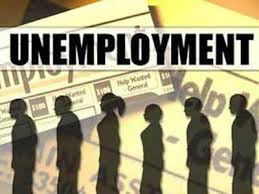
joblessOver 7.8 lakh persons in 1.6 lakh households were surveyed across the country between April and December 2015. Expectedly, urban areas continue to provide more and better paying jobs compared with the rural areas. While 82% of job seekers get year-round jobs in urban areas, just 53% of rural job seekers manage to get such security.

About 42% of workers in rural areas work for less than 12 months in a year, a result of dependence on seasonal agriculture work. Unsurprisingly, this means that 77% of the rural households end up with an average monthly income of less than Rs 10,000. In urban areas, about half the households earn between Rs 10,000 and Rs 50,000 per month.

These findings of the first large sample survey after the Modi government took power in June 2014 show that even after more than a year of seeing the new government's policies in action, the situation on the ground continues to be dire and effectively the same as in the preceding UPA's rule. It shows a continuation of a distressing job situation — and hence economic status — that was reflected in earlier surveys like the 68th round of NSSO and the Socio-Economic & Caste Census (SECC) in 2011-12.

What does 5% unemployment and 35% underemployment mean in hard numbers? Projecting from Census 2011 figures, India had a 15-years-and-older labour force of about 45 crore.

So, 5% of that is a whopping 2.3 crore persons. In addition, there are those who work but not for the whole year, signifying hidden unemployment.

This works out to nearly 16 crore persons.

Women's employment continues to stagnate with 8.7% of women in the labour force without jobs.

Comparison to previous surveys done by the labour bureau show that the unemployment rate rose from about 3.8% in 2011 to 4.9% in 2013. This was a period of relative economic slowdown compared to earlier in the decade. But growth has been recorded at 7.3% in 2015-16 — yet the jobs situation has worsened. The Modi government's pronouncements for job creation, like Make in India, Start-Up India and Digital India do not seem to have had the desired impact.

The labour bureau survey also found that about 47% of the working population was self-employed.

This would be mostly farmers, shopkeepers, and enterprise owners. But the low economic level of this section is revealed by the fact that 85% of such households had a monthly income of less than Rs 10,000.

Another 33% of households earn their living through casual employment.

Regular wage or salary earning households make up just 17% of all, although this is the kind of work that pays more with 43% of people earning more than Rs 10,000.

Comments

mangalorean
 - 
Sunday, 2 Oct 2016

Yes..

This is not only increasing in India but also affecting globally! Population increasing rapidly and same time requirements also has to increase but not happening why??

Its only because we are becoming more greedy day by day so to increase the wealth over night we are forgetting what we are doing!
No proper deal, fraud while making the deal, not paying to supplier or customer, duplicate and chemical contained material supplying all over the world. in short there is no proper give and take policy and forgetting humanity!!

Hoe we can expect success in any field. Business getting loss and company do not want to hire the employees.

then from where we can expect the blessings..

Satyameva jayate
 - 
Saturday, 1 Oct 2016

Please contact Naren and Viren for real survey and support.....ha haa...khudh milk see baahar hai...also our Pm....wit please

Add new comment

  • Coastaldigest.com reserves the right to delete or block any comments.
  • Coastaldigset.com is not responsible for its readers’ comments.
  • Comments that are abusive, incendiary or irrelevant are strictly prohibited.
  • Please use a genuine email ID and provide your name to avoid reject.
News Network
July 5,2020

Bengaluru, Jul 5: A total number of 32 SSLC students, who took exams between June 25 and July 3 have tested positive for the coronavirus.

Eighty other students are in home quarantine. As per a press release from the Karnataka government here as of July 3, more than 7.60 lakh students wrote the exam, with 14,745 absentees. The report from the government stated that 3,911 students did not attend the exams as they were in a containment zone. A total of 863 students had not attended the exams as they were unwell.

Last week, a Class 10 student from Hassan had tested coronavirus positive. The student reportedly wrote an exam on June 25, despite having taken the coronavirus test. His positive result reportedly came shortly after he finished writing the exam.

Comments

Add new comment

  • Coastaldigest.com reserves the right to delete or block any comments.
  • Coastaldigset.com is not responsible for its readers’ comments.
  • Comments that are abusive, incendiary or irrelevant are strictly prohibited.
  • Please use a genuine email ID and provide your name to avoid reject.
News Network
June 29,2020

Bengaluru, June 29: The Karnataka government on Monday issued guidelines to conduct online classes for all students of ICSE, CBSE and SSLC under the directions of the High Court.

According to the guidelines, for the kindergarten students, online classes can be held 30 minutes a week and students in classes 1-5 will have online classes for 30-45 minutes divided into two periods for three alternate days every week.

For students in classes 6-8, the online classes will be for 30-45 minutes divided into two periods for five days every week while students in classes 9 and 10 can have the virtual classes for 30-45 minutes divided into four periods for five days a week.

Earlier, the state government barred online classes for the kids from LKG to class 5.

Minister for primary and secondary education S Suresh Kumar had said that online classes cannot be held for the kids from LKG to class V.

Comments

Add new comment

  • Coastaldigest.com reserves the right to delete or block any comments.
  • Coastaldigset.com is not responsible for its readers’ comments.
  • Comments that are abusive, incendiary or irrelevant are strictly prohibited.
  • Please use a genuine email ID and provide your name to avoid reject.
News Network
January 27,2020

New Delhi, Jan 27: Non-Muslim refugees from Pakistan, Bangladesh and Afghanistan will have to provide proofs of their religious beliefs while applying for Indian citizenship under the controversial Citizenship Amendment Bill (CAA), officials said on Monday.

The applicants belonging to Hindu, Sikh, Christian, Buddhist, Jain or Parsi faiths will also have to furnish documents to prove that they entered India on or before December 31, 2014.

Those who will seek Indian citizenship under the CAA will have to provide proofs of their religious beliefs and this will be mentioned in the rules to be issued under the CAA, a government official said.

According to the CAA, members of Hindu, Sikh, Buddhist, Jain, Parsi and Christian communities who have come from Pakistan, Bangladesh and Afghanistan till December 31, 2014, due to religious persecution there will not be treated as illegal immigrants and will be given Indian citizenship.

The central government is also likely to give a relatively smaller window of just three months to those who want to apply for Indian citizenship in Assam under the CAA, another official said.

Some Assam-specific provisions are expected to be incorporated in the rules to be issued for the implementation of the CAA.

Assam chief minister Sarbananda Sonowal and his finance minister Himanta Biswa Sarma had made a request about a fortnight ago to keep a limited period window for applying under the CAA and also incorporate some other Assam-specific provisions in the CAA rules.

The move comes in view of continuing protests against the CAA in Assam that have been going on since the legislation was passed by Parliament in December last year.

There has been a growing feeling among the indigenous people of Assam that the newly enacted legislation will hurt their interests politically, culturally as well as socially.

The Assam Accord provides for detection and deportation of all illegal immigrants who have entered the country after 1971 and are living in the state, irrespective of their religion.

The protesters in Assam say that the CAA violates the provisions of the Assam Accord.

Comments

Add new comment

  • Coastaldigest.com reserves the right to delete or block any comments.
  • Coastaldigset.com is not responsible for its readers’ comments.
  • Comments that are abusive, incendiary or irrelevant are strictly prohibited.
  • Please use a genuine email ID and provide your name to avoid reject.