


Acche Din: Unemployment in India rising rapidly, reveals survey

October 1, 2016

New Delhi, Oct 1: Joblessness in India is running at a five-year high of 5% of the 15-plus-years work force. Over a third of working people are employed for less than a year and 68% of households are earning up to only Rs 10,000 per month, according to a new employment-unemployment (EU) survey report conducted by the Labour Bureau.
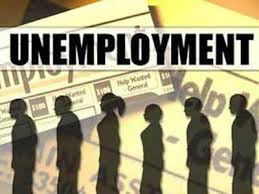
joblessOver 7.8 lakh persons in 1.6 lakh households were surveyed across the country between April and December 2015. Expectedly, urban areas continue to provide more and better paying jobs compared with the rural areas. While 82% of job seekers get year-round jobs in urban areas, just 53% of rural job seekers manage to get such security.

About 42% of workers in rural areas work for less than 12 months in a year, a result of dependence on seasonal agriculture work. Unsurprisingly, this means that 77% of the rural households end up with an average monthly income of less than Rs 10,000. In urban areas, about half the households earn between Rs 10,000 and Rs 50,000 per month.

These findings of the first large sample survey after the Modi government took power in June 2014 show that even after more than a year of seeing the new government's policies in action, the situation on the ground continues to be dire and effectively the same as in the preceding UPA's rule. It shows a continuation of a distressing job situation — and hence economic status — that was reflected in earlier surveys like the 68th round of NSSO and the Socio-Economic & Caste Census (SECC) in 2011-12.

What does 5% unemployment and 35% underemployment mean in hard numbers? Projecting from Census 2011 figures, India had a 15-years-and-older labour force of about 45 crore.

So, 5% of that is a whopping 2.3 crore persons. In addition, there are those who work but not for the whole year, signifying hidden unemployment.

This works out to nearly 16 crore persons.

Women's employment continues to stagnate with 8.7% of women in the labour force without jobs.

Comparison to previous surveys done by the labour bureau show that the unemployment rate rose from about 3.8% in 2011 to 4.9% in 2013. This was a period of relative economic slowdown compared to earlier in the decade. But growth has been recorded at 7.3% in 2015-16 — yet the jobs situation has worsened. The Modi government's pronouncements for job creation, like Make in India, Start-Up India and Digital India do not seem to have had the desired impact.

The labour bureau survey also found that about 47% of the working population was self-employed.

This would be mostly farmers, shopkeepers, and enterprise owners. But the low economic level of this section is revealed by the fact that 85% of such households had a monthly income of less than Rs 10,000.

Another 33% of households earn their living through casual employment.

Regular wage or salary earning households make up just 17% of all, although this is the kind of work that pays more with 43% of people earning more than Rs 10,000.

Comments

mangalorean
 - 
Sunday, 2 Oct 2016

Yes..

This is not only increasing in India but also affecting globally! Population increasing rapidly and same time requirements also has to increase but not happening why??

Its only because we are becoming more greedy day by day so to increase the wealth over night we are forgetting what we are doing!
No proper deal, fraud while making the deal, not paying to supplier or customer, duplicate and chemical contained material supplying all over the world. in short there is no proper give and take policy and forgetting humanity!!

Hoe we can expect success in any field. Business getting loss and company do not want to hire the employees.

then from where we can expect the blessings..

Satyameva jayate
 - 
Saturday, 1 Oct 2016

Please contact Naren and Viren for real survey and support.....ha haa...khudh milk see baahar hai...also our Pm....wit please

Add new comment

  • Coastaldigest.com reserves the right to delete or block any comments.
  • Coastaldigset.com is not responsible for its readers’ comments.
  • Comments that are abusive, incendiary or irrelevant are strictly prohibited.
  • Please use a genuine email ID and provide your name to avoid reject.
News Network
February 21,2020

Bengaluru, Feb 21: Amulya Leona, a college student, who raised to pro-Pakistan slogans to embarrass organisers of a protest against the Citizenship (Amendment) Act (CAA) here on Thursday evening, has been charged with sedition.

The student-activist, who was allowed to talk on stage, suddenly raised pro-Pakistan slogans. She was arrested by police after All India Majlis-e-Ittehadul Muslimeen (AIMIM) chief Asaduddin Owaisi snatched her mike.

Deputy Commissioner of Police Ramesh Bannoth confirmed the girl has been charged with sedition, provoking enmity between groups, and intentional insult to provoke breach of peace.

It was just after Mr. Owaisi’s arrival on the stage at Freedom Park here that the 19-year-old student was asked to speak. After preliminary remarks, she suddenly shouted “Pakistan zindabad” thrice, leaving the crowd and organisers stunned.

Some of the organisers rushed to her and tried to take the mike away and stop her from speaking further. Mr. Owaisi too joined in and snatched the mike. Holding on to the mike, the girl then went on to shout “Hindustan zindabad” twice, before a posse of police personnel and organisers whisked her away from the stage

Soon after the student was taken away, a visibly upset Mr. Owaisi told the crowd: “Whatever has been spoken [by the girl] is wrong. Neither my party nor I has any connection with it. As long as we are alive, we will be raising Bharat zindabad slogans. Never had we any relationship with Pakistan nor will we have anything in future,” he announced.

He further stated: “This is condemnable. The organisers should not have invited such people to this place. If I had known that these kind of things would be said here, I would not have come here.”

It is unfortunate that the organisers have invited such people and a wrong message is going out, he said. “Now, BJP has got an opportunity and will blame me,” he added.

Every speaker, who took the podium after the incident, condemned the pro-Pakistan slogans raised by Amulya.

Janata Dal (S) councillor representing Gurappanapalya, Imran Pasha, one of the organisers of the protest under “Hindu, Muslim, Sikh, Isayi Federation”, claimed that they had not invited the “activist” and were not aware that she would be speaking from the stage. Mr. Pasha said that such statements were “a deliberate attempt to drive a wedge between Hindus and Muslims”.

Meanwhile, the BJP State unit tweeted, “Truth is that protests against CAA are a joint venture between Pakistan and anti-National forces led by INC India.” In a press release, BJP State unit president Nalin Kumar Kateel termed this as an “anti-national act” and urged the police to take action.

Comments

Add new comment

  • Coastaldigest.com reserves the right to delete or block any comments.
  • Coastaldigset.com is not responsible for its readers’ comments.
  • Comments that are abusive, incendiary or irrelevant are strictly prohibited.
  • Please use a genuine email ID and provide your name to avoid reject.
News Network
February 22,2020

Bengaluru, Feb 22: The Hindu Mahasabha has decided to carry out a 'cleaning ceremony' by using 'gau-mutra' (cow urine) to purify Freedom Park, where pro-Pakistan slogans were shouted as a protest against the CAA, NRC and NRP.

On Thursday, an 18-year-old girl Amulya Leona hadraised slogans of 'Pakistan Zindabad,' after the organisers of the event under the banner of 'Save Constitution' invited her to address the gathering. AIMIM chief Asaduddin Owaisi soon rushed and tried to snatch away mic from her hand.

Amulya, who was arrested by the police soon after the event on charges of Sedition, was remanded to 14-day judicial custody.

Associates of Amulya insisted that she was trying to make a point that nobody in the anti-CAA rallies would hail a ‘long Live Pakistan’ slogan while they would do so for a ‘Long Live Hindustan’ chant.

“She is not dumb. She knew exactly what she was saying. She had a clear narrative in mind, but was interrupted before she could complete it. Her half-comments are now being taken out of context,” said Sujnan, another student-activist. 

“In the end, the campaign is not involved with whatever she said or intended to say. It falls on her to explain herself,” said a protest organiser.

Comments

Add new comment

  • Coastaldigest.com reserves the right to delete or block any comments.
  • Coastaldigset.com is not responsible for its readers’ comments.
  • Comments that are abusive, incendiary or irrelevant are strictly prohibited.
  • Please use a genuine email ID and provide your name to avoid reject.
News Network
May 5,2020

Dubai, May 5: Tickets on repatriation flights from UAE to India, which start on May 7, could be costlier than regular airfare, and adding to the financial woes of those flying back. Nearly 200,000 Indians in the UAE have registered on the website seeking to return home.

“A one-way repatriation ticket to Delhi will cost approximately Dh1,400-Dh1,650 - this would earlier have cost between Dh600-Dh700 [during these months],” said Jamal Abdulnazar, CEO of Cozmo Travel. “A one-way repatriation flight ticket to Kerala would cost approximately Dh1,900-Dh2,300.”

This can be quite a burden, as a majority of those taking these flights have either lost their jobs or are sending back their families because of uncertainty on the work front. To now have to pay airfare that is nearly on par with those during peak summer months is quite a blow.

Sources said that officials in Indian diplomatic missions have already initiated calls to some expats, telling them about likely ticket fares and enquiring about their willingness to travel.

Although many believed repatriation would be government-sponsored, Indian authorities have clarified that customers would have to pay for the tickets themselves. Those who thought they were entitled to free repatriation might back out of travel plans for now.

Fact of life

But aviation and travel industry sources say higher rates cannot be escaped since social distancing norms have to be strictly enforced at all times. That would limit the number of passengers on each of these flights.

“One airline can carry only limited passengers - therefore, multiple airlines are likely to get the approval to operate repatriation flights,” said Abdulnazar. “Also, airports will have to maintain safe distance for passengers to queue up at immigration and security counters.

“Therefore, it is recommended that multiple carriers fly into multiple Indian airports for repatriation to be expedited.”

The Indian authorities, so far, have not taken the easy decision to get its private domestic airlines into the rescue act. Gulf News tried speaking to the leading players, but they declined to provide any official statements. So far, only Air India, the national airline, has been commissioned to operate the flights.

Air India finds itself in the driver's seat when it comes to operating India's repatriation flights. To date, there is no confirmation India's private airlines will be allowed to join in.

UAE carriers ready to help out

UAE’s Emirates airline, Etihad, flydubai and Air Arabia are likely to also operate repatriation flights to India after Air India implements the first phase of services.

“We are fully supporting governments and authorities across the flydubai network with their repatriation efforts, helping them to make arrangements for their citizens to return home,” said a flydubai spokesperson.

“We will announce repatriation flights as and when they are confirmed, recognising this is an evolving situation whilst the flight restrictions remain in place.”

An AirArabia spokesperson said the airline is ready to operate repatriation flights when the government tells them to.

Travel agencies likely to benefit

Apart from operating non-scheduled commercial flights, the Indian government is also deploying naval ships to bring expat Indians back. Sources claim the ships are to ferry passengers who cannot afford the repatriation airfares.

Even then, considering the sheer numbers who will want to get on the flights, travel agencies are likely to see a surge in bookings since airline websites alone may not cope with the demand set off in such a short span.

Learn from Gulf governments

In instances when they carried out their own repatriation flights, some GCC governments paid the ticket fares to fly in their citizens. Those citizens who did not have the ready funds could approach their diplomatic mission and aid would be given on a case-to-case basis.

Should Indians wait for normal services to resume?

Industry sources say that those Indians wanting to fly back and cannot afford the repatriation flights should wait for full services to resume once the COVID-19 pandemic settles.

But can those who lost their jobs or seen steep salary cuts stay on without adding to their costs? And is there any guarantee that when flight services resume, ticket rates would be lower than on the repatriation trips.

As such, normal travel is expected to pick up only after the repatriation exercise to several countries is completed. UAE-based travel agencies are not seeing any bookings for summer, which is traditionally the peak holiday season.

“Majority want to stay put unless full confidence is restored,” said Abdulnazar. “I expect full normalcy to be restored not until March 2021.

“People have also taken a hit to their income. Without disposable income, you will curtail your travel.”

What constitutes normalcy?

Airfares are expected to remain high, given the need to keep the middle seats empty to practise safe distance onboard.

“We expect holiday travel to resume by October or November - but, the travel sentiment will not go back to pre-COVID-19 levels anytime soon,” said Manvendra Roy, Vice-President – Commercial at holidayme, an online travel agency. “The need to keep the middle seat vacant will add 30-40 per cent pricing pressure per seat from an airline perspective.

“This will make holidays more expensive.”

As for business travel, it will take some time to recover. Corporate staff are now used to getting work done via conference calls. “Companies will also curtail their travel expenditure since their income has taken a hit,” said Abdulnazar.

Comments

Add new comment

  • Coastaldigest.com reserves the right to delete or block any comments.
  • Coastaldigset.com is not responsible for its readers’ comments.
  • Comments that are abusive, incendiary or irrelevant are strictly prohibited.
  • Please use a genuine email ID and provide your name to avoid reject.