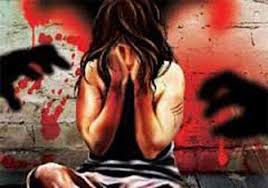
After gang rape, woman left naked in grove for two days

December 17, 2016

Tumakuru, Dec 17: A 40-year-old woman was allegedly gang-raped by four persons in Gulur on the outskirts of Tumakuru on Tuesday, but this came to light only on Friday.

1gangThe woman, left naked in an acacia grove for two days, shouted out for help but when it went unnoticed, she finally gathered the courage to walk out of the grove. She was spotted by local villagers who rushed to her rescue with clothes and took her to hospital.

The woman had come to Tumakuru on Tuesday from Chikkanayakanahalli and wanted to go to Gulur. She was waiting for a bus near Kunigal Circle, when an auto driver and his friends offered to drop her.

Instead, they took the autotowards Gulur and raped her in a grove. According to Tumakuru SP Karthik Reddy, the woman was a labourer in an arecanut farm in Gulur, and was travelling to meet her employer to collect her wages, which had not been paid.

On the way, the driver and his friends offered her a soft drink, after which she fell unconscious. The four men are said to have taken the woman in an unconscious state and raped her. When she regained consciousness, the gang had left and taken away her clothes. For two days, she stayed in the grove afraid to come out.

The survivor is now admitted to a hospital in Tumakuru, where her condition is said to be stable.

Comments

Mohammed musthafa
 - 
Monday, 19 Dec 2016

Only she is to be blamed for her own mistakes

Add new comment

  • Coastaldigest.com reserves the right to delete or block any comments.
  • Coastaldigset.com is not responsible for its readers’ comments.
  • Comments that are abusive, incendiary or irrelevant are strictly prohibited.
  • Please use a genuine email ID and provide your name to avoid reject.
Agencies
May 8,2020

Washington D.C., May 8: The prime time for brain development in a child's life is the first year, where the infant spends most of the time asleep. It is the time when neural connections form and sensory memories are encoded.

However, when sleep is disrupted, as occurs more often among children with autism, brain development may be affected, too.

New research led by the University of Washington finds that sleep problems in a baby's first 12 months may not only precede an autism diagnosis but also may be associated with altered growth trajectory in a key part of the brain, the hippocampus.

The study, which was published in the American Journal of Psychiatry, researchers report that in a sample of more than 400 taken of 6- to 12-month-old infants, those who were later diagnosed with autism were more likely to have had difficulty falling asleep.

It also states that this sleep difficulty was associated with altered growth trajectories in the hippocampus.

"The hippocampus is critical for learning and memory, and changes in the size of the hippocampus have been associated with poor sleep in adults and older children.

As many as 80 per cent of the children with autism spectrum disorder have sleep problems," said Annette Estes, director of the UW Autism Center and senior author of the study.

"In our clinical experience, parents have a lot of concerns about their children's sleep, and in our work on early autism intervention, we observed that sleep problems were holding children and families back," added Estes, who is also a UW professor of speech and hearing sciences.

"It could be that altered sleep is part-and-parcel of autism for some children. One clue is that behavioural interventions to improve sleep don't work for all children with autism, even when their parents are doing everything just right. This suggests that there may be a biological component to sleep problems for some children with autism," said Estes.

To consider links among sleep, brain development, and autism, researchers at the IBIS Network looked at MRI scans of 432 infants, surveyed parents about sleep patterns, and measured cognitive functioning using a standardized assessment.

At the outset of the study, infants were classified according to their risk for developing autism: Those who were at higher risk of developing autism -- about two-thirds of the study sample -- had an older sibling who had already been diagnosed.

Infant siblings of children with autism have a 20 per cent chance of developing autism spectrum disorder -- a much higher risk than children in the general population.

In the current study, 127 of the 432 infants were identified as "low risk" at the time the MRI scans were taken because they had no family history of autism.

They later evaluated all the participants at 24 months of age to determine whether they had developed autism. Of the roughly 300 children originally considered "high familial risk," 71 were diagnosed with autism spectrum disorder at that age.

Problems with sleep were more common among the infants later diagnosed with an autism spectrum disorder, as were larger hippocampi. No other subcortical brain structures were affected, including the amygdala, which is responsible for certain emotions and aspects of memory, or the thalamus, a signal transmitter from the spinal cord to the cerebral cortex.

The authors note that while parents reported more sleep difficulties among infants who developed autism compared to those who did not, the differences were very subtle and only observed when looking at group averages across hundreds of infants.

Sleep patterns in the first years of life change rapidly as infants transition from sleeping around the clock to a more adult-like sleep/wake cycle. Until further research is completed, Estes said, it is not possible to interpret challenges with sleep as an early sign of increased risk for autism.


Comments

Add new comment

  • Coastaldigest.com reserves the right to delete or block any comments.
  • Coastaldigset.com is not responsible for its readers’ comments.
  • Comments that are abusive, incendiary or irrelevant are strictly prohibited.
  • Please use a genuine email ID and provide your name to avoid reject.
News Network
July 6,2020

Bengaluru, Jul 6: Criminal cases will be registered against private hospitals that refuse treatment to COVID-19 patients, Medical Education Minister Dr K Sudhakar said on Sunday.

Addressing a press conference here at Vidhana Soudha, he said: "No hospital should refuse to admit patients and if any hospital is found denying treatment criminal cases will be registered against them."

He spoke to media persons after returning from his surprise visit to Jayanagar General Hospital and Rajiv Gandhi Chest Hospital responded to the questions regarding private hospitals refusing to treat covid patients.

"The government has come up with 6 different systems for treatment of COVID-19 patients. COVID care centres, government medical colleges, private medical college, government hospitals, corporate hospitals and home isolation with proper facilities and according to government guidelines," the minister added.

Dr Sudhakar gave the statistics of 4 metropolitan cities in the country including Delhi, Mumbai, Chennai and Bengaluru.

"Bengaluru's and the mortality rate is the lowest at 1.46%. The aim is to increase testing by optimal utilisation of capacity especially in private labs. Once we increase testing, it is natural that the positive cases will also increase," he said.

"So citizens need not panic due to this but should take all precautionary measures. He advised to get tested in the nearest fever clinics as soon as any symptoms like cough, fever etc are found. Guidelines regarding the home isolation will be released soon," the minister said.

He announced that 400 ambulances will be deployed in Bengaluru and 2 each for every ward.

He said that the government recommended patients at private hospitals will be provided with insurance under Suvarna Arogya Suraksha Trust.

"If private hospitals refuse to admit the patients, call 1912 helpline to get assistance. If admitted in Private hospital voluntarily the treatment cost will be borne by patients as per the rates fixed by the government," Sudhakar said.

He said that the cost of testing at private labs has been capped at Rs 2,200 as per test.

Comments

Add new comment

  • Coastaldigest.com reserves the right to delete or block any comments.
  • Coastaldigset.com is not responsible for its readers’ comments.
  • Comments that are abusive, incendiary or irrelevant are strictly prohibited.
  • Please use a genuine email ID and provide your name to avoid reject.
News Network
March 1,2020

Udupi/Mangaluru, Mar 1: A total of twenty leaplings were born in the hospitals of the Udupi and Dakshina Kannada (DK) districts on Saturday, February 29, district health department said on Sunday.

According to the district health department, sixteen babies were born in DK district while Udupi district saw four births. More boys than girls were born in DK (12–4) and it was the inverse in Udupi district (3–1).

Comments

Add new comment

  • Coastaldigest.com reserves the right to delete or block any comments.
  • Coastaldigset.com is not responsible for its readers’ comments.
  • Comments that are abusive, incendiary or irrelevant are strictly prohibited.
  • Please use a genuine email ID and provide your name to avoid reject.