AG's opinion sought on action against journalists

DHNS
June 24, 2017

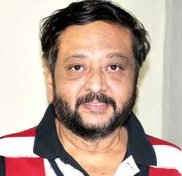
Bengaluru, Jun 24: The recommendations of the privileges committee of the Legislative Assembly, sentencing journalists Ravi Belagere and Anil Raj to one-year imprisonment with a fine of Rs 10,000 for breach of privilege, has been forwarded to Advocate General Madhusudhan Naik for an opinion.ravi22

“The recommendations have been referred to Advocate General (AG) for further procedure.The reports with recommendations have also been sent to the DG and IGP R K Dutta and Bengaluru City Police Commissioner, Praveen Sood.

“The police can’t immediately arrest the two as warrants have not been issued against them. Based on the AG’s opinion, the Bengaluru city police will take an appropriate step,” Director General and Inspector General of Police R K Dutta said.

“Write against a politician, you will be in jail,” said ‘Hai Bangalore’ editor Ravi Belagere in his Facebook post on Friday. Belagere, who is in Dandeli, could not be contacted over phone.

In his Facebook post, he states: “message being sent is to stop making comments. Still I am confident and think that democracy is alive in India. Great men, writers, men of chaste history have suffered this. I am personally not disturbed by these judgements as I have been battling. I am 100% sure of the successful fight (sic).” Belagere has urged his Facebook friends to support him. “Lets teach them,” he wrote.

The Legislative Assembly, earlier this week, adopted recommendations made by the privileges committee of the House sentencing Belagere and ‘Yelahanka Voice’ editor Anil Raj to one-year imprisonment with a fine of Rs 10,000 for breach of privilege.

In 2014, MLAs K B Koliwad (now Speaker) and B M Nagaraju had petitioned the privileges committee taking offence to “defamatory articles” against them in ‘Hai Bangalore.’

The privileges committee report states that derogatory words were used against Koliwad in an article published in ‘Hai Bangalore’ in the edition dated September 11, 2014.

Further, the report states that the article cast aspersions on the ability of Koliwad to discharge duties as a minister (he was an aspirant for a Cabinet berth).

“Further, the article cast aspersions on the health of Koliwad and made baseless allegation against his family,“ the report states. The panel, after conducting proceedings, made its recommendation. Anil Raj was not available for comment.

Amnesty International opposes action

Amnesty International India has demanded that the recommendations of the privileges committee be withdrawn. “Journalists must have the freedom to write critical articles, and politicians must be able to tolerate criticism,” said Asmita Basu, Programmes Director at Amnesty International India, reports DHNS from New Delhi.

“If individuals feel that their reputations have been affected, they can take recourse to civil defamation remedies in court,” a statement from the Amnesty International.

Comments

Add new comment

  • Coastaldigest.com reserves the right to delete or block any comments.
  • Coastaldigset.com is not responsible for its readers’ comments.
  • Comments that are abusive, incendiary or irrelevant are strictly prohibited.
  • Please use a genuine email ID and provide your name to avoid reject.
News Network
July 17,2020

Bengaluru, Jul 17: Karnataka Medical Education Minister K Sudhakar held a meeting through video conference on Thursday with private and government establishments involved in testing and treatment of COVID-19 in the state.

A total of 51,422 cases including 19,729 recoveries and 1,032 deaths were reported in the state till yesterday.

On the same day, K Sudhakar also paid a surprise visit to the Bengaluru's CV Raman Hospital and urged the administration to follow COVID-19 guidelines properly. He also took stock of the hospital's preparedness to fight the deadly virus.

"Surprise visits will continue. I will be in touch with every lab and get the right number of tests done on a daily basis," the minister said while speaking to the media.

He also urged the people who have recovered from coronavirus to donate their plasma to save other lives, adding that donors will receive a reward of Rs 5,000 as a token of appreciation.

Comments

Add new comment

  • Coastaldigest.com reserves the right to delete or block any comments.
  • Coastaldigset.com is not responsible for its readers’ comments.
  • Comments that are abusive, incendiary or irrelevant are strictly prohibited.
  • Please use a genuine email ID and provide your name to avoid reject.
Ram Puniyani
June 29,2020

In Minneapolis, US an African American, George Floyd lost his life as the white policeman, Derek Chauvin, caught hold of him and put his knee on his neck. This is a technique developed by Israel police. For nine long minutes the knee of the while policeman was on the neck of George, who kept shouting, I can’t breathe.

Following this gruesome murder America erupted with protests, ‘Black lives matter’. The protestors were not just African Americans but also a large section of whites. Within US one police Chief apologized for the act of this. In a touching gesture of apology the police force came on its knees. This had reverberations in different parts of the World.

The act was the outcome of the remnants of the racial hatred against blacks by the whites. It is the hatred and the perceptions which are the roots of such acts of violence. What was also touching that the state of democracy in US is so deep that even the police apologized, the nation, whites and blacks, stood up as a sensitive collective against this violence.

US is not the only country where the brutal acts of violence torment the marginalized sections of society. In India there is a list of dalits, minorities and adivasis who are regularly subjected to such acts. But the reaction is very different. We have witnessed the case of Tabrez Ansari, who was tied to the pole by the mob and beaten ruthlessly. When he was taken to police station, police took enough time to take him to hospital and Tabrez died.

Mohsin Sheikh, a Pune techie was murdered by Hindu Rashtra Sena mob, the day Modi came to power in 2014. Afrazul was killed by Shambhulal Regar, videotaped the act released on social media. Regar believed that Muslims are indulging in love Jihad, so deserve such a fate. Mohammad Akhlaq is one among many names who were mob lynched on the issue of beef cow. The list can fill pages after pages.

Recently a young dalit boy was shot dead for the crime of entering a temple. In Una four dalits were stripped above waste and beaten mercilessly. Commenting on this act the Union Minister Ramvilas Paswan commented that it is a minor incident. Again the list of atrocities against dalits is long enough. The question is what Paswan is saying is the typical response to such gruesome murders and tortures. In US loss of one black life, created the democratic and humane response. In India there is a general silence in response to these atrocities. Some times after a good lapse of time, the Prime Minister will utter, ‘Mother Bharati has lost a son’. Most of the time victim is blamed. Some social groups raise their voice in some fora but by and large the deafening silence from the country is the norm.

India is regarded as the largest democracy. Democracy is the rule of law, and the ground on which the injustices are opposed. In America though the present President is insensitive person, but its institutions and processes of democratic articulations are strong. The institutions have deepened their roots and though prejudices may be guiding the actions of some of the officers like the killer of George, there are also police officers who can tell their President to shut up if he has nothing meaningful to say on the issue. The prejudices against Blacks may be prevalent and deep in character, still there are large average sections of society, who on the principles of ‘Black lives matter’. There are large sections of vocal population who can protest the violation of basic norms of democracy and humanism.

In India by contrast there are multiple reasons as to why the lives of Tabrez Ansari, Mohammad Akhlaq, Una dalit victims and their likes don’t matter. Though we claim that we are a democracy, insensitivity to injustices is on the rise. The strong propaganda against the people from margins has become so vicious during last few decades that any violence against them has become sort of a new normal. The large populace, though disturbed by such brutalities, is also fed the strong dose of biases against the victims. The communal forces have a great command over effective section of media and large section of social media, which generates Hate against these disadvantaged groups, thereby the response is muted, if at all.

As such also the process of deepening of our democracy has been weak. Democracy is a dynamic process; it’s not a fixed entity. Decades ago workers and dalits could protest for their rights. Now even if peasants make strong protests, dominant media presents it as blocking of traffic! How the roots of democracy are eroded and are visible in the form where the criticism of the ruling dispensation is labelled as anti National..

Our institutions have been eroded over a period of time, and these institutions coming to the rescue of the marginalized sections have been now become unthinkable. The outreach of communal, divisive ideology, the ideology which looks down on minorities, dalits and Adivasis has risen by leaps and bounds.

The democracy in India is gradually being turned in to a hollow shell, the rule of law being converted in to rule of an ideology, which does not have faith in Indian Constitution, which looks down upon pluralism and diversity of this country, which is more concerned for the privileges of the upper caste, rich and affluent. The crux of the matter is the weak nature of democracy, which was on way to become strong, but from decades of 1980s, as emotive issues took over, the strength of democracy started dwindling, and that’s when the murders of the types of George Floyd, become passé. One does complement the deeper roots of American democracy and its ability to protect the democratic institutions, which is not the case in India, where protests of the type, which were witnessed after George Floyd’s murder may be unthinkable, at least in the present times. 

Comments

Add new comment

  • Coastaldigest.com reserves the right to delete or block any comments.
  • Coastaldigset.com is not responsible for its readers’ comments.
  • Comments that are abusive, incendiary or irrelevant are strictly prohibited.
  • Please use a genuine email ID and provide your name to avoid reject.
News Network
April 28,2020

Bengaluru, Apr 28: Providing respite, Karnataka has decided to ‘conditionally’ allow economic activities to restart in green zones.

The green zones of Chamarajanagar, Koppal, Chikkamagaluru, Raichur, Chitradurga, Ramanagara, Hassan, Shivamogga, Haveri, Yadgir, Kolar, Davangere, Udupi and Kodagu will now see shops and industrial activities starting operations, according to an order issued by Chief Secretary TM Vijay Bhaskar on Tuesday.

Lockdown restrictions in the wake of COVID-19 will continue in Bengaluru Urban, Belagavi, Mysuru, Vijayapura, Bagalkot, Kalaburagi, Bidar and Dakshina Kannada. Here, only essential services and supplies will be allowed.

In green zones, all shops that include neighbourhood shops, standalone shops, shops in residential complexes within the limits of municipal corporations and municipalities can open with 50 per cent manpower but with masks and social distancing mandatory.

Shops in residential and marketing complexes are allowed to open in areas located outside municipal limits, the order states.

Multi-brand and single-brand malls will remain shut across Karnataka.

Industries operating in rural areas of these green zones (except Ramanagara) have been allowed to start. Also, manufacturing and other industrial establishments with access control in special economic zones and export-oriented units, industrial estates and industrial townships will be allowed to operate.

“These establishments shall make arrangements for stay of workers within their premises as far as possible and/ or adjacent buildings. The transportation of workers to workplace shall be arranged by the employers in dedicated transport by ensuring social distancing (sic),” Bhaskar said in the order.

This order comes a day after Chief Minister BS Yediyurappa participated in a video conference with Prime Minister Narendra Modi, and with all deputy commissioners.

No decision on relaxing lockdown restrictions has been taken for Ballari, Mandya, Bengaluru Rural, Gadag, Tumakuru, Chikkaballapur, Uttara Kannada and Dharwad. “The decision regarding opening of shops and industries in taluks where there are no active COVID-19 cases will be taken by the concerned district in-charge minister,” Bhaskar said.

Comments

Add new comment

  • Coastaldigest.com reserves the right to delete or block any comments.
  • Coastaldigset.com is not responsible for its readers’ comments.
  • Comments that are abusive, incendiary or irrelevant are strictly prohibited.
  • Please use a genuine email ID and provide your name to avoid reject.