


AG's opinion sought on action against journalists

DHNS
June 24, 2017

Bengaluru, Jun 24: The recommendations of the privileges committee of the Legislative Assembly, sentencing journalists Ravi Belagere and Anil Raj to one-year imprisonment with a fine of Rs 10,000 for breach of privilege, has been forwarded to Advocate General Madhusudhan Naik for an opinion.ravi22
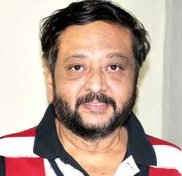
“The recommendations have been referred to Advocate General (AG) for further procedure.The reports with recommendations have also been sent to the DG and IGP R K Dutta and Bengaluru City Police Commissioner, Praveen Sood.

“The police can’t immediately arrest the two as warrants have not been issued against them. Based on the AG’s opinion, the Bengaluru city police will take an appropriate step,” Director General and Inspector General of Police R K Dutta said.

“Write against a politician, you will be in jail,” said ‘Hai Bangalore’ editor Ravi Belagere in his Facebook post on Friday. Belagere, who is in Dandeli, could not be contacted over phone.

In his Facebook post, he states: “message being sent is to stop making comments. Still I am confident and think that democracy is alive in India. Great men, writers, men of chaste history have suffered this. I am personally not disturbed by these judgements as I have been battling. I am 100% sure of the successful fight (sic).” Belagere has urged his Facebook friends to support him. “Lets teach them,” he wrote.

The Legislative Assembly, earlier this week, adopted recommendations made by the privileges committee of the House sentencing Belagere and ‘Yelahanka Voice’ editor Anil Raj to one-year imprisonment with a fine of Rs 10,000 for breach of privilege.

In 2014, MLAs K B Koliwad (now Speaker) and B M Nagaraju had petitioned the privileges committee taking offence to “defamatory articles” against them in ‘Hai Bangalore.’

The privileges committee report states that derogatory words were used against Koliwad in an article published in ‘Hai Bangalore’ in the edition dated September 11, 2014.

Further, the report states that the article cast aspersions on the ability of Koliwad to discharge duties as a minister (he was an aspirant for a Cabinet berth).

“Further, the article cast aspersions on the health of Koliwad and made baseless allegation against his family,“ the report states. The panel, after conducting proceedings, made its recommendation. Anil Raj was not available for comment.

Amnesty International opposes action

Amnesty International India has demanded that the recommendations of the privileges committee be withdrawn. “Journalists must have the freedom to write critical articles, and politicians must be able to tolerate criticism,” said Asmita Basu, Programmes Director at Amnesty International India, reports DHNS from New Delhi.

“If individuals feel that their reputations have been affected, they can take recourse to civil defamation remedies in court,” a statement from the Amnesty International.

Comments

Add new comment

  • Coastaldigest.com reserves the right to delete or block any comments.
  • Coastaldigset.com is not responsible for its readers’ comments.
  • Comments that are abusive, incendiary or irrelevant are strictly prohibited.
  • Please use a genuine email ID and provide your name to avoid reject.
Agencies
May 8,2020

Washington D.C., May 8: The prime time for brain development in a child's life is the first year, where the infant spends most of the time asleep. It is the time when neural connections form and sensory memories are encoded.

However, when sleep is disrupted, as occurs more often among children with autism, brain development may be affected, too.

New research led by the University of Washington finds that sleep problems in a baby's first 12 months may not only precede an autism diagnosis but also may be associated with altered growth trajectory in a key part of the brain, the hippocampus.

The study, which was published in the American Journal of Psychiatry, researchers report that in a sample of more than 400 taken of 6- to 12-month-old infants, those who were later diagnosed with autism were more likely to have had difficulty falling asleep.

It also states that this sleep difficulty was associated with altered growth trajectories in the hippocampus.

"The hippocampus is critical for learning and memory, and changes in the size of the hippocampus have been associated with poor sleep in adults and older children.

As many as 80 per cent of the children with autism spectrum disorder have sleep problems," said Annette Estes, director of the UW Autism Center and senior author of the study.

"In our clinical experience, parents have a lot of concerns about their children's sleep, and in our work on early autism intervention, we observed that sleep problems were holding children and families back," added Estes, who is also a UW professor of speech and hearing sciences.

"It could be that altered sleep is part-and-parcel of autism for some children. One clue is that behavioural interventions to improve sleep don't work for all children with autism, even when their parents are doing everything just right. This suggests that there may be a biological component to sleep problems for some children with autism," said Estes.

To consider links among sleep, brain development, and autism, researchers at the IBIS Network looked at MRI scans of 432 infants, surveyed parents about sleep patterns, and measured cognitive functioning using a standardized assessment.

At the outset of the study, infants were classified according to their risk for developing autism: Those who were at higher risk of developing autism -- about two-thirds of the study sample -- had an older sibling who had already been diagnosed.

Infant siblings of children with autism have a 20 per cent chance of developing autism spectrum disorder -- a much higher risk than children in the general population.

In the current study, 127 of the 432 infants were identified as "low risk" at the time the MRI scans were taken because they had no family history of autism.

They later evaluated all the participants at 24 months of age to determine whether they had developed autism. Of the roughly 300 children originally considered "high familial risk," 71 were diagnosed with autism spectrum disorder at that age.

Problems with sleep were more common among the infants later diagnosed with an autism spectrum disorder, as were larger hippocampi. No other subcortical brain structures were affected, including the amygdala, which is responsible for certain emotions and aspects of memory, or the thalamus, a signal transmitter from the spinal cord to the cerebral cortex.

The authors note that while parents reported more sleep difficulties among infants who developed autism compared to those who did not, the differences were very subtle and only observed when looking at group averages across hundreds of infants.

Sleep patterns in the first years of life change rapidly as infants transition from sleeping around the clock to a more adult-like sleep/wake cycle. Until further research is completed, Estes said, it is not possible to interpret challenges with sleep as an early sign of increased risk for autism.

Comments

Add new comment

  • Coastaldigest.com reserves the right to delete or block any comments.
  • Coastaldigset.com is not responsible for its readers’ comments.
  • Comments that are abusive, incendiary or irrelevant are strictly prohibited.
  • Please use a genuine email ID and provide your name to avoid reject.
News Network
March 7,2020

Thrissur, Mar 7: A local temple in Kerala is at the centre of a social media storm after the picture of a ''Brahmins-only toilet'' outside its main campus went viral on online platforms, prompting the management to remove the signboard.

The picture of three toilets, with signboards showing "Men", "Women" and "Brahmins", at the Kuttumukku Mahadeva Temple in Thrissur, has gone viral with many social media users viewing it as an unethical practise that can portray the progressive state in a bad light.

However, temple officials said the toilets were located outside the main campus and the board was brought to their notice only now.

Kannan, an official of the temple committee, said the board was placed nearly two decades ago and nobody raised any complaint against it so far.

"That particular toilet was being used by priests and other temple employees. We didn't even notice that board... As soon as we came to know about it, we removed it and affixed a staff-only board," he told PTI.

Also a CPI-M functionary and ward councillor, Kannan said the shrine and it's management was against all kinds of unethical customs.

The temple official said they were planning to pursue legal measures against the man who posted the photo of the toilets on social media.

"We suspect that he did it deliberately to create issues during the time of the festival and to tarnish the shrine's reputation. Not only that, the photo he shared was an old one though he claimed that it was taken during the time of the festival, " he said.

Comments

Add new comment

  • Coastaldigest.com reserves the right to delete or block any comments.
  • Coastaldigset.com is not responsible for its readers’ comments.
  • Comments that are abusive, incendiary or irrelevant are strictly prohibited.
  • Please use a genuine email ID and provide your name to avoid reject.
News Network
January 22,2020

Bengaluru, Jan 22: Three alleged Bangladeshi nationals living illegally in India were apprehended in Karnataka's Bengaluru district, police said on Wednesday.

The arrested are identified as Mohammed Lokman (55), his wife Jasmin Begun (35) and son Raasel (22) are natives of Boresel village in Pirojpur district in Bangladesh.

According to police, they were staying at a camp at Munnekolala village.

Comments

Add new comment

  • Coastaldigest.com reserves the right to delete or block any comments.
  • Coastaldigset.com is not responsible for its readers’ comments.
  • Comments that are abusive, incendiary or irrelevant are strictly prohibited.
  • Please use a genuine email ID and provide your name to avoid reject.