



Air India backs moody pilot who put over 200 lives in peril

September 2, 2016

Mumbai, Sep 2: A senior Air India executive commander prone to sudden, psychotic mood swings carried out an extremely unsafe manoeuvre onboard a Delhi-Paris flight on April 28 putting the Boeing 787 and the lives of over 200 passengers and crew at risk.
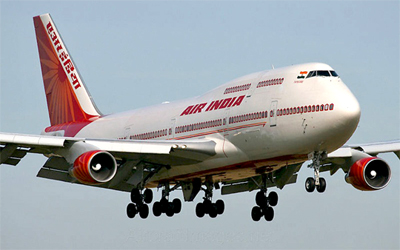
airindiaA panel formed to probe the incident concluded last month that the commander should undergo psychiatric evaluation and thereafter fly only as a co-pilot for six months, during which his behaviour should be under check. The commander is currently grounded, but the airline has formed another committee to relook the case and there are apprehensions he may get a clean chit.

Unlike the Germanwings March 2015 crash in which a suicidal co-pilot locked out the commander and flew into the French Alps killing all 150 people on board, in the Air India case, it was the copilot who raised an alarm.

On April 28, the commander, for reasons unknown, manipulated the onboard flight management computer and initiated a climb beyond the aircraft's altitude capability.

This would have taken the aircraft into what's commonly called the "coffin corner" — the altitude at which an aircraft becomes unstable and the flight controls offer no help. Once at this altitude, any reduction in airspeed would cause the aircraft to stall, but if the speed is increased (to prevent the stall) the aircraft could suffer structural damage. So either way the aircraft is at risk.

"Even as the commander started the climb, the co-pilot objected. But he disregarded the co-pilot's advice and the aircraft came close to stall speed," said a source. "Luckily for its crew and passengers, the aircraft was brought down to a safer altitude."

The co-pilot later reported the incident. "An inquiry was ordered, which subsequently discovered a number of other incidents where the commander's behaviour had come across as mercurial, unstable and temperamental, a trait considered unsafe for a pilot," a source said.

In the last 2-3 years, the frequency of such cases had gone up. The inquiry panel said it would be unsafe to overlook his behaviour pattern and recommended a psychiatric assessment by IAF doctors.

However, the airline, instead has constituted a new panel. "Two of the three members in this panel are known to be close to the commander and they might let him go scotfree and let him back into the cockpit in command," said a source. The AI spokesperson was sent a questionnaire, but the airline did not respond.

Comments

Well Wisher
 - 
Friday, 2 Sep 2016

Dear Mr.Anand wake up don't comment like fool. What happend in Mangalore May 22nd 2010. Who did the crash landing of DXB/IXE flight. Because of restless duty n dirty airindia miss management arrogant pilot crash landed N attempted to take of from table top airport and swallowed innocents life. One Mr.Shetty AR also giving some use less comments in favor of this dirty airlone. If u look at historuair India is one top with miss handling cases.
Airindia is unsafe n dangerous airline.

Add new comment

  • Coastaldigest.com reserves the right to delete or block any comments.
  • Coastaldigset.com is not responsible for its readers’ comments.
  • Comments that are abusive, incendiary or irrelevant are strictly prohibited.
  • Please use a genuine email ID and provide your name to avoid reject.
Wafa Sultana
April 4,2020

Over the last couple of days when the world was occupied with unifying efforts to fight the deadly Covid19 pandemic, sections of Indian media provided viewers a familiar scapegoat – the Indian Muslims – who are often stereotyped as a community being constantly at loggerheads with the citizenry and the State. Biased media channels were quick to resort to blaming the entire Muslim community for the spread of the disease in the country, thanks to an ill-timed Tablighi Jamaat gathering at its international headquarters in Delhi’s Nizamuddin. Unsurprisingly, the opprobrium was also marked by a sudden spike in WhatsApp forwards of videos with people wearing skullcaps licking spoons and performing Sufi breathing rituals, suggesting some sort of wild conspiracy on the part of the community to spread the virus.  Some media channels were quick to formulate, hypothesize and provide loose definitions of a newly discovered form of Jihad i.e. ‘Corona Jihad ’ thereby vilifying the Islamic faith and its followers.

While the investigation on the culpability of the organizers of the Nizamuddin event is still ongoing, there is enough information to suggest that the meeting was held before any lockdown was in force, and the problem began when there was no way of getting people out once the curfew was announced. Be that as it may, there is little doubt that organizing a meet of such a scale when there is a global pandemic smacks of gross misjudgment, and definitely the organizers should be held accountable if laws or public orders were defied. Attendees who attempt to defy quarantine measures must be dealt with strictly. However, what is alarming is that the focus and narrative have now shifted from the unfortunate event at Nizamuddin to the Tablighi Jamaat itself.

For those not familiar with the Tablighi Jamaat, the organization was founded in 1926 in Mewat by scholar Maulana Mohammad Ilyas. The Jamaat’s main objective was to get Muslim youth to learn and practice pristine Islam shorn of external influences. This is achieved through individuals dedicating time for moral and spiritual upliftment secluded from the rest of the world for a brief period of time. There is no formal membership process. More senior and experienced participants typically travel from one mosque to other delivering talks on religious topics, inviting local youth to attend and then volunteer for a spiritual retreat for a fixed number of days to a mosque in a nearby town or village to present the message to their co-religionists. Contrary to ongoing Islamophobic rhetoric, the movement does not actively proselytize. The focus is rather on getting Muslims to learn the teachings and practices of Islam.  This grassroots India-based movement has now grown to almost all countries with substantial Muslim populations. Its annual meets, or ‘ijtemas’ are among the largest Islamic congregations in the world after the annual Haj. One of the reasons for its popularity and wide network in the subcontinent and wordwide is the fact that it has eschewed the need for scholarly intervention, focusing on peer learning of fundamental beliefs and practice rather than high-falutin ideological debates. The Tablighi Jamaat also distinguishes itself from other Islamic movements through its strictly apolitical nature, with a focus on individual self-improvement rather than political mobilization. Hardships and difficulty in the world are expected to be face through ‘sabr’ (patience) and ‘dua’ (supplication),  than through quest for political power or influence. In terms of ideology, it is very much based on mainstream Sunni Islamic principles derived from the Deobandi school.

So, why is all this background important in the current context? While biased media entities have expectedly brought out their Islamophobic paraphernalia out for full display, more neutral commentators have tried to paint the Tablighi Jamaat as a fringe group and have tried to distance it from 'mainstream Muslims'. While the intent is no doubt innocent, this is a trap we must not fall into. This narrative, unfortunately, is also gaining ground due to apathy some Muslims have for the group, accusing it of being “disconnected from the realities of the world”. Unlike other Muslim organizations and movements, the Tablighi Jamat, by virtue of its political indifference, does not boast of high-profile advocates and savvy spokespersons who can defend it in mainstream or social media.  The use of adjectives such as 'outdated' and 'orthodox' by liberal columnists to describe the Jamaat feeds into the malignant attempt to change the narrative from the control of the spread of the pandemic due to the Nizamuddin gathering to 'raison d'etre' of the organization itself.

A large mainstream religious group like the Tablighi Jamaat with nearly a hundred-year history, normally considered to be peaceful, apolitical and minding its own business is now suddenly being villainized owing to unfortunate circumstances. Biased media reactions filled with disgust and hate seem to feed the Indian public conscience with a danngerous misconception - to be a nominal Muslim is okay but being a practicing one is not.  For those committed to the truth and fighting the spread of Islamophobia, the temptation to throw the entire Tablighi Jamaat under the bus must be resisted.

The writer is a lawyer and research scholar at Qatar University. Her research interests include Islamic law and politics.

Comments

zahoorahmed
 - 
Saturday, 4 Apr 2020

great article! provides a great perspective on tableeg jamat

Add new comment

  • Coastaldigest.com reserves the right to delete or block any comments.
  • Coastaldigset.com is not responsible for its readers’ comments.
  • Comments that are abusive, incendiary or irrelevant are strictly prohibited.
  • Please use a genuine email ID and provide your name to avoid reject.
News Network
July 22,2020

New Delhi, Jul 22: Sir Philip Barton visited Bengaluru on Tuesday in the first of the series of virtual regional visits as the UK's new High Commissioner and called Chief Minister BS Yeddyurappa, business leaders, and startup community to pitch for new momentum in the already strong UK-Karnataka relationship.

During his virtual call, High Commissioner Barton got a 'real' taste of Bengaluru through a traditional Masala Dosa delivered to his residence in Delhi along with authentic south Indian filter coffee, which he relished over a chat with historian and commentator Ramachandra Guha. They discussed the unique UK-India "living bridge" across culture and cuisine, history and heritage, and sports and science.

Both Yeddyurappa and the British envoy restated their commitment to working together on the immediate challenges of Covid-19 and beyond.

Barton subsequently 'traveled' to Electronics City, where he met with a range of key business leaders to discuss deepening the UK-India tech partnership and opportunities for global investors in the UK.

Barton also met with a group of entrepreneurs, business founders and innovators, who were part of the first GoGlobal UK cohort to explore the dynamic UK market considered one of the best ecosystems for startups in the world. 

They had earlier attended a week-long boot-camp in London and Manchester in December 2019 that helped them bolster their business skills, build links with UK's thriving digital sector, and paved the way for future partnerships.

"I am delighted to make my first regional virtual visit to Bengaluru, the technology hub of India. My visit comes at a difficult time for everyone. So it is also a time when the excellent collaboration between the UK and Karnataka across technology and healthcare could not be important," Barton said.

"Making the most of those close links, and drawing on the great energy, innovation and entrepreneurship that Karnataka is famous for, will be central to ensuring we all recover from Covid-19 stronger than ever," he added.

Comments

Add new comment

  • Coastaldigest.com reserves the right to delete or block any comments.
  • Coastaldigset.com is not responsible for its readers’ comments.
  • Comments that are abusive, incendiary or irrelevant are strictly prohibited.
  • Please use a genuine email ID and provide your name to avoid reject.
News Network
March 18,2020

Karnataka, Mar 18: Karnataka State Cricket Association (KSCA) has asked its administrative staff to work from home until further order amid coronavirus outbreak.

KSCA has taken various measures to mitigate the risk of spreading coronavirus. The association had already closed down all section of the sports centre and also given off to all the sports centre staff from March 14.

"Ksca had already closed down all section of the sports centre and also given off to all the sports centre staff w.e.f 14th March 2020. Further to that, now it is decided that most of the KSCA administrative staff will be working from home until further orders," KSCA Treasurer and official spokesperson Vinay Mruthyunjaya said in a statement.

"All the KSCA employees have been advised strictly to be at home and should not travel and be available on phones and mails. However skeleton staff will be deputed at KSCA to make sure ongoing works like grounds maintenance, regular maintenance etc., is not affected," he added.

Comments

Add new comment

  • Coastaldigest.com reserves the right to delete or block any comments.
  • Coastaldigset.com is not responsible for its readers’ comments.
  • Comments that are abusive, incendiary or irrelevant are strictly prohibited.
  • Please use a genuine email ID and provide your name to avoid reject.