


Air India backs moody pilot who put over 200 lives in peril

September 2, 2016

Mumbai, Sep 2: A senior Air India executive commander prone to sudden, psychotic mood swings carried out an extremely unsafe manoeuvre onboard a Delhi-Paris flight on April 28 putting the Boeing 787 and the lives of over 200 passengers and crew at risk.
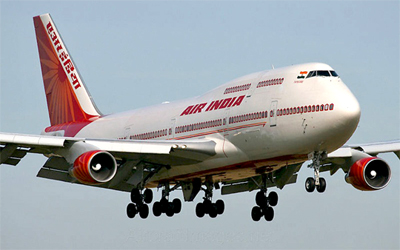
airindiaA panel formed to probe the incident concluded last month that the commander should undergo psychiatric evaluation and thereafter fly only as a co-pilot for six months, during which his behaviour should be under check. The commander is currently grounded, but the airline has formed another committee to relook the case and there are apprehensions he may get a clean chit.

Unlike the Germanwings March 2015 crash in which a suicidal co-pilot locked out the commander and flew into the French Alps killing all 150 people on board, in the Air India case, it was the copilot who raised an alarm.

On April 28, the commander, for reasons unknown, manipulated the onboard flight management computer and initiated a climb beyond the aircraft's altitude capability.

This would have taken the aircraft into what's commonly called the "coffin corner" — the altitude at which an aircraft becomes unstable and the flight controls offer no help. Once at this altitude, any reduction in airspeed would cause the aircraft to stall, but if the speed is increased (to prevent the stall) the aircraft could suffer structural damage. So either way the aircraft is at risk.

"Even as the commander started the climb, the co-pilot objected. But he disregarded the co-pilot's advice and the aircraft came close to stall speed," said a source. "Luckily for its crew and passengers, the aircraft was brought down to a safer altitude."

The co-pilot later reported the incident. "An inquiry was ordered, which subsequently discovered a number of other incidents where the commander's behaviour had come across as mercurial, unstable and temperamental, a trait considered unsafe for a pilot," a source said.

In the last 2-3 years, the frequency of such cases had gone up. The inquiry panel said it would be unsafe to overlook his behaviour pattern and recommended a psychiatric assessment by IAF doctors.

However, the airline, instead has constituted a new panel. "Two of the three members in this panel are known to be close to the commander and they might let him go scotfree and let him back into the cockpit in command," said a source. The AI spokesperson was sent a questionnaire, but the airline did not respond.

Comments

Well Wisher
 - 
Friday, 2 Sep 2016

Dear Mr.Anand wake up don't comment like fool. What happend in Mangalore May 22nd 2010. Who did the crash landing of DXB/IXE flight. Because of restless duty n dirty airindia miss management arrogant pilot crash landed N attempted to take of from table top airport and swallowed innocents life. One Mr.Shetty AR also giving some use less comments in favor of this dirty airlone. If u look at historuair India is one top with miss handling cases.
Airindia is unsafe n dangerous airline.

Add new comment

  • Coastaldigest.com reserves the right to delete or block any comments.
  • Coastaldigset.com is not responsible for its readers’ comments.
  • Comments that are abusive, incendiary or irrelevant are strictly prohibited.
  • Please use a genuine email ID and provide your name to avoid reject.
Agencies
May 8,2020

Washington D.C., May 8: The prime time for brain development in a child's life is the first year, where the infant spends most of the time asleep. It is the time when neural connections form and sensory memories are encoded.

However, when sleep is disrupted, as occurs more often among children with autism, brain development may be affected, too.

New research led by the University of Washington finds that sleep problems in a baby's first 12 months may not only precede an autism diagnosis but also may be associated with altered growth trajectory in a key part of the brain, the hippocampus.

The study, which was published in the American Journal of Psychiatry, researchers report that in a sample of more than 400 taken of 6- to 12-month-old infants, those who were later diagnosed with autism were more likely to have had difficulty falling asleep.

It also states that this sleep difficulty was associated with altered growth trajectories in the hippocampus.

"The hippocampus is critical for learning and memory, and changes in the size of the hippocampus have been associated with poor sleep in adults and older children.

As many as 80 per cent of the children with autism spectrum disorder have sleep problems," said Annette Estes, director of the UW Autism Center and senior author of the study.

"In our clinical experience, parents have a lot of concerns about their children's sleep, and in our work on early autism intervention, we observed that sleep problems were holding children and families back," added Estes, who is also a UW professor of speech and hearing sciences.

"It could be that altered sleep is part-and-parcel of autism for some children. One clue is that behavioural interventions to improve sleep don't work for all children with autism, even when their parents are doing everything just right. This suggests that there may be a biological component to sleep problems for some children with autism," said Estes.

To consider links among sleep, brain development, and autism, researchers at the IBIS Network looked at MRI scans of 432 infants, surveyed parents about sleep patterns, and measured cognitive functioning using a standardized assessment.

At the outset of the study, infants were classified according to their risk for developing autism: Those who were at higher risk of developing autism -- about two-thirds of the study sample -- had an older sibling who had already been diagnosed.

Infant siblings of children with autism have a 20 per cent chance of developing autism spectrum disorder -- a much higher risk than children in the general population.

In the current study, 127 of the 432 infants were identified as "low risk" at the time the MRI scans were taken because they had no family history of autism.

They later evaluated all the participants at 24 months of age to determine whether they had developed autism. Of the roughly 300 children originally considered "high familial risk," 71 were diagnosed with autism spectrum disorder at that age.

Problems with sleep were more common among the infants later diagnosed with an autism spectrum disorder, as were larger hippocampi. No other subcortical brain structures were affected, including the amygdala, which is responsible for certain emotions and aspects of memory, or the thalamus, a signal transmitter from the spinal cord to the cerebral cortex.

The authors note that while parents reported more sleep difficulties among infants who developed autism compared to those who did not, the differences were very subtle and only observed when looking at group averages across hundreds of infants.

Sleep patterns in the first years of life change rapidly as infants transition from sleeping around the clock to a more adult-like sleep/wake cycle. Until further research is completed, Estes said, it is not possible to interpret challenges with sleep as an early sign of increased risk for autism.

Comments

Add new comment

  • Coastaldigest.com reserves the right to delete or block any comments.
  • Coastaldigset.com is not responsible for its readers’ comments.
  • Comments that are abusive, incendiary or irrelevant are strictly prohibited.
  • Please use a genuine email ID and provide your name to avoid reject.
coastaldigest.com news network
March 23,2020

Mangaluru/Udupi, Mar 23: The coastal district of Dakshina Kannada including the city of Mangaluru today refused to return to normalcy from yesterday’s Janata Curfew, as the government imposed lockdown in the district till the month end to contain the Covid-19 caused by the deadly novel coronavirus.

The lockdown coupled with the prohibitory orders under Section 144 has forced all the commercial establishments barring few to remain closed in the district.

The police started issuing stern warning to the people through loudspeakers against venturing out of their homes unnecessarily. People are allowed to move only in case of any emergency or basic needs.

The police warning came after a few people started ignoring the lockdown and ban orders. A few private buses also were seen plying on the roads in the morning.

Under the proibitory orders, the district administration banned from venturing out of their homes except in case of emergency or extreme necessity. All public programmes including religious ceremonies, cultural programmes also are banned. All shops, commercial establishments, workshops and godowns with other unessential goods are supposed to remain closed. Bus service, both government and private, are to suspended. Mass prayers and religious ceremonies are not allowed in temples, mosques and churches. Beaches and other tourist spots are closed.

Udupi

The lockdown in 9 districts of Karnataka has forced many private buses in Udupi to stay off the roads for second day on Monday. Some buses plying between Udupi to Kundapur have resumed service a day after Janata Curfew, with very minimum occupancy.

Due to lockdown in Dakshina Kannada, all services operating from Mangaluru to Udupi, Manipal, and Kundapur have been suspended till the month end. Buses on Karkala-Udupi route have also stopped their operations.

Comments

Add new comment

  • Coastaldigest.com reserves the right to delete or block any comments.
  • Coastaldigset.com is not responsible for its readers’ comments.
  • Comments that are abusive, incendiary or irrelevant are strictly prohibited.
  • Please use a genuine email ID and provide your name to avoid reject.
News Network
March 31,2020

Mangaluru, Mar 31: With the Dakshina Kannada district administration relaxing the lockdown from 6 am to 3 pm to purchase essential commodities, panic-stricken citizens rushed to the shops early in the morning itself.

The citizens had formed a serpentine line in front of shops and supermarkets in different parts of Mangaluru and on the outskirts of the city to purchase their requirements.

As a precautionary measure, many were seen wearing masks.

“In spite of waiting in a long queue to purchase, we are not able to get the required essential commodities. Why can’t the district administration ensure enough stock of commodities in the shops and supermarkets,’’ asked a customer who had stood in a queue outside a supermarket at Chilimbi.
People were seen crowding outside markets at Kankanady, Mallikatte, Urwa and Central Market, violating the purpose of social distancing.

Consequently, vegetable prices have increased in the markets and shops. This is despite abundant stocks being available in these markets.

Trucks had unloaded the vegetables at Central Market on Sunday, according to sources. The prices of onions are skyrocketing yet again and is sold from Rs 50 to Rs 55 while a kg of carrot costs Rs 100.

"Why can’t the authorities check the rise in the price of vegetables and ensure that the poor are not inconvenienced," asks Lakshmi, a housewife.

Comments

Add new comment

  • Coastaldigest.com reserves the right to delete or block any comments.
  • Coastaldigset.com is not responsible for its readers’ comments.
  • Comments that are abusive, incendiary or irrelevant are strictly prohibited.
  • Please use a genuine email ID and provide your name to avoid reject.