


Air India backs moody pilot who put over 200 lives in peril

September 2, 2016

Mumbai, Sep 2: A senior Air India executive commander prone to sudden, psychotic mood swings carried out an extremely unsafe manoeuvre onboard a Delhi-Paris flight on April 28 putting the Boeing 787 and the lives of over 200 passengers and crew at risk.
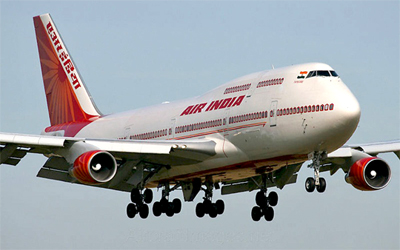
airindiaA panel formed to probe the incident concluded last month that the commander should undergo psychiatric evaluation and thereafter fly only as a co-pilot for six months, during which his behaviour should be under check. The commander is currently grounded, but the airline has formed another committee to relook the case and there are apprehensions he may get a clean chit.

Unlike the Germanwings March 2015 crash in which a suicidal co-pilot locked out the commander and flew into the French Alps killing all 150 people on board, in the Air India case, it was the copilot who raised an alarm.

On April 28, the commander, for reasons unknown, manipulated the onboard flight management computer and initiated a climb beyond the aircraft's altitude capability.

This would have taken the aircraft into what's commonly called the "coffin corner" — the altitude at which an aircraft becomes unstable and the flight controls offer no help. Once at this altitude, any reduction in airspeed would cause the aircraft to stall, but if the speed is increased (to prevent the stall) the aircraft could suffer structural damage. So either way the aircraft is at risk.

"Even as the commander started the climb, the co-pilot objected. But he disregarded the co-pilot's advice and the aircraft came close to stall speed," said a source. "Luckily for its crew and passengers, the aircraft was brought down to a safer altitude."

The co-pilot later reported the incident. "An inquiry was ordered, which subsequently discovered a number of other incidents where the commander's behaviour had come across as mercurial, unstable and temperamental, a trait considered unsafe for a pilot," a source said.

In the last 2-3 years, the frequency of such cases had gone up. The inquiry panel said it would be unsafe to overlook his behaviour pattern and recommended a psychiatric assessment by IAF doctors.

However, the airline, instead has constituted a new panel. "Two of the three members in this panel are known to be close to the commander and they might let him go scotfree and let him back into the cockpit in command," said a source. The AI spokesperson was sent a questionnaire, but the airline did not respond.

Comments

Well Wisher
 - 
Friday, 2 Sep 2016

Dear Mr.Anand wake up don't comment like fool. What happend in Mangalore May 22nd 2010. Who did the crash landing of DXB/IXE flight. Because of restless duty n dirty airindia miss management arrogant pilot crash landed N attempted to take of from table top airport and swallowed innocents life. One Mr.Shetty AR also giving some use less comments in favor of this dirty airlone. If u look at historuair India is one top with miss handling cases.
Airindia is unsafe n dangerous airline.

Add new comment

  • Coastaldigest.com reserves the right to delete or block any comments.
  • Coastaldigset.com is not responsible for its readers’ comments.
  • Comments that are abusive, incendiary or irrelevant are strictly prohibited.
  • Please use a genuine email ID and provide your name to avoid reject.
Media Release
February 14,2020

Veteran journalist P. Sainath has said that the nation is in a crisis. And this crisis is not limited to just the rural area. It has become a national crisis at various areas such as agriculture, education, economy, job creation etc.

He was delivering the endowment lecture on the topic ‘Indian democracy at the post-liberalization and post-truth era’ at Media Manthan 2020 organized by the PG department of journalism and mass communication at St Aloysius College (Autonomous). 

Mr Sainath said that the many policies adopted in the 90s led to India becoming unusually unequal. Referring to the speech Ambedkar had made at the Constituent Assembly while handing over the draft of the Constitution, Mr Sainath said, “Ambedkar had warned about the weakness of Indian democracy that liberty without equality allows the supremacy of a few over the multitude. Liberty, equality and fraternity must be kept together as we cannot have one without the other.” 

Mr Sainath stated that the agrarian crisis was no longer about the loss of productivity, employment or about farmer suicide; it was a societal, civilizational crisis. Commenting on the lopsided policies such as cow-slaughter ban, he explained how cow slaughter ban had adversely affected many industries due to their interdependency. While Muslims who slaughtered cows were rendered helpless, the cattle traders who were mostly OBCs lost their earnings as the cattle prices crashed. An important industry like Kolhapur sandals industry in Maharashtra went bankrupt as a result of the cow slaughter ban in Maharashtra. He said the policymakers had no idea how the rural industries were interconnected. Demonetisation too devastated the rural economy as 98 percent of rural transactions happen through cash. 

Mr Sainath also spoke about the crisis of inequality which affects the Dalits and the Adivasis far more than anyone else as 90 percent of the rural households take home less than Rs 10,000/- per month. “Women are yet another group whose labour is never counted in the gross domestic product. Women and girls globally do unpaid work which amounts to about 12.5 billion working hours per year. Monetarily speaking, this is worth 10.8 trillion dollars,” Mr Sainath added. 

Speaking about the crisis of jobs Mr Sainath said that major companies were laying off employees just to create more profits for the investors and the adoption of artificial intelligence in the industry would further destroy millions of jobs.

Rector of St Aloysius College Institutions Fr Dionysius Vaz SJ, Principal Dr (Fr) Praveen Martis SJ, HOD of Journalism and Mass Communication department Dr (Fr) Melwyn Pinto SJ were present.

‘Veerappan and Vijay Mallya’s business models are interesting!’

Addressing the gathering during his endowment lecture on Friday, Mr Sainath made an interesting comment on the so called ‘revenue model’. “Whenever I visit IIMs and IITs for lectures on my PARI project, the students there ask me what my revenue model for my project is. I tell them that I do not have a revenue model. In fact, journalism does not begin with a revenue model. Gandhiji, Ambedkar, Bhagat Singh were all great journalists. But they did not have a revenue model,” Mr Sainath said.

On a lighter note, he said that the best revenue model that he liked was that of forest brigand Veerappan and liquor baron Vijay Mallya. “Veerappan ruled the forest for forty years and from the top ministers to the villagers he could dictate terms and liver royally. Similarly, Mallya’s revenue model was to steal the banks and run away abroad and live like a king,” Mr Sainath added.

Journalism is not and can never be a business. It is a calling, he opined. While newspaper can be a business, television can be a business, journalism per se cannot be reduced to a business. “Unfortunately today, journalists are recruited on a contract basis and they have no bargaining power; and there are no unions to fight for their cause. Hence, they are at the mercy of the corporate media houses for their survival and are made to write stories that cannot be called journalism,” Mr Sainath said.

Answering a question as to the pressures he faced as a journalist, he said that external pressures from the government or others could be very well handled. It is the internal pressures from once own media house that journalists find it difficult to manage.


Comments

Add new comment

  • Coastaldigest.com reserves the right to delete or block any comments.
  • Coastaldigset.com is not responsible for its readers’ comments.
  • Comments that are abusive, incendiary or irrelevant are strictly prohibited.
  • Please use a genuine email ID and provide your name to avoid reject.
News Network
March 23,2020

Bengaluru, Mar 23: Karnataka government today decided to go for complete lockdown. This includes the closure of all non essential government offices, suspension of all public transport services and banning of mass prayers in places of worships across the state.

Chief Minister BS Yediyurappa had expressed the need for a complete lockdown like the Janta Curfew on Sunday. Going by this, there will be no government transport services at least till March 31 and as many as 19,000 government buses will be off the road.

The government also decided to cancel the famous Karaga festival. The CM said that all celebrations and functions will be called off along with mass prayers in mosques and churches.

The CM said that they have decided to procure 1,000 ventilators and 10 lakh face masks in addition to other health equipments.

Private hospitals have come forward to spare their doctors and nursing staff to attend to Covid-19 patients in government hospitals, the CM said.

Yediyurappa also said that he has directed the health department to paste notification on the houses of residents who are infected with coronavirus. This is being done after people with indelible seals and home quarantined are reported to be roaming freely. The notifications will help neighbours to keep an eye on them.

The CM said the government-run Indira Canteen will serve free food to the poor until the lockdown continues. He also said that action will be initiated against non essential shops that are open despite a directive to shut down.

Comments

Add new comment

  • Coastaldigest.com reserves the right to delete or block any comments.
  • Coastaldigset.com is not responsible for its readers’ comments.
  • Comments that are abusive, incendiary or irrelevant are strictly prohibited.
  • Please use a genuine email ID and provide your name to avoid reject.
News Network
May 8,2020

Mangaluru, May 8: Twenty-two students of Jawahar Navodaya Vidyalaya (JNV), Mudipu on the outskirts of Mangalur city, stranded in Uttara Pradesh due to lock-down reached the campus on Friday morning.

These Class 9 students (12 girls and 10 boys) had studied at JNV Amroha, Uttar Pradesh, as part of an exchange programme, 21 students of Amroha campus studied in Mudipu. 

While Amroha students could return after completing their studies, the Mudipu students were among many JNV students who were unable to return because of the lock-down.

JNV Mudipu Principal V Srinivasan said the 22 students, along with escorts, reached the campus at 7.15 a.m today.

Comments

Add new comment

  • Coastaldigest.com reserves the right to delete or block any comments.
  • Coastaldigset.com is not responsible for its readers’ comments.
  • Comments that are abusive, incendiary or irrelevant are strictly prohibited.
  • Please use a genuine email ID and provide your name to avoid reject.