


Ambulance bomb kills 95, wounds 158 in Kabul: official

Agencies
January 27, 2018

Kabul, Jan 27: An explosives-packed ambulance blew up in a crowded area of Kabul today, killing at least 95 people and wounding 158 others, officials said, in one of the biggest blasts to rock the war-torn city in recent years.

The Taliban-claimed assault -- the second carried out by the militant group in the Afghan capital in a week -- triggered chaotic scenes as terrified survivors fled the area scattered with body parts, blood and debris, and hospitals were overwhelmed by the large number of wounded.

It came as both the insurgents and the Islamic State group have escalated their attacks on Kabul, one of the deadliest places in Afghanistan for civilians.

An news agency reporter saw "lots of dead and wounded" civilians in the Jamuriate hospital, which is metres away from the blast and where medical staff struggled to treat the bloodied men, women and children lying on the floor in corridors.

Health ministry spokesman Waheed Majroh said that the toll "now stands at 95 dead, 158 wounded", shortly after the interior ministry warned that an earlier death toll of 63 could rise.

The blast happened in an area where several high-profile organisations, including the European Union, have offices. Members of the EU delegation in Kabul were in their "safe room" and there were no casualties, an official told AFP.

The force of the explosion shook windows of buildings at least two kilometres away and caused some low-rise structures in the immediate vicinity to collapse.

The suicide bomber passed through at least one checkpoint in the ambulance, saying he was taking a patient to Jamuriate hospital, an interior ministry spokesman told AFP.

"At the second checkpoint he was recognised and blew his explosive-laden car," Nasrat Rahimi said.

Rahimi told a news conference that most of the victims were civilians. He said the Taliban-affiliated Haqqani Network was responsible and four suspects had been arrested.

Twenty minutes before the blast an news agency reporter saw police checking ambulances several hundred metres from the scene of the explosion, as the drivers and patients stood on the street. Ambulances are rarely checked in the city.

The International Committee of the Red Cross in Afghanistan condemned the use of an ambulance in the bombing, saying on Twitter it was "unacceptable and unjustifiable".

The Taliban used social media to claim responsibility for the attack, which comes exactly a week after its insurgents stormed Kabul's landmark Intercontinental hotel, killing at least 25 people, the majority foreigners.

Photos shared on social media purportedly of the blast -- the deadliest in Kabul since a truck bomb ripped through the city's diplomatic quarter on May 31, killing 150 people and wounding hundreds -- showed a huge plume of smoke rising into the sky.

Near the blast site civilians walked through debris- covered streets carrying wounded on their backs as others loaded several bodies at a time into ambulances and private cars to take them to medical facilities around the city.

The Italian NGO Emergency said 131 wounded had been taken to its hospital, with its coordinator Dejan Panic tweeting that it had been a "massacre".

A photo posted on Emergency's Twitter account showed hospital staff treating injured people in an outdoor walkway next to a garden.

A man told Ariana TV he had taken his wounded brother to Jamuriate and Emergency hospitals but had been turned away.

"They are asking people with non-life threatening wounds to go to other hospitals," he said.

Aminullah, whose stationery shop is just metres from where the explosion happened, said the force of the explosion shook the foundations of his building.

"The building shook. All our windows broke. The people are in shock in our market," he said.

A man told Tolo News he was passing the area when the explosion happened.

"I heard a big bang and I fainted," he said, outside the Emergency hospital.

"There were dozens of people who were killed and wounded. There were pools of blood."

The attack was condemned by the presidential palace as a "crime against humanity". There was international outcry too, with NATO, the US embassy in Kabul and British foreign minister Boris Johnson among those expressing horror at the latest attack.

The offices of the High Peace Council, charged with negotiating with the Taliban which has been waging a more than 16-year insurgency in the war-torn country, are also near the blast site.

"It targeted our checkpoint. It was really huge -- all our windows are broken," Hassina Safi, a member of High Peace Council said.

"So far we don't have any reports if any of our members are wounded or killed."

A security alert issued this morning had warned that the Islamic State group was planning "to conduct aggressive attacks" on supermarkets, shops and hotels frequented by foreigners.

Comments

Add new comment

  • Coastaldigest.com reserves the right to delete or block any comments.
  • Coastaldigset.com is not responsible for its readers’ comments.
  • Comments that are abusive, incendiary or irrelevant are strictly prohibited.
  • Please use a genuine email ID and provide your name to avoid reject.
News Network
February 26,2020

Feb 26: Looking out over the world’s largest cricket stadium, the seats jammed with more than 100,000 people, India’s prime minister heaped praise on his American visitor.

“The leadership of President Trump has served humanity,” Prime Minister Narendra Modi said Monday, highlighting Trump’s fight against terrorism and calling his 36-hour visit to India a watershed in India-U.S. relations.

The crowds cheered. Trump beamed.

“The ties between India and the U.S. are no longer just any other partnership,” Modi said. “It is a far greater and closer relationship.”

India, it seems, loves Donald Trump. It seemed obvious from the thousands who turned out to wave as his motorcade snaked through the city of Ahmedabad, and from the tens of thousands who filled the city’s new stadium. It seemed obvious from the hug that Modi gave Trump after he descended from Air Force One, and from the hundreds of billboards proclaiming Trump’s visit.

But it’s not so simple.

Because while Trump is genuinely popular in India, his clamorous and carefully choreographed welcome was also about Asian geopolitics, China’s growing power and a masterful Indian politician who gave his American visitor exactly what he wanted.

Modi “is doing this not necessarily because he loves Trump,” said Tanvi Madan, the director of the India Project at the Brookings Institution in Washington, D.C. “It’s very much about Trump as the leader of the U.S. and recognizing what it is that Trump himself likes.”

Trump likes crowds — big crowds — and the foot soldiers of India’s political parties have long known how to corral enough people to make any politician look popular. In a city like Ahmedabad, the capital of Modi’s home state of Gujarat and the center of his power base, it wouldn’t take much effort to fill a cavernous sports stadium. It was more surprising that a handful of seats remained empty, and that some in the stands had left even before Trump had finished his speech.

For India, good relations with the U.S. are deeply important: They signal that India is a serious global player, an issue that has long been important to New Delhi, and help cement an alliance that both nations see as a counterweight to China’s rise.

“For both countries, their biggest rival is China,” said John Echeverri-Gent, a professor at the University of Virginia whose research often focuses on India. “China is rapidly expanding its presence in the Indian Ocean, which India has long considered its backyard and its exclusive realm for security concerns.”

“It’s very clearly a major concern for both India and the United States,” he said.

Trump isn’t the first U.S. president that Modi has courted. In 2015, then-President Barack Obama was the first American chief guest at India’s Republic Day parade, a powerful symbolic gesture. Obama also got a Modi hug, and the media in both countries were soon writing about the two leaders’ “bromance.”

Trump is popular in India, even if some of that is simply because he’s the U.S. president. A 2019 Pew Research Center poll showed that 56% of Indians had confidence in Trump’s abilities in world affairs, one of only a handful of countries where he has that level of approval. But Obama was also popular: Before he left office, he had 58% approval in world affairs among Indians.

The Pew poll also indicated that Trump’s support was higher among supporters of Modi’s Hindu nationalist party.

That’s not surprising. Both men have fired up their nationalist bases with anti-Muslim rhetoric and government policies, from Trump’s travel bans to Modi’s crackdown in Kashmir, India’s only Muslim-majority state.

And Trump’s Indian support is far from universal. Protests against his trip roiled cities from New Delhi to Hyderabad to the far northeastern city of Gauhati, although those demonstrations were mostly overshadowed by protests over a new Indian citizenship law that Modi backs.

Modi, who is widely popular in India, has faced weeks of protests over the law, which provides fast track naturalization for some foreign-born religious minorities — but not Muslims. While Trump talked about ties with India on Tuesday, Hindus and Muslims fought in violent clashes that left at least 10 people dead over two days.

In some ways, Modi and Trump are powerful echoes of each other.

They have overlapping political styles. Both are populists who see themselves as brash, rule-breaking outsiders who disdain their countries’ traditional elites. Both are seen by their critics as having authoritarian leanings. Both surround themselves with officials who rarely question their decisions.

But are they friends?

Trump says yes. “Really, we feel very strongly about each other,” he said at a New Delhi press briefing.

But many observers aren’t so sure.

“The question is how much of this is real chemistry, as opposed to what I’d call planned chemistry” orchestrated for diplomatic reasons, said Madan. “It’s so hard to know if you’re not in the room.”

Certainly, Modi understands America’s importance to India. While the two countries continue to bicker about trade issues, the prime minister organized a welcome that impressed even India’s news media, which have watched countless choreographed mass political rallies.

“There is no other country for whose leader India would hold such an event, and for which an Indian prime minister would lavish such rhetoric,” the Hindustan Times said in an editorial.

“The spectacle and the sound were worth a thousand agreements.”

Comments

Add new comment

  • Coastaldigest.com reserves the right to delete or block any comments.
  • Coastaldigset.com is not responsible for its readers’ comments.
  • Comments that are abusive, incendiary or irrelevant are strictly prohibited.
  • Please use a genuine email ID and provide your name to avoid reject.
News Network
June 10,2020

Islamabad, Jun 10: The World Health Organization has told Pakistan it should implement "intermittent" lockdowns to counter a surge in coronavirus infections that has come as the country loosens restrictions, officials said.

Since the start of Pakistan's outbreak in March, Prime Minister Imran Khan opposed a nationwide lockdown of the sort seen elsewhere, arguing the impoverished country could not afford it.

Instead, Pakistan's four provinces ordered a patchwork of closures, but last week Khan said most of these restrictions would be lifted.

Health officials on Wednesday declared a record number of new cases in the past 24 hours. The country has now confirmed a total of more than 113,000 cases and 2,200 deaths -- though with testing still limited, real rates are thought to be much higher.

"As of today, Pakistan does not meet any of the pre-requisite conditions for opening the lockdown", the WHO said in a letter confirmed by Pakistan officials on Tuesday.

Many people have not adopted behavioural changes such as social distancing and frequent hand-washing, meaning "difficult" decisions will be required including "intermittent lockdowns" in targeted areas, the letter states.

Some 25 percent of tests in Pakistan come back positive for COVID-19, the WHO said, indicating high levels of infection in the general population.

The health body recommended an intermittent lockdown cycle of two weeks on, two weeks off.

Responding to the WHO's letter, Zafar Mirza, the prime minister's special advisor for health, said the country had "consciously but gradually" eased lockdowns while enforcing guidelines in shops, mosques and public transport.

"We have to make tough policy choices to strike a balance between lives and livelihoods," Mirza said Wednesday.

Punjab's provincial health minister Yasmin Rashid, who received the WHO's letter, said the provincial government had already given "orders to take strict action against those violating" virus guidelines.

Hospitals across Pakistan say they are at or near capacity, and some are turning COVID-19 patients away.

WHO Director-General Tedros Adhanom Ghebreyesus said Monday that 136,000 cases had been reported in the previous 24 hours, "the most in a single day so far", with the majority of them in South Asia and the Americas.

Comments

Add new comment

  • Coastaldigest.com reserves the right to delete or block any comments.
  • Coastaldigset.com is not responsible for its readers’ comments.
  • Comments that are abusive, incendiary or irrelevant are strictly prohibited.
  • Please use a genuine email ID and provide your name to avoid reject.
Agencies
August 2,2020

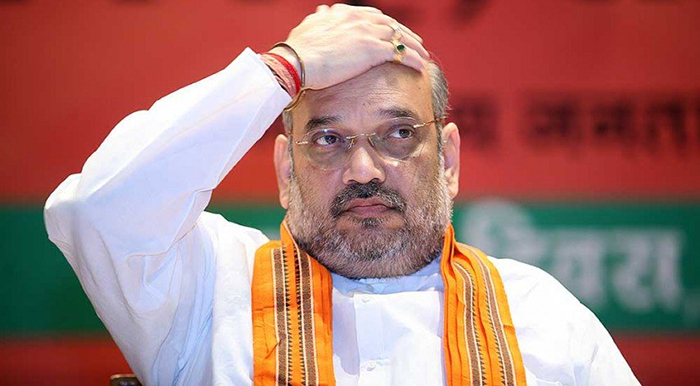
New Delhi, Aug 2: Union Home Minister Amit Shah today tested positive for COVID-19 coronavirus infection and has been admitted to a hospital. 

Shah took to social media today to inform about his infection. “I have tested positive but my health is fine," he said, adding that he has been hospitalised on the assistance of doctors. 

The Union Home Minister also appealed to those who came into close contact with him in the last few days to get themselves tested for COVID-19.

Comments

Add new comment

  • Coastaldigest.com reserves the right to delete or block any comments.
  • Coastaldigset.com is not responsible for its readers’ comments.
  • Comments that are abusive, incendiary or irrelevant are strictly prohibited.
  • Please use a genuine email ID and provide your name to avoid reject.