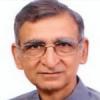
Amit Shah has come to unseat Siddaramaiah; let DKS become CM: Poojary

coastaldigest.com news network
August 12, 2017

Mangaluru, Aug 12: Congress veteran B Janardhana Poojary has warned chief minister Siddaramaiah against neglecting BJP supremo Amit Shah’s strategies for upcoming assembly polls.

Speaking to media persons here on Saturday, the former union minister said that CM should wake up from and tender his resignation. 

“Siddaramaiah should realise that Amit Shah has come to the State to unseat the former. The visit of BJP chief was a matter of concern for the Congress and more so Siddaramaiah. Wherever Shah has toured, the ruling party’s Chief Minister has been unseated,” Poojary said.

He said that in spite of the severe drought, Siddaramaiah has so far not found time to tour the affected regions of the State. “I am really shocked by his recent statement on drought following a visit to an affected place.”

Poojary also said that Siddaramaiah should pave way for a Dalit leader or D.K. Shivakumar to become Chief Minister. The party high command has a good opinion of Mr. Shivakumar, who has stood by the party during difficult times. “Both Sonia Gandhi and Rahul Gandhi have appreciated Mr. Shivakumar,” he said and added that Mr. Shivakumar would become the Chief Minister in the coming days.

Poojary said the ongoing investigation by the Income Tax department on the assets of Mr. Shivakumar will not come in the way of his becoming the Chief Minister.

Comments

abdullah
 - 
Sunday, 13 Aug 2017

He have Age related problems ....

Well Wisher
 - 
Sunday, 13 Aug 2017

Scrap mind, seems he lost some nuts from kidney side and effects on his brain.

Saleem
 - 
Sunday, 13 Aug 2017

आबे पुजारी तुम्हारा अकल तो तीखनेपे हे नहीं........उपारसे तुम्हारी गीधाड़ धमकी किसी और को सूनाओ.......

Add new comment

  • Coastaldigest.com reserves the right to delete or block any comments.
  • Coastaldigset.com is not responsible for its readers’ comments.
  • Comments that are abusive, incendiary or irrelevant are strictly prohibited.
  • Please use a genuine email ID and provide your name to avoid reject.
Ram Puniyani
June 29,2020

In Minneapolis, US an African American, George Floyd lost his life as the white policeman, Derek Chauvin, caught hold of him and put his knee on his neck. This is a technique developed by Israel police. For nine long minutes the knee of the while policeman was on the neck of George, who kept shouting, I can’t breathe.

Following this gruesome murder America erupted with protests, ‘Black lives matter’. The protestors were not just African Americans but also a large section of whites. Within US one police Chief apologized for the act of this. In a touching gesture of apology the police force came on its knees. This had reverberations in different parts of the World.

The act was the outcome of the remnants of the racial hatred against blacks by the whites. It is the hatred and the perceptions which are the roots of such acts of violence. What was also touching that the state of democracy in US is so deep that even the police apologized, the nation, whites and blacks, stood up as a sensitive collective against this violence.

US is not the only country where the brutal acts of violence torment the marginalized sections of society. In India there is a list of dalits, minorities and adivasis who are regularly subjected to such acts. But the reaction is very different. We have witnessed the case of Tabrez Ansari, who was tied to the pole by the mob and beaten ruthlessly. When he was taken to police station, police took enough time to take him to hospital and Tabrez died.

Mohsin Sheikh, a Pune techie was murdered by Hindu Rashtra Sena mob, the day Modi came to power in 2014. Afrazul was killed by Shambhulal Regar, videotaped the act released on social media. Regar believed that Muslims are indulging in love Jihad, so deserve such a fate. Mohammad Akhlaq is one among many names who were mob lynched on the issue of beef cow. The list can fill pages after pages.

Recently a young dalit boy was shot dead for the crime of entering a temple. In Una four dalits were stripped above waste and beaten mercilessly. Commenting on this act the Union Minister Ramvilas Paswan commented that it is a minor incident. Again the list of atrocities against dalits is long enough. The question is what Paswan is saying is the typical response to such gruesome murders and tortures. In US loss of one black life, created the democratic and humane response. In India there is a general silence in response to these atrocities. Some times after a good lapse of time, the Prime Minister will utter, ‘Mother Bharati has lost a son’. Most of the time victim is blamed. Some social groups raise their voice in some fora but by and large the deafening silence from the country is the norm.

India is regarded as the largest democracy. Democracy is the rule of law, and the ground on which the injustices are opposed. In America though the present President is insensitive person, but its institutions and processes of democratic articulations are strong. The institutions have deepened their roots and though prejudices may be guiding the actions of some of the officers like the killer of George, there are also police officers who can tell their President to shut up if he has nothing meaningful to say on the issue. The prejudices against Blacks may be prevalent and deep in character, still there are large average sections of society, who on the principles of ‘Black lives matter’. There are large sections of vocal population who can protest the violation of basic norms of democracy and humanism.

In India by contrast there are multiple reasons as to why the lives of Tabrez Ansari, Mohammad Akhlaq, Una dalit victims and their likes don’t matter. Though we claim that we are a democracy, insensitivity to injustices is on the rise. The strong propaganda against the people from margins has become so vicious during last few decades that any violence against them has become sort of a new normal. The large populace, though disturbed by such brutalities, is also fed the strong dose of biases against the victims. The communal forces have a great command over effective section of media and large section of social media, which generates Hate against these disadvantaged groups, thereby the response is muted, if at all.

As such also the process of deepening of our democracy has been weak. Democracy is a dynamic process; it’s not a fixed entity. Decades ago workers and dalits could protest for their rights. Now even if peasants make strong protests, dominant media presents it as blocking of traffic! How the roots of democracy are eroded and are visible in the form where the criticism of the ruling dispensation is labelled as anti National..

Our institutions have been eroded over a period of time, and these institutions coming to the rescue of the marginalized sections have been now become unthinkable. The outreach of communal, divisive ideology, the ideology which looks down on minorities, dalits and Adivasis has risen by leaps and bounds.

The democracy in India is gradually being turned in to a hollow shell, the rule of law being converted in to rule of an ideology, which does not have faith in Indian Constitution, which looks down upon pluralism and diversity of this country, which is more concerned for the privileges of the upper caste, rich and affluent. The crux of the matter is the weak nature of democracy, which was on way to become strong, but from decades of 1980s, as emotive issues took over, the strength of democracy started dwindling, and that’s when the murders of the types of George Floyd, become passé. One does complement the deeper roots of American democracy and its ability to protect the democratic institutions, which is not the case in India, where protests of the type, which were witnessed after George Floyd’s murder may be unthinkable, at least in the present times. 

Comments

Add new comment

  • Coastaldigest.com reserves the right to delete or block any comments.
  • Coastaldigset.com is not responsible for its readers’ comments.
  • Comments that are abusive, incendiary or irrelevant are strictly prohibited.
  • Please use a genuine email ID and provide your name to avoid reject.
News Network
February 2,2020

Feb 2: Prime Minister Narendra Modi’s second budget in seven months disappointed investors who were hoping for big-bang stimulus to revive growth in Asia’s third-largest economy.

The fiscal plan -- delivered by Finance Minister Nirmala Sitharaman on Saturday -- proposed tax cuts for individuals and wider deficit targets but failed to provide specific steps to fix a struggling financial sector, improve infrastructure and create jobs. Stocks slumped as a proposal to scrap the dividend distribution tax for companies failed to impress investors.

"Far from being a game changer, the budget provides little in terms of short-term growth stimulus,” said Priyanka Kishore, head of India and South East Asia economics at Oxford Economics Ltd. in Singapore. “While income tax cuts will provide some relief on the consumption front, the multiplier effect is low and the overall stance of the budget is not expansionary."

India has gone from being the world’s fastest-growing major economy three years ago, expanding at 8%, to posting its weakest performance in more than a decade this fiscal year, estimated at 5%.

While the government has taken a number of steps in recent months to spur growth, they’ve fallen short of spurring demand in the consumption-driven economy. Saturday’s budget just added to the glum sentiment.

Okay Budget

“It’s an okay budget but not firing on all cylinders that the market was hoping for,” said Andrew Holland, chief executive officer at Avendus Capital Alternate Strategies in Mumbai.

The government had limited scope for a large stimulus given a huge shortfall in revenues in the current year. The slippage induced Sitharaman to invoke a never-used provision in fiscal laws, allowing the government to exceed the budget gap by 0.5 percentage points. The result: the deficit for the year ending March was widened to 3.8% of gross domestic product from a planned 3.3%.

On Friday, India’s chief economic adviser Krishnamurthy Subramanian said reviving economic growth was an “urgent priority” and deficit goals could be relaxed to achieve that. The adviser’s Economic Survey estimated growth will rebound to 6%-6.5% in the year starting April.

The fiscal gap will narrow to 3.5% next year, as the government budgeted for gross market borrowing to rise marginally to 7.8 trillion rupees from 7.1 trillion rupees in the current year. A plan to earn 2.1 trillion rupees by selling state-owned assets in the year starting April will also help plug the deficit.

Total spending in the coming fiscal year will increase to 30.4 trillion rupees, representing a 13% increase from the current year’s budget, according to latest data.

Key highlights from the budget:

* Tax on annual income up to 1.25 million rupees pared, with riders

* Dividend distribution tax to be levied on investors, instead of companies

* Farm sector budget raised 28%, transport infrastructure gets 7% more

* Spending on education raised 5%

* Fertilizer subsidy cut 10%

Analysts said the muted spending plan to keep the deficit in check will lead to more downside risks to growth in the coming months.

“It is very doubtful that the increase in expenditure will push demand much,” Chakravarthy Rangarajan, former governor at the Reserve Bank of India told BloombergQuint, adding that achieving next year’s budget deficit goal of 3.5% of GDP was doubtful.

With the government sticking to a conservative fiscal path, the focus will now turn to central bank, which is set to review monetary policy on Feb. 6. Given inflation has surged to a five-year high of 7.35%, the RBI is unlikely to lower interest rates.

What Bloomberg’s Economists Say:

The burden of recovery now falls solely on the Reserve Bank of India. With inflation breaching RBI’s target at present, any rate cuts by the central bank are likely to be delayed and contingent upon inflation falling below the upper end of its 2%-6% target range.

-- Abhishek Gupta, India economist

Governor Shaktikanta Das may instead focus on unconventional policy tools such as the Federal Reserve-style Operation Twist -- buying long-end debt while selling short-tenor bonds -- to keep borrowing costs down.


Comments

Add new comment

  • Coastaldigest.com reserves the right to delete or block any comments.
  • Coastaldigset.com is not responsible for its readers’ comments.
  • Comments that are abusive, incendiary or irrelevant are strictly prohibited.
  • Please use a genuine email ID and provide your name to avoid reject.
News Network
January 11,2020

Bengaluru, Jan 11: The Chief Justice of India Justice Sharad Arvind Bobde on Saturday inaugurated the phase-1 of the new building of the Karnataka Judicial Academy on Crescent Road in Bengaluru.

The new building has three floors, besides, the ground floor and two basement floors.

While Chief Minister B S Yediyurappa inaugurated the 319-seater multi-purpose auditorium, at which Chief Justice of the High Court of Karnataka Justice Abhay Shreeniwas Oka felicitated Justice Bobde.

Justice Ravi Malimath, President of the Karnataka Judicial Academy and Judge of the High Court of Karnataka, in his welcome address said that the academy has so far trained as many as 4000 judicial officers and striving for excellence in the field of judiciary.

The building, built in the first phase, has parking in the lower and the upper basement, which can accommodate 44 cars and 124 two-wheelers, the ground floor consists of a 319-seater multi-purpose air-conditioned auditorium, a lecture hall with 84 seats, two lecture halls with 40 seats each and a VIP lounge. The First Floor has a lecture hall with 84 seats, two lecture halls with 40 seats each, a VIP lounge, two discussion rooms and an administrative office for the staff of the academy.

The second phase, to be built has a parking facility for 36 four-wheelers and 22 two-wheelers in the lower basement and 32 four-wheelers and 30 two-wheelers in the upper basement.

The total cost of the project, including Phase-1 and Phase-2, to be executed by the Public Works Department in the sprawling 2.2 acres plot of the Karnataka Judicial Academy is around Rs 96.02 Crore.

Comments

Add new comment

  • Coastaldigest.com reserves the right to delete or block any comments.
  • Coastaldigset.com is not responsible for its readers’ comments.
  • Comments that are abusive, incendiary or irrelevant are strictly prohibited.
  • Please use a genuine email ID and provide your name to avoid reject.