Arts topper says Political Science teaches cooking, Science topper doesn't know what is H2O; new exams ordered

June 2, 2016

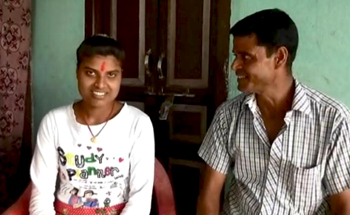
Patna, Jun 2: On camera, Ruby Rai, 17, who topped Bihar's Class 12 exams in the Arts stream, says political science, a subject she virtually aced, teaches cooking. Another student from her junior or intermediate college , who placed as Bihar's Science topper, was not able to answer elementary questions like the link between water and H20.

BiharThe students were interviewed by local channels after their results were declared last week.

So the 10 toppers among the nearly 15 lakhs students in Bihar will now take a new exam within the next week, an embarrassed government has said. Education Minister Ashok Choudhary conceded that it appears that either proxies took the exam for the students, or that answer sheets submitted by students were replaced later with better ones.

More signs of cheating - the toppers are disproportionately distributed- most belong to the V N Rai College in Hajipur, just 20 km from the state capital of Patna.

The minister admitted this points to signs of flourishing "education mafias" which organize everything a student needs from admissions to, well, assisted exam-taking.

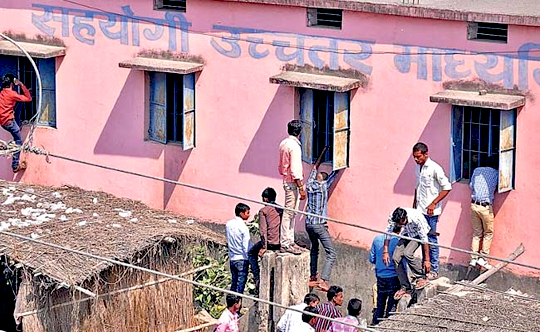
Last year, photos of adults scaling the walls of an examination centre to pass cheat-sheets to Class 10 students made international headlines, triggering the introduction of new penalties for cheating including a six-year jail term for adults found guilty.

biharfrau

Comments

UMMAR
 - 
Thursday, 2 Jun 2016

IF THEY CHEAT A EDUCAION BOARD AND TOOK HEIGEST MARK ITS WIL ONLY IN PAPER ,

ME SURE U R MIND IT REMAIN ZERO... INDIN GOV SHOULD TAKE PROPER ACTION FOR THIS TYPE OF CHEATING.

Welwisher
 - 
Thursday, 2 Jun 2016

Indian Education system should be changed. Everyone want to get good marks by cheating the board.

Add new comment

  • Coastaldigest.com reserves the right to delete or block any comments.
  • Coastaldigset.com is not responsible for its readers’ comments.
  • Comments that are abusive, incendiary or irrelevant are strictly prohibited.
  • Please use a genuine email ID and provide your name to avoid reject.
News Network
March 28,2020

Kasaragod, Mar 28: A pregnant Bihari migrant woman in labour gave birth in an ambulance after the Karnataka police allegedly refused to allow the ambulance carrying her to cross the border road to Mangaluru to reach her hospital.

The border road was shut due to the lockdown. The woman used to consult a doctor in Mangaluru across the border.

As Karnataka police stopped the vehicle at the border in Talapady, saying no vehicle, including ambulances from Kerala, could be permitted to their state, the drivers decided to take the woman was taken to the general hospital here, but she went into labour and delivered a baby girl in the vehicle

Both the mother and baby are doing fine, authorities said.

Hailing from Patna in Bihar, 25-year-old Gowri Devi and her husband were working in a local plywood factory in this north Kerala district, from where the maximum number of coronavirus cases have been reported so far in the state.

Those living in the border towns and villages of Kasaragod are dependent on the hospitals in Mangaluru as it is nearer, local people said.

The ambulance drivers- Aslam and Musthafa- said they stopped the vehicle by the wayside, making it safe for the woman. The baby girl and the mother were soon shifted to the government general hospital here and both of them are safe and healthy, they said.

Local people complained that not only pregnant women, but even patients requiring daily dialysis and emergency cardiac and cancer treatment were being sent back by Karnataka.

Comments

Add new comment

  • Coastaldigest.com reserves the right to delete or block any comments.
  • Coastaldigset.com is not responsible for its readers’ comments.
  • Comments that are abusive, incendiary or irrelevant are strictly prohibited.
  • Please use a genuine email ID and provide your name to avoid reject.
Agencies
February 20,2020

India ranked 77th on a sustainability index that takes into account per capita carbon emissions and ability of children in a nation to live healthy lives and secures 131st spot on a flourishing ranking that measures the best chance at survival and well-being for children, according to a UN-backed report.

The report was released on Wednesday by a commission of over 40 child and adolescent health experts from around the world. It was commissioned by the World Health Organization (WHO), UN Children's Fund (UNICEF) and The Lancet medical journal.

In the report assessing the capacity of 180 countries to ensure that their youngsters can survive and thrive, India ranks 77th on the Sustainability Index and 131 on the Flourishing Index, it said.

Flourishing is the geometric mean of Surviving and Thriving. For Surviving, the authors selected maternal survival, survival in children younger than 5 years old, suicide, access to maternal and child health services, basic hygiene and sanitation, and lack of extreme poverty.

For Thriving, the domains were educational achievement, growth and nutrition, reproductive freedom, and protection from violence.

Under the Sustainability Index, the authors noted that promoting today's national conditions for children to survive and thrive must not come at the cost of eroding future global conditions for children's ability to flourish.

The Sustainability Index ranks countries on excess carbon emissions compared with the 2030 target. This provides a convenient and available proxy for a country's contribution to sustainability in future.

The report noted that under realistic assumptions about possible trajectories towards sustainable greenhouse gas emissions, models predict that global carbon emissions need to be reduced from 39·7 giga­ tonnes to 22·8 gigatonnes per year by 2030 to maintain even a 66 per cent chance of keeping global warming below 1·5°C.

It said that the world's survival depended on children being able to flourish, but no country is doing enough to give them a sustainable future.

"No country in the world is currently providing the conditions we need to support every child to grow up and have a healthy future," said Anthony Costello, Professor of Global Health and Sustainability at University College London, one of the lead authors of the report.

"Especially, they're under immediate threat from climate change and from commercial marketing, which has grown hugely in the last decade," said Costello – former WHO Director of Mother, Child and Adolescent health.

Norway leads the table for survival, health, education and nutrition rates - followed by South Korea and the Netherlands. Central African Republic, Chad and Somalia come at the bottom.

However, when taking into account per capita CO2 emissions, these top countries trail behind, with Norway 156th, the Republic of Korea 166th and the Netherlands 160th.

Each of the three emits 210 per cent more CO2 per capita than their 2030 target, the data shows, while the US, Australia, and Saudi Arabia are among the 10 worst emitters. The lowest emitters are Burundi, Chad and Somalia.

According to the report, the only countries on track to beat CO2 emission per capita targets by 2030, while also performing fairly – within the top 70 – on child flourishing measures are: Albania, Armenia, Grenada, Jordan, Moldova, Sri Lanka, Tunisia, Uruguay and Vietnam.

"More than 2 billion people live in countries where development is hampered by humanitarian crises, conflicts, and natural disasters, problems increasingly linked with climate change," said Minister Awa Coll-Seck from Senegal, Co-Chair of the commission.

The report also highlights the distinct threat posed to children from harmful marketing.

Evidence suggests that children in some countries see as many as 30,000 advertisements on television alone in a single year, while youth exposure to vaping (e-cigarettes) advertisements increased by more than 250 per cent in the US over two years, reaching more than 24 million young people.

Studies in Australia, Canada, Mexico, New Zealand and the US – among many others – have shown that self-regulation has not hampered commercial ability to advertise to children.

Children's exposure to commercial marketing of junk food and sugary beverages is associated with purchase of unhealthy foods and overweight and obesity, linking predatory marketing to the alarming rise in childhood obesity, it said.

The number of obese children and adolescents increased from 11 million in 1975 to 124 million in 2016 – an 11-fold increase, with dire individual and societal costs, the report said.

To protect children, the authors call for a new global movement driven by and for children.

Specific recommendations include stopping CO2 emissions with the utmost urgency, to ensure children have a future on this planet; placing children and adolescents at the centre of global efforts to achieve sustainable development, the report said.

New policies and investment in all sectors to work towards child health and rights; incorporating children's voices into policy decisions and tightening national regulation of harmful commercial marketing, supported by a new Optional Protocol to the UN Convention on the Rights of the Child, it said.


Comments

Add new comment

  • Coastaldigest.com reserves the right to delete or block any comments.
  • Coastaldigset.com is not responsible for its readers’ comments.
  • Comments that are abusive, incendiary or irrelevant are strictly prohibited.
  • Please use a genuine email ID and provide your name to avoid reject.
coastaldigest.com news network
July 11,2020

Bengaluru, Jul 11: Amidst the mounting number of covid-19 cases, Karnataka is witnessing another disturbing trend of increasing number of people ending their life. After the lockdown was relaxed, the state saw a worrying jump in the number of suicides.

According to statistics, as many as 2,211 suicide cases have been registered in just two months. The number of suicides rose by 23% in May to 1,127, and by another 18% in June to 1,084, from an average of 912 suicides in the first three months of the year. 

In April, however, the number nearly halved to 477. But April was also the month during which the lockdown (announced on March 24) was complete, and everyone was at home -- which, experts say, could have prevented people with suicidal tendencies from taking their own lives.

Shockingly, number of teenagers including school children committing suicide also increased in the state in past couple of months.

With the pandemic still accelerating and impacting people in multiple ways, the World Health Organisation has urged people to pay greater attention to mental health and suicide prevention. 

Dr Poonam Khetrapal Singh, Regional Director, World Health Organisation (WHO), South-East Asia Region, said stigma related to Covid-19 infection may lead to feelings of isolation and depression. Another precipitating factor impacting mental health amidst Covid-19 could be domestic violence, which is reported to have increased globally as several countries imposed lockdowns, she said.

“Hitting lives and livelihoods, the pandemic is causing fear, anxiety, depression and stress among people. Social distancing, isolation and coping with perpetually evolving and changing information about the virus has both triggered and aggravated existing and pre-existing mental health conditions, which need urgent attention,” she said.

Dr H Chandrashekar, professor and head of the department of psychiatry at Victoria Hospital, said reasons for suicide are always multi-factored, combined, cumulative, unresolving and interrelated.

“There is grief everywhere now due to deaths related to Covid-19, and it may have an adverse effect on some. But people should be watchful of their family members, especially those who are in depression and have a history of suicide attempts. One should never ignore signs, like when someone says they feel like ending their life. They should not be left alone, and unconditional support needs to be given. Also, objects that could be used to commit suicide must be kept away from them,” Dr Chandrashekar said.

Comments

Add new comment

  • Coastaldigest.com reserves the right to delete or block any comments.
  • Coastaldigset.com is not responsible for its readers’ comments.
  • Comments that are abusive, incendiary or irrelevant are strictly prohibited.
  • Please use a genuine email ID and provide your name to avoid reject.