


Attendance shortage: Over 2,000 II PU students in Karnataka can't write exams

[email protected] (CD Network)
March 9, 2015

Bengaluru, Mar 9: More than 2,000 second-year PUC students across Karnataka will not be allowed to appear for the final examinations this year thanks to attendance shortage.
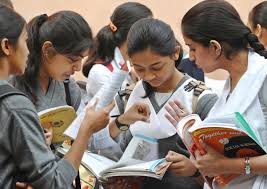
pucAs per information available from the Department of Pre-University Education, this academic year, 2,050 students from various colleges across the state have attendance below 75 per cent.

“This information was collected from the principals of colleges and, as per that list, we have not even generated the admission tickets of such students who fall short of the required attendance,” said R H Ritti, Joint Director, Examinations.

The PUE Department took a decision not to generate the admission tickets of candidates who do not meet the attendance criterion from the March 2013 final exams.

“There were complaints against some principals for allowing students with shortage of attendance to appear for the exams by collecting a penalty. There is no such provision to collect penalty and allow them to write the exam. To avoid such malpractice by colleges, we are not generating the admission ticket itself,” stated another senior official of the examinations section.

Rule 21 of the Karnataka Education Act, 2006, deals with mandatory 75 per cent attendance to be eligible to appear for the final examinations at all levels. This rule applies even for first PUC, undergraduate and postgraduate courses. There is also a similar direction by the Supreme Court mandating minimum attendance.

According to the rule, if any student falls short of attendance, he/she will not be allowed to write the final or supplementary examinations. They need to enrol/get admission as fresh candidates, get 75 per cent attendance by attending classes regularly and then take up the final exams.

Comments

Add new comment

  • Coastaldigest.com reserves the right to delete or block any comments.
  • Coastaldigset.com is not responsible for its readers’ comments.
  • Comments that are abusive, incendiary or irrelevant are strictly prohibited.
  • Please use a genuine email ID and provide your name to avoid reject.
News Network
January 27,2020

Bagalkote, Jan 27: The bank of Krishna River in front of Sangamantha Temple at Koodalasangama in Karnataka today witnessed the launch of women’s indefinite strike demanding liquor ban in the state.

Thousands of women from various parts of Karnataka have taken part in the strike being organised under the banner of 'Karnataka Madya Nisheda Andolana'.

The strike was launched to draw the attention of the state government to press for a complete ban on the sale of liquor across the state.

About 50 various organizations and religious pontiffs have extended their support for the strike. Food is being cooked on the bank of the river for the agitating women.

The women from Chikmagalur, Tumakuru, Raichur and Ballari districts are taking part in it.

Comments

SK
 - 
Tuesday, 28 Jan 2020

Change the Heading........


The protest is for Liquor ban and not against .......  Please edit the articles before posting

FAIRMAN
 - 
Monday, 27 Jan 2020

Thanks to God,

At least now, people wokeup., which should have been done immediattely after independence or during implementation of constitution.


Shame to men who drink more.

Add new comment

  • Coastaldigest.com reserves the right to delete or block any comments.
  • Coastaldigset.com is not responsible for its readers’ comments.
  • Comments that are abusive, incendiary or irrelevant are strictly prohibited.
  • Please use a genuine email ID and provide your name to avoid reject.
News Network
June 26,2020

Bengaluru, Jun 26: The National Restaurant Association of India (NRAI) on Thursday came up with a Standard Operating Procedure (SOP) for restaurants whereby among other physical distancing norms, it has suggested a 2-metre gap between tables.

Formulated in partnership with Releski, a Bengaluru based skill-tech company, the SoP suggests that in case of back-to-back seating, people sitting with their backs towards each other will have their seats divided by 'Plexiglass' divider raised up to 2 meters from the ground.

"In a typical restaurant, the improvised seating plan should have a minimum distance of 2 metres between tables. The distance of 2 metres (6 feet) between tables should measure from one edge of the table to the other table's edge," it said.

In case of loose or free seating such as in banquet style or food court style seating, a minimum 2 meters of distance should be maintained between tables.

The guidelines noted that, to encourage physical distancing, restaurants have to sacrifice their seating capacity, to promote health and safety, and also to gain trust from their patrons.

"In order to perform this, divide your restaurants under different sectors. Pull out your restaurant's floor plan and colour code different sections red and yellow. Red sections are potential areas where maximum footfall or traffic is observed. Yellow sections are areas where the footfalls are average," it said.

All the red sections are encircled or bordered by placing barricades or Q manager and will open at specific points to access the yellow section and all the opening points will have hand sanitisers and sprays, and every guest who walks from red zones to yellow zones will sanitise himself/herself to reduce the chances of contamination.

For air conditioning, the guidelines of CPWD shall be followed which inter alia emphasises that the temperature setting of all air conditioning devices should be in the range of 24-30 degree Celsius, relative humidity should be in the range of 40- 65 per cent, intake of fresh air should be as much as possible and cross ventilation should be adequate, the guidelines suggested.

The industry body has also suggested appointment of a COVID-free Ambassador who would operate as the Chief Health Officer within the restaurant team, preferably from the management team in each shift.

The ambassador's would put the new daily work routines into practice, to monitor compliance with good practice and to lead the preventative measures, adapt to health & safety recommendations and requirements of the restaurant and oversee the implementation of the norms.

Anurag Katriar, President of NRAI and CEO & Executive Director of deGustibus Hospitality, said: "Every restaurant cutting across formats is facing the harsh reality of subdued to shut business volumes in the present and the uncertainty of business environment in the future. One thing is certain that hygiene and safety will be a key differentiator in the post-pandemic restaurant operations."

Comments

Add new comment

  • Coastaldigest.com reserves the right to delete or block any comments.
  • Coastaldigset.com is not responsible for its readers’ comments.
  • Comments that are abusive, incendiary or irrelevant are strictly prohibited.
  • Please use a genuine email ID and provide your name to avoid reject.
coastaldigest.com news network
June 17,2020

Mangaluru, Jun 17: A private flight chartered by UAE-based NRI hotelier Praveen Shetty has brought home around 175 people from United Arab Emirates.

This is the third flight chartered by Mr Shetty, chairman of the Fortune Group of Hotels, and president of the Karnataka Non-Resident Indian Forum, to repatriate his employees and other stranded Kannadigas.

The Air Arabia flight with 168 adult passengers and six infants on board took off from Sharjah International Airport at 9:45 pm (UAE time) on June 16 and landed at Mangaluru International Airport at 2:50 am Indian Standard Time on June 17.

Comments

Add new comment

  • Coastaldigest.com reserves the right to delete or block any comments.
  • Coastaldigset.com is not responsible for its readers’ comments.
  • Comments that are abusive, incendiary or irrelevant are strictly prohibited.
  • Please use a genuine email ID and provide your name to avoid reject.