


Attendance shortage: Over 2,000 II PU students in Karnataka can't write exams

[email protected] (CD Network)
March 9, 2015

Bengaluru, Mar 9: More than 2,000 second-year PUC students across Karnataka will not be allowed to appear for the final examinations this year thanks to attendance shortage.
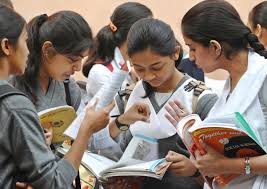
pucAs per information available from the Department of Pre-University Education, this academic year, 2,050 students from various colleges across the state have attendance below 75 per cent.

“This information was collected from the principals of colleges and, as per that list, we have not even generated the admission tickets of such students who fall short of the required attendance,” said R H Ritti, Joint Director, Examinations.

The PUE Department took a decision not to generate the admission tickets of candidates who do not meet the attendance criterion from the March 2013 final exams.

“There were complaints against some principals for allowing students with shortage of attendance to appear for the exams by collecting a penalty. There is no such provision to collect penalty and allow them to write the exam. To avoid such malpractice by colleges, we are not generating the admission ticket itself,” stated another senior official of the examinations section.

Rule 21 of the Karnataka Education Act, 2006, deals with mandatory 75 per cent attendance to be eligible to appear for the final examinations at all levels. This rule applies even for first PUC, undergraduate and postgraduate courses. There is also a similar direction by the Supreme Court mandating minimum attendance.

According to the rule, if any student falls short of attendance, he/she will not be allowed to write the final or supplementary examinations. They need to enrol/get admission as fresh candidates, get 75 per cent attendance by attending classes regularly and then take up the final exams.

Comments

Add new comment

  • Coastaldigest.com reserves the right to delete or block any comments.
  • Coastaldigset.com is not responsible for its readers’ comments.
  • Comments that are abusive, incendiary or irrelevant are strictly prohibited.
  • Please use a genuine email ID and provide your name to avoid reject.
News Network
August 2,2020

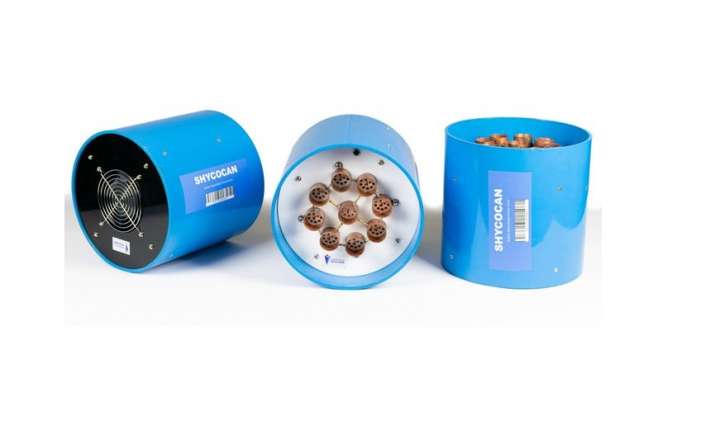
Bengaluru, Aug 2: Bengaluru based Centre for Advanced Research and Development (CARD), the research wing of organisation De scalene has come up with a device called "SHYCOCAN" (Scalene Hypercharge Corona Canon) which neutralizes the coronavirus.

Speaking to news agency Dr Rajah Vijay Kumar, Chairman, Organisation De Scalene said that the device will not kill any bacteria or fungus, however, neutralizes the coronavirus particles.

"The device was tested for its safety and efficacy and is soon going to be manufactured and marketed in the US under the Enforcement Discretion policy of USFDA and in Europe as the device is CE compliant and is CE marked," said Kumar.

He also added the device will cover a volume of 10,000 cubic feet.

The device Scalene Hypercharge Corona Canon (SHYCOCAN) is intended to be used in the residential, industrial and commercial environment and is designed for active containment by attenuation of Corona family of viruses. (Laboratories de Especialidades Immunological S.A. de C.V, Virucidal Activity concludes 99.9 per cent virus elimination), Kumar asserted.

"SHYCOCAN operates on regular 110/240V - 50/60 Hz wall socket and is a plug and play device, that delivers the necessary signals to a photon mediated electrons emitters (PMEE), that produces hypercharge high-velocity electrons by photon mediation that interacts with the negative seeking S-protein of Corona family of viruses thus reducing infectivity and prevent air and surface borne transmission of corona family of viruses," said Kumar.

The device does not use any chemicals, or any other consumables and does not produce harmful ozone gas or any other substances and is completely safe for use in any environment, he added.

"The attack mechanism of the Virus starts with the initial attachment of the virion to the host cell, it is initiated by interactions between the S-protein and its receptor on the "negative" cell membrane. The sites of receptor binding domains (RBD) within the S1 region of a coronavirus S-protein vary depending on the virus. 

The S-protein/receptor interaction is the primary determinant for a coronavirus to infect a host species and governs the tissue tropism of the virus. However, the end result is the fusion and release of the viral genome into the cytoplasm," said Kumar.

He continued saying that the counter mechanism by the device SHYCOCAN is that if negative seeking is the guidance mechanism of the S- Protein, attracted by the transmembrane potential of the host cells, then breaking this mechanism would block the Coronavirus infectivity and spread.

"The device has been in use for more than a year at the S-CARD campus, the headquarters of Scalene," said Kumar.

Comments

Add new comment

  • Coastaldigest.com reserves the right to delete or block any comments.
  • Coastaldigset.com is not responsible for its readers’ comments.
  • Comments that are abusive, incendiary or irrelevant are strictly prohibited.
  • Please use a genuine email ID and provide your name to avoid reject.
News Network
January 2,2020

Kalaburgi, Jan 2: At least 10 students sustained injuries when a private bus carrying students of a school on an educational tour rammed into a tree today morning.

The mishap occurred when the students of Ayyappa School located in Chennaveera Nagar were going around the city in a bus during their tour.

The bus crashed into a tree near Venkatagiri Hotel on New Jewargi Road in the city.

A case has been registered at a traffic police station.

Comments

Add new comment

  • Coastaldigest.com reserves the right to delete or block any comments.
  • Coastaldigset.com is not responsible for its readers’ comments.
  • Comments that are abusive, incendiary or irrelevant are strictly prohibited.
  • Please use a genuine email ID and provide your name to avoid reject.
coastaldigest.com news network
May 9,2020

Bengaluru, May 9: A three-year-old boy was killed by a leopard in the early hours of Saturday in Magadi taluk near Bengaluru.

According to police, the boy identified as C Hemanth, was sleeping with his parents - Chandrasekhar and Mangalagowramma - outside his grandfather Chikkanna's residence at Kadaraiana Palya.

The couple, residents of Dodderi, near Big Banyan Tree (Dodda Alada Mara), had been staying at Chikkanna's [Mangalagowramma's father] residence since past a few days following the outbreak of COVID-19 epidemic in Bengaluru.

Some of the family members, with the child, had slept outside the residence on Friday as the temperature was high. The feline might have taken the child between 1.30 a.m. and 4 a.m., and killed it on the outskirts of the village, said the sources.

After a frantic search, family members and villagers found the mutilated body of the child in the early hours. The leopard had left the partially devoured body on the outskirts of the village, added the sources.

According to the villagers, many felines have been prowling in the area, probably arriving from forests around Magadi and attached areas, for the last several weeks.

The Forest Department officials said that they have launched an exercise to trap the animal by placing cages with live baits.

According to preliminary investigations, the child was killed by a leopard. Pugmarks were found near the body. A detailed investigation and post-mortem report will find the exact cause for the death.

The incident has sent shockwaves in the vicinity of the village. According to the sources, people are planning to launch a protest to condemn the killing of the boy.

Minister for Forest and Environment B.S. Anand Singh has announced a compensation of ₹7.5 lakh to the family of the victim.

Accompanied by Bengaluru Rural Lok Sabha member D.K. Suresh, Magadi legislator Manjunath and senior officials, Mr. Singh visited the place on Saturday morning.

Addressing media persons, he said that the department has decided to start combing operations for the leopard.

Mr. Suresh said the leopard might have come from Thippagondanahalli reservoir's catchment area on the outskirts of Bengaluru. The leopard has already tasted the blood of the child and hence the department should initiate immediate action [as the chances of the feline becoming a man-eater is high, Mr. Suresh added.

Comments

Add new comment

  • Coastaldigest.com reserves the right to delete or block any comments.
  • Coastaldigset.com is not responsible for its readers’ comments.
  • Comments that are abusive, incendiary or irrelevant are strictly prohibited.
  • Please use a genuine email ID and provide your name to avoid reject.