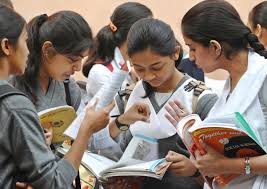
Attendance shortage: Over 2,000 II PU students in Karnataka can't write exams

[email protected] (CD Network)
March 9, 2015

Bengaluru, Mar 9: More than 2,000 second-year PUC students across Karnataka will not be allowed to appear for the final examinations this year thanks to attendance shortage.

pucAs per information available from the Department of Pre-University Education, this academic year, 2,050 students from various colleges across the state have attendance below 75 per cent.

“This information was collected from the principals of colleges and, as per that list, we have not even generated the admission tickets of such students who fall short of the required attendance,” said R H Ritti, Joint Director, Examinations.

The PUE Department took a decision not to generate the admission tickets of candidates who do not meet the attendance criterion from the March 2013 final exams.

“There were complaints against some principals for allowing students with shortage of attendance to appear for the exams by collecting a penalty. There is no such provision to collect penalty and allow them to write the exam. To avoid such malpractice by colleges, we are not generating the admission ticket itself,” stated another senior official of the examinations section.

Rule 21 of the Karnataka Education Act, 2006, deals with mandatory 75 per cent attendance to be eligible to appear for the final examinations at all levels. This rule applies even for first PUC, undergraduate and postgraduate courses. There is also a similar direction by the Supreme Court mandating minimum attendance.

According to the rule, if any student falls short of attendance, he/she will not be allowed to write the final or supplementary examinations. They need to enrol/get admission as fresh candidates, get 75 per cent attendance by attending classes regularly and then take up the final exams.

Comments

Add new comment

  • Coastaldigest.com reserves the right to delete or block any comments.
  • Coastaldigset.com is not responsible for its readers’ comments.
  • Comments that are abusive, incendiary or irrelevant are strictly prohibited.
  • Please use a genuine email ID and provide your name to avoid reject.
Agencies
July 8,2020

The Central Board of Secondary Education (CBSE) has rationalised by up to 30 per cent the syllabus for classes 9 to 12 for the academic year 2020-21 to reduce course load on students amid the COVID-19 crisis, Union HRD Minister Ramesh Pokhriyal 'Nishank' announced on Tuesday.

The curriculum has been rationalised while retaining the core elements, the Human Resource Development said.

Among the chapters dropped after the rationalisation exercise are lessons on democracy and diversity, demonetisation, nationalism, secularism, India's relations with its neighbours and growth of local governments in India, among others.

"Looking at the extraordinary situation prevailing in the country and the world, CBSE was advised to revise the curriculum and reduce course load for the students of classes 9 to 12.

"To aid the decision, a few weeks back I also invited suggestions from all educationists on the reduction of syllabus for students and I am glad to share that we received more than 1.5K suggestions. Thank you, everyone, for the overwhelming response," Nishank tweeted.

"Considering the importance of learning achievement, it has been decided to rationalise syllabus up to 30 per cent by retaining the core concepts," he added.

The Union minister said the changes made in the syllabi have been finalised by the respective course committees with the approval of the curriculum committee and the Governing Body of the Board.

"The heads of schools and teachers have been advised by the board to ensure that the topics that have been reduced are also explained to the students to the extent required to connect different topics. However, the reduced syllabus will not be part of the topics for internal assessment and year-end board examination.

"Alternative academic calendar and inputs from the NCERT on transacting the curriculum using different strategies shall also be part of the teaching pedagogy in the affiliated schools," a senior official of the HRD ministry said.

For classes 1 to 8, the National Council of Education Research and Training (NCERT) has already notified an alternative calendar and learning outcomes.

According to the updated curriculum, among the chapters deleted from class 10 syllabus are-- democracy and diversity, gender, religion and caste, popular struggles and movement, challenges to democracy

For class 11, the deleted portions included chapters on federalism, citizenship, nationalism, secularism, growth of local governments in India.

Similarly, class 12 students will not be required to study chapters on India's relations with its neighbours, changing nature of India's economic development, social movements in India and demonetisation, among others.

Universities and schools across the country have been closed since March 16 when the central government announced a nationwide classroom shutdown as one of the measures to contain the COVID-19 outbreak.

A nationwide lockdown was announced on March 24, which came into effect the next day. While the government has eased several restrictions, schools and colleges continue to remain closed.

Comments

Add new comment

  • Coastaldigest.com reserves the right to delete or block any comments.
  • Coastaldigset.com is not responsible for its readers’ comments.
  • Comments that are abusive, incendiary or irrelevant are strictly prohibited.
  • Please use a genuine email ID and provide your name to avoid reject.
News Network
March 6,2020

Bengaluru, Mar 6: In the face of unprecedented economic difficulties, Chief Minister B S Yediyurappa has chosen to hike the prices of fuel and liquor to fund development in his 2020-21 Budget, which tries to offer something for everybody with the available resources.

Yediyurappa announced a 3% hike in the rate of tax on petrol and diesel. This will result in the prices of petrol going up by Rs 1.60 per litre and diesel by Rs 1.59 per litre. This is expected to fetch the government Rs 1,500 crore.

By hiking additional excise duty on Indian Made Liquor (IML) by 6%, the government hopes to mop up Rs 1,200 crore.

In essence, Yediyurappa, the finance minister, pointed fingers at the Centre for the state’s fiscal woes. He said Karnataka’s share in Central taxes has come down this fiscal by Rs 8,887 crore. Plus, Rs 3,000 crore GST compensation will also be reduced as collections from the GST cess are not on expected lines, he said in his Budget speech. 

“It has become difficult to reach the 2019-20 Budget targets due to these reasons. To manage this situation within the bounds of the Karnataka Fiscal Responsibility Act, it has become inevitable this year to cut down the expenditure of many departments,” he said.

Under the 15th Finance Commission, Karnataka will see a reduction of Rs 11,215 crore in the state’s share of central taxes in 2020-21, Yediyurappa said. He also pointed out that expenditure on salaries, pensions and loan interest payments had risen by Rs 10,000 crore. “Serious difficulties are being faced in resource mobilisation efforts of the state. The state never faced economic difficulties of this magnitude in the previous years,” he said.

But in an attempt to please all, Yediyurappa made announcements across sectors and communities. Instead of the usual department-wise announcements, the CM chose to divide the Budget into six sectors: agriculture & allied activities; welfare & inclusive growth; stimulating economic growth; Bengaluru development; culture, heritage & natural resources and administrative reforms & public service delivery.

Farmers will get additional incentives under PM-KISAN costing Rs 2,600 crore and a waiver of interest on loans they have borrowed from cooperative banks worth Rs 466 crore.

The CM has earmarked Rs 500 crore to start work on the Kalasa-Banduri canals under the Mahadayi project. Also, Yediyurappa has given Rs 1,500 crore to commission the Yettinahole drinking water project.

This project will cater to the districts of Hassan, Chikkamagaluru, Tumakuru, Bengaluru Rural, Ramanagara, Chikkaballapur and Kolar.

For Bengaluru, the CM has made an allocation of Rs 8,772 crore. This includes Rs 500 crore for the suburban rail project, an electric bike taxi project and bus priority lanes.

Significantly, Yediyurappa has not made any allocation to mutts. However, the government will spend Rs 100 crore on the Anubhava Mantapa at Basavakalyan, Rs 66 crore for a 100 ft Kempegowda statue in Bengaluru and Rs 20 crore on a 325 ft statue of Basavanna at the Murugha Mutt in Chitradurga.

The CM has given Rs 305 crore for the development of various communities — Christians (Rs 200 crore), Upparas (Rs 10 crore), Vishwakarma (Rs 25 crore), Ambigara Chaudaiah (Rs 50 crore), Arya Vysya (Rs 10 crore) and Kumbara (Rs 10 crore).

Also, nearly 22.5 lakh government employees and their dependents will get cashless treatment facility for surgical treatment procedures at an estimated annual cost of Rs 50 crore under the Jyothi Sanjini scheme, the CM said.


Comments

Add new comment

  • Coastaldigest.com reserves the right to delete or block any comments.
  • Coastaldigset.com is not responsible for its readers’ comments.
  • Comments that are abusive, incendiary or irrelevant are strictly prohibited.
  • Please use a genuine email ID and provide your name to avoid reject.
News Network
April 16,2020

Bengaluru, Apr 16: With two more people testing positive for COVID-19 in Karnataka, the state's corona cases count has reached 279, including 80 discharged and 12 deaths, said the government on Wednesday.

A total of 19 corona cases were confirmed in the state on Wednesday. 17 cases were reported earlier in the day, of which 15 are male patients and two are female. Of the 17 cases, nine are workers of a pharmaceutical company in Mysuru, the government stated.

Meanwhile, a 65-year-old from Chikkaballapur, who had tested positive for COVID-19, lost his life this afternoon.

"He was referred to a Bengaluru hospital with complaints of H1N1 positive, chronic obstructive pulmonary disease with obstructive sleep apnea and a past history of diabetes and hypertension," the government said.

Comments

Add new comment

  • Coastaldigest.com reserves the right to delete or block any comments.
  • Coastaldigset.com is not responsible for its readers’ comments.
  • Comments that are abusive, incendiary or irrelevant are strictly prohibited.
  • Please use a genuine email ID and provide your name to avoid reject.