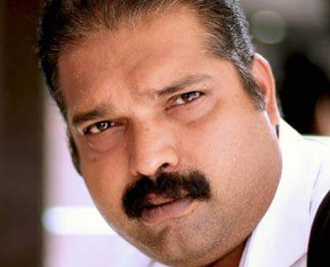
Baliga murder: Photographer Manujanth arrested for harbouring NaMo Naresh

[email protected] (CD Network)
May 30, 2016

Mangaluru, May 29: The Manglauru police have arrested another accused in connection with the cold blooded murder of an RTI activist, who had taken on a temple and builders. This is the fifth arrest in connection with the case.

1manjunathK Manujanth Shenoy, alias Manju Neereshwalya, (39) was arrested on Sunday on the charge of harbouring Naresh Shenoy, the prime accused in the same case. He is photographer by profession.

Naresh Shenoy, the founder of local unit of NaMo Brigade, has been absconding since the murder of 51-year-old RTI activist Vinayak Baliga.

In a press note, the police said that Manju Neereshwalya was in constant touch with Naresh Shenoy, whom the police wanted to question in connection with the murder.

The police said that Manju Neereshwalya was informing Naresh Shenoy of the developments in the case and helping him hide.

Vinayak Baliga was hacked to death near his house in Kodialbail on March 21. The police have arrested Vineet Poojary, Nishit Devadiga, Shiva, alias Shivaprasad, and Shailesh (40).

The police said that they are still looking for Naresh Shenoy.

Comments

Mohammed SS
 - 
Monday, 30 May 2016

Jathi ge jathi page, nayi ge nayi page

Swapnil
 - 
Monday, 30 May 2016

NAMO NAMO NAMO NAMO NAMO.....Na.....Mone..............Brigade

What else can be expected in future............as coming into power with the help of Goondaaas and killers....how BJP can weep like crocodile.....every one knows what you are.........

Add new comment

  • Coastaldigest.com reserves the right to delete or block any comments.
  • Coastaldigset.com is not responsible for its readers’ comments.
  • Comments that are abusive, incendiary or irrelevant are strictly prohibited.
  • Please use a genuine email ID and provide your name to avoid reject.
News Network
February 12,2020

New Delhi, Feb 12: Buoyed by the Aam Aadmi Party's stellar performance in the Delhi Assembly elections, the Maharashtra unit of the party has decided to fight all forthcoming local elections, including the Mumbai elections.

The AAP’s Bengaluru unit will also contest the municipal corporation polls likely to take place in August or September.

AAP National Executive Member Preeti Sharma Menon said the party will try to “replicate the Delhi model of pragmatism, performance, and people centric policies”.

“We are sure that Maharashtra will shower us with the same faith and love as Delhi has done so,” she said.

The party has decided to field candidates in all the 198 wards of the Bruhat Bengaluru Mahanagara Palike (BBMP).

"We have been planning to contest the BBMP election when we received a major shot in the arm. The Delhi victory happened because of the good work, which we want to replicate here," AAP's co-convener in Karnataka and party's BBMP campaign in charge Shanthala Damle told PTI on Tuesday.

Born out of an anti-corruption movement, the AAP led by Delhi chief minister Arvind Kejriwal registered the second landslide victory by winning 63 out of 70 seats in the Delhi Assembly elections.

According to Damle, AAP in Bengaluru was working in full swing to make its presence felt in the city. "The party has already done its ground workin terms of election campaign and reaching out to the people in Bengaluru," she added.

According to her, the party has already opened around 10 offices and about 50 people have been announced as the assembly president or ward president.

Last month, the party launched a 40-minute movie called 'Hosa Bengaluru' (New Bengaluru) and conducted 50 shows already.

"It shows the Delhi model and explains what can be done in Bengaluru. So that is part of our vision," the AAP leader said.

In its next level of the campaign, AAP intends to conduct 'Jana Samvada' (Dialogue with people) in every street and in every ward.

The preparedness of the party can be gauged from the fact that it has identified many of its candidates for the BBMP elections.

The party has never tasted success in Karnataka anywhere but the Delhi's success story has kindled a new hope as many people would now be waiting to join the AAP, Damle said. The AAP cadres in Bengaluru burst into celebration soon after it became clear that the party was going to script history by forming government for the third consecutive time since its inception.

Sporting their signature caps, party workers lit crackers, danced on the Delhi election song 'Lage Raho Kejriwal'.

Comments

Add new comment

  • Coastaldigest.com reserves the right to delete or block any comments.
  • Coastaldigset.com is not responsible for its readers’ comments.
  • Comments that are abusive, incendiary or irrelevant are strictly prohibited.
  • Please use a genuine email ID and provide your name to avoid reject.
coastaldigest.com news network
June 7,2020

Mangaluru/Udupi, Jun 7: Coastal districts of Dakshina Kannada and Udupi have recorded 17 and 13 new coronavirus positive cases between 5 p.m. on June 6 and 5 p.m. on June 7. 

16 among 17 new covid patients in Dakshina Kannada are returnees from Maharashtra, while one returned from Goa recently.

Maharashtra returnees comprise 14 males, including three teenagers t, and two females aged 32 and 41. The Goa returnee is a 32-year-old male.

All of them have all been admitted to the designated COVID hospital in the district.

With this, the total tally of coronavirus cases in Dakshina Kannada has risen to 203, out of which 47 are currently active. As many as 150 patients have recovered and been discharged, and seven have died.

Among the 13 in Udupi, 12 are Maharashtra returnees, while process of contact tracing of one patient, a 30-year-old woman, is going on.

The patients comprise eight males, including a 7-year-old boy, and five females. They have all been admitted to the designated hospital.

This takes the total number of coronavirus cases in Udupi district to 902, out of which 798 are currently active, 103 discharged, and one patient has died.

Comments

Add new comment

  • Coastaldigest.com reserves the right to delete or block any comments.
  • Coastaldigset.com is not responsible for its readers’ comments.
  • Comments that are abusive, incendiary or irrelevant are strictly prohibited.
  • Please use a genuine email ID and provide your name to avoid reject.
Media Release
February 14,2020

Veteran journalist P. Sainath has said that the nation is in a crisis. And this crisis is not limited to just the rural area. It has become a national crisis at various areas such as agriculture, education, economy, job creation etc.

He was delivering the endowment lecture on the topic ‘Indian democracy at the post-liberalization and post-truth era’ at Media Manthan 2020 organized by the PG department of journalism and mass communication at St Aloysius College (Autonomous). 

Mr Sainath said that the many policies adopted in the 90s led to India becoming unusually unequal. Referring to the speech Ambedkar had made at the Constituent Assembly while handing over the draft of the Constitution, Mr Sainath said, “Ambedkar had warned about the weakness of Indian democracy that liberty without equality allows the supremacy of a few over the multitude. Liberty, equality and fraternity must be kept together as we cannot have one without the other.” 

Mr Sainath stated that the agrarian crisis was no longer about the loss of productivity, employment or about farmer suicide; it was a societal, civilizational crisis. Commenting on the lopsided policies such as cow-slaughter ban, he explained how cow slaughter ban had adversely affected many industries due to their interdependency. While Muslims who slaughtered cows were rendered helpless, the cattle traders who were mostly OBCs lost their earnings as the cattle prices crashed. An important industry like Kolhapur sandals industry in Maharashtra went bankrupt as a result of the cow slaughter ban in Maharashtra. He said the policymakers had no idea how the rural industries were interconnected. Demonetisation too devastated the rural economy as 98 percent of rural transactions happen through cash. 

Mr Sainath also spoke about the crisis of inequality which affects the Dalits and the Adivasis far more than anyone else as 90 percent of the rural households take home less than Rs 10,000/- per month. “Women are yet another group whose labour is never counted in the gross domestic product. Women and girls globally do unpaid work which amounts to about 12.5 billion working hours per year. Monetarily speaking, this is worth 10.8 trillion dollars,” Mr Sainath added. 

Speaking about the crisis of jobs Mr Sainath said that major companies were laying off employees just to create more profits for the investors and the adoption of artificial intelligence in the industry would further destroy millions of jobs.

Rector of St Aloysius College Institutions Fr Dionysius Vaz SJ, Principal Dr (Fr) Praveen Martis SJ, HOD of Journalism and Mass Communication department Dr (Fr) Melwyn Pinto SJ were present.

‘Veerappan and Vijay Mallya’s business models are interesting!’

Addressing the gathering during his endowment lecture on Friday, Mr Sainath made an interesting comment on the so called ‘revenue model’. “Whenever I visit IIMs and IITs for lectures on my PARI project, the students there ask me what my revenue model for my project is. I tell them that I do not have a revenue model. In fact, journalism does not begin with a revenue model. Gandhiji, Ambedkar, Bhagat Singh were all great journalists. But they did not have a revenue model,” Mr Sainath said.

On a lighter note, he said that the best revenue model that he liked was that of forest brigand Veerappan and liquor baron Vijay Mallya. “Veerappan ruled the forest for forty years and from the top ministers to the villagers he could dictate terms and liver royally. Similarly, Mallya’s revenue model was to steal the banks and run away abroad and live like a king,” Mr Sainath added.

Journalism is not and can never be a business. It is a calling, he opined. While newspaper can be a business, television can be a business, journalism per se cannot be reduced to a business. “Unfortunately today, journalists are recruited on a contract basis and they have no bargaining power; and there are no unions to fight for their cause. Hence, they are at the mercy of the corporate media houses for their survival and are made to write stories that cannot be called journalism,” Mr Sainath said.

Answering a question as to the pressures he faced as a journalist, he said that external pressures from the government or others could be very well handled. It is the internal pressures from once own media house that journalists find it difficult to manage.


 

Comments

Add new comment

  • Coastaldigest.com reserves the right to delete or block any comments.
  • Coastaldigset.com is not responsible for its readers’ comments.
  • Comments that are abusive, incendiary or irrelevant are strictly prohibited.
  • Please use a genuine email ID and provide your name to avoid reject.