


Bangalore University split into three universities

[email protected] (News Network)
May 26, 2015

Bengaluru, May 26: The Karnataka Cabinet has approved amendments to the Karnataka State University Act in order to split the Bangalore University into three. The boundaries of the new universities will be based on Legislative Assembly constituencies.
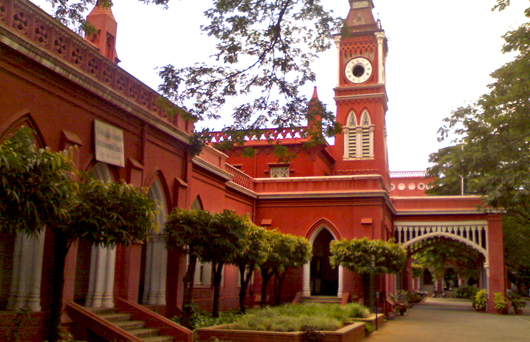
bangalore university

Currently, more than 600 degree colleges are affiliated to Bangalore University. The three parts that the university would be divided into are: Bangalore University, Bangalore Central and Bangalore North.

Sources in the State Secretariat said that while the Bangalore University would continue to function from its Jnana Bharati campus, the new Bangalore Central University would be located at Central College campus in the City.

The campus of Bangalore North University would be located at Jangammana Kote in Sidlaghatta taluk, Kolar district. For the time being, the Bangalore North University would commence functioning from its Post-Graduation Centre in Kolar.

Each university is expected to have 200 affiliated colleges. All the three universities would include teaching and research activities.

The Bill related to splitting Bangalore University three-way, is expected to be passed in the State Legislature session that is likely to be held in July.

Comments

Raja R
 - 
Wednesday, 5 Oct 2016

Good Idea of Bangalore University Trifurcation....

But the Infrastructure Should by Commenced as early as Possible

Instead of Postponing...... like PRR

Wish you all the Very Best for Speedy planting the Infrastructures
and Functioning.

Add new comment

  • Coastaldigest.com reserves the right to delete or block any comments.
  • Coastaldigset.com is not responsible for its readers’ comments.
  • Comments that are abusive, incendiary or irrelevant are strictly prohibited.
  • Please use a genuine email ID and provide your name to avoid reject.
coastaldigest.com news network
May 6,2020

Mangaluru, May 6: Amidst preparation for the paid evacuation of Indians stuck in Gulf countries amidst coronavirus lockdown, the central government has announced that it would only do a medical screening of the passengers before the flight and only asymptomatic persons would be allowed to travel.

Each passenger will have to fill a self-reporting form to be presented at the health and immigration counter at their destination.

The passengers are required to state whether they are suffering from fever, cough, diabetes or any respiratory disease. This form is similar to the one filled by passengers landing in India during the early days of the COVID-19 outbreak.

As per the announcement by the government, returnees would undergo COVID-19 once they complete 14-day quarantine in a hospital or government –arranged institution on a payment basis.

However, the form asks the applicants to keep themselves isolated at home for 28 days unless they develop any symptoms such as fever and cough.

During the journey, they will have to follow the protocols such as those issued by the Health Ministry and the Civil Aviation Ministry. Applicants from the UAE are yet to receive instructions on these.

On reaching the destination, passengers will have to register on the Arogya Setu app, India’s mobile application for COVID-19 surveillance.

No physical distancing!

Air India Express (AIE) which is set to operate the first two flights to Kerala on Thursday will operate its Boeing 737-800 flights, with a seating capacity of 186 economy class seats.

With nine seats reserved for isolation, only 177 passengers would be flown, sources said.

While most of the UAE flights in the first week will be operated by the AIE, Air India will operate two of its Dreamliner aircraft with a seating capacity of 256 seats. These flights would also reserve some seats for isolation.

However, the plan has made it clear that the Indian government will not be following the rules of physical distancing to prevent the spread of coronavirus in the repatriation flights.

Several people, including the Chief Minister of Kerala Pinarayi Vijayan, expressed concern over flying passengers, who will not be tested for COVID-19, without observing physical distancing.

Comments

Add new comment

  • Coastaldigest.com reserves the right to delete or block any comments.
  • Coastaldigset.com is not responsible for its readers’ comments.
  • Comments that are abusive, incendiary or irrelevant are strictly prohibited.
  • Please use a genuine email ID and provide your name to avoid reject.
coastaldigest.com news network
February 5,2020

Bengaluru, Jan 5: B S Yediyurappa-led Karnataka cabinet has finally decided to resume supply of subsidised rice and wheat to students of welfare institutions and hostels including those run by religious mutts under the Dasoha Scheme’s welfare programme. The supply was stopped over two months ago.

“Cabinet has decided to continue supply of subsidised foodgrains (rice and wheat) for the benefit of 37,700 children under the Dasoha scheme in 351 welfare institutions for the next one year at the cost of Rs 18 crore,” said J C Madhuswamy, Law and Parliamentary Affairs Minister. Under this scheme, institutions that provide free accommodation and food for students are entitled to avail 10 kg rice and 5 kg wheat per student every month at subsidised rates. But following a central government directive in November, the state government had stopped supply to private institutions since December.

Hours before the cabinet meeting, Khader addressed a press conference and said, “This government is snatching away food from children by stalling the supply of foodgrains. Institutions like Suttur Mutt, Siddaganga Mutt that have worldwide fame for their service are being inconvenienced by this,” Khader said.

Finding itself in a fix, especially in a matter that involves mutts, the cabinet was quick to restore the supply. “Foodgrains were being supplied to 183 government-run institutions and 281 institutions run by private entities. As per a central government directive, supply to private institutions was stopped but the decision was made by the previous government,” Shashikala Jolle, Women and Child Development Minister, said.

Comments

Add new comment

  • Coastaldigest.com reserves the right to delete or block any comments.
  • Coastaldigset.com is not responsible for its readers’ comments.
  • Comments that are abusive, incendiary or irrelevant are strictly prohibited.
  • Please use a genuine email ID and provide your name to avoid reject.
News Network
March 13,2020

Mysuru, Mar 13: A state-of-the-art viral research laboratory in the city has been identified as one of the testing laboratories for the detection of COVID-19, official sources said here on Friday.

The samples of suspected cases could be sent to the lab for analysis and it would take about three hours to get the results.

The Viral Research and Diagnostic Laboratory (VRDL), which was set up from Central grants and functions at the Microbiology Department of K.R. Hospital, has been authorised to carry out the tests. This lab in Mysuru is among the 52-plus laboratories in the country.

Though the VRDL is equipped to carry out the tests, the sole authority of confirming the virus lies with the Indian Council of Medical Research (ICMR)-National Institute of Virology (NIV) in Pune. VRDL is also the sole agency for collection and transportation of suspected samples of COVID-19 to NIV.

VRDL, which is part of the Mysore Medical College and Research Institute, functions on the advice of NIV.

According to the guidelines issued by ICMR, the results of the tests done here have to be shared with NIV the same day and the labs are not supposed to disclose the results since the NIV is the only authority to declare positive cases. Also, confirmation from the NIV should be awaited in case the samples test negative for COVID-19. The ICMR, in the guidelines made available on its website, has advised clinicians at labs to isolate the patient tested positive for COVID-19 in the identified facility and follow bio-safety precautions.

VRDL is a part of a network of labs established by the Department of Health Research, Government of India. The rise in the number of viral outbreaks and the resultant mortality had been cited as key reasons for the launch of network of such hi-tech labs in the country.

The NIV and the National Centre for Disease Control, Delhi, are the top laboratories for the network, while the National Institute of Epidemiology, Chennai, is the supervising authority for the data generated by the network of labs, sources added.

Comments

Add new comment

  • Coastaldigest.com reserves the right to delete or block any comments.
  • Coastaldigset.com is not responsible for its readers’ comments.
  • Comments that are abusive, incendiary or irrelevant are strictly prohibited.
  • Please use a genuine email ID and provide your name to avoid reject.