Bangalore University split into three universities

[email protected] (News Network)
May 26, 2015

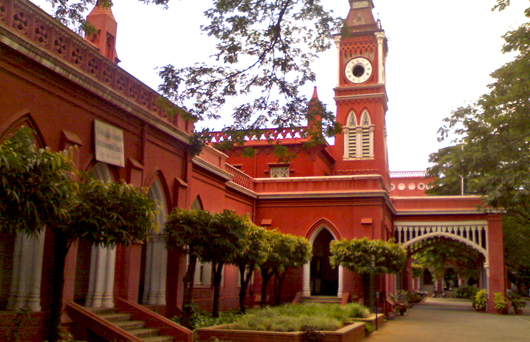
Bengaluru, May 26: The Karnataka Cabinet has approved amendments to the Karnataka State University Act in order to split the Bangalore University into three. The boundaries of the new universities will be based on Legislative Assembly constituencies.

bangalore university

Currently, more than 600 degree colleges are affiliated to Bangalore University. The three parts that the university would be divided into are: Bangalore University, Bangalore Central and Bangalore North.

Sources in the State Secretariat said that while the Bangalore University would continue to function from its Jnana Bharati campus, the new Bangalore Central University would be located at Central College campus in the City.

The campus of Bangalore North University would be located at Jangammana Kote in Sidlaghatta taluk, Kolar district. For the time being, the Bangalore North University would commence functioning from its Post-Graduation Centre in Kolar.

Each university is expected to have 200 affiliated colleges. All the three universities would include teaching and research activities.

The Bill related to splitting Bangalore University three-way, is expected to be passed in the State Legislature session that is likely to be held in July.

Comments

Raja R
 - 
Wednesday, 5 Oct 2016

Good Idea of Bangalore University Trifurcation....

But the Infrastructure Should by Commenced as early as Possible

Instead of Postponing...... like PRR

Wish you all the Very Best for Speedy planting the Infrastructures
and Functioning.

Add new comment

  • Coastaldigest.com reserves the right to delete or block any comments.
  • Coastaldigset.com is not responsible for its readers’ comments.
  • Comments that are abusive, incendiary or irrelevant are strictly prohibited.
  • Please use a genuine email ID and provide your name to avoid reject.
News Network
June 26,2020

Bengaluru, Jun 26: The National Restaurant Association of India (NRAI) on Thursday came up with a Standard Operating Procedure (SOP) for restaurants whereby among other physical distancing norms, it has suggested a 2-metre gap between tables.

Formulated in partnership with Releski, a Bengaluru based skill-tech company, the SoP suggests that in case of back-to-back seating, people sitting with their backs towards each other will have their seats divided by 'Plexiglass' divider raised up to 2 meters from the ground.

"In a typical restaurant, the improvised seating plan should have a minimum distance of 2 metres between tables. The distance of 2 metres (6 feet) between tables should measure from one edge of the table to the other table's edge," it said.

In case of loose or free seating such as in banquet style or food court style seating, a minimum 2 meters of distance should be maintained between tables.

The guidelines noted that, to encourage physical distancing, restaurants have to sacrifice their seating capacity, to promote health and safety, and also to gain trust from their patrons.

"In order to perform this, divide your restaurants under different sectors. Pull out your restaurant's floor plan and colour code different sections red and yellow. Red sections are potential areas where maximum footfall or traffic is observed. Yellow sections are areas where the footfalls are average," it said.

All the red sections are encircled or bordered by placing barricades or Q manager and will open at specific points to access the yellow section and all the opening points will have hand sanitisers and sprays, and every guest who walks from red zones to yellow zones will sanitise himself/herself to reduce the chances of contamination.

For air conditioning, the guidelines of CPWD shall be followed which inter alia emphasises that the temperature setting of all air conditioning devices should be in the range of 24-30 degree Celsius, relative humidity should be in the range of 40- 65 per cent, intake of fresh air should be as much as possible and cross ventilation should be adequate, the guidelines suggested.

The industry body has also suggested appointment of a COVID-free Ambassador who would operate as the Chief Health Officer within the restaurant team, preferably from the management team in each shift.

The ambassador's would put the new daily work routines into practice, to monitor compliance with good practice and to lead the preventative measures, adapt to health & safety recommendations and requirements of the restaurant and oversee the implementation of the norms.

Anurag Katriar, President of NRAI and CEO & Executive Director of deGustibus Hospitality, said: "Every restaurant cutting across formats is facing the harsh reality of subdued to shut business volumes in the present and the uncertainty of business environment in the future. One thing is certain that hygiene and safety will be a key differentiator in the post-pandemic restaurant operations."


Comments

Add new comment

  • Coastaldigest.com reserves the right to delete or block any comments.
  • Coastaldigset.com is not responsible for its readers’ comments.
  • Comments that are abusive, incendiary or irrelevant are strictly prohibited.
  • Please use a genuine email ID and provide your name to avoid reject.
coastaldigest.com news network
August 8,2020

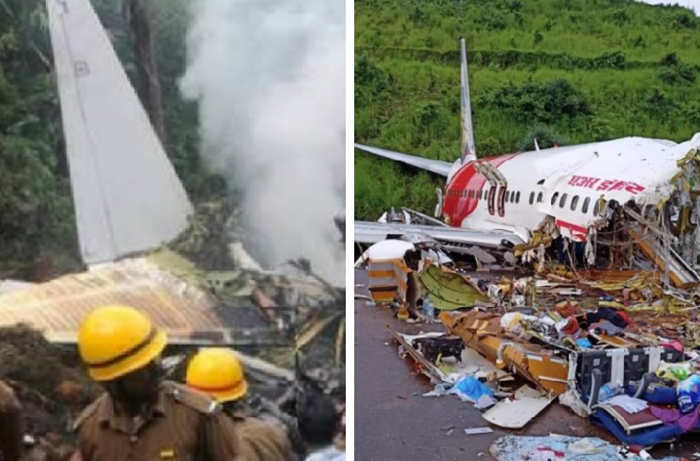
Mangaluru, Aug 8: As visuals of the Air India Express flight crash at Kozhikode international airport emerge, one cannot help but be reminded of an eerily similar and unfortunate accident that occurred a decade ago. The August 7, 2020 tragedy brought back memories of the 2010 crash.

It was on May 22, 2010 that an Air India Express Boeing 737-800 flight from Dubai to Mangaluru over shot the runway while landing at Bajpe airport and fell into a cliff. Of the 160 passengers and 6 crew members on board, 158 were killed (all crew members and 152 passengers) and only 8 survived.

Even back then, the plane had split into two. The crash has been termed as one of India's worst aviation disasters.

The final conversations between Air traffic control (ATC) and the pilot prior to the landing showed no indication of any distress.

Like the Mangaluru accident, Karipur crash too happened when the flight was attempting to land.

The captain of the aircraft which crashed at Mangaluru, Z Glucia, was an experienced pilot with 10,000 hours of flying experience and had 19 landings at the Mangalore airport. Co-pilot S S Ahluwalia, with 3,000 hours of flying experience had as many as 66 landings at this airport. Both the pilot and co-pilot were among the victims.

An investigation into the accident later found that the cause of the accident was the captain’s failure to discontinue an ‘unstabilised approach’ and his persistence to continue with the landing, despite three calls from the First Officer to ‘go-around’.

Comments

Add new comment

  • Coastaldigest.com reserves the right to delete or block any comments.
  • Coastaldigset.com is not responsible for its readers’ comments.
  • Comments that are abusive, incendiary or irrelevant are strictly prohibited.
  • Please use a genuine email ID and provide your name to avoid reject.
coastaldigest.com news network
June 1,2020

Mangaluru, June 1: The private bus services resumed services in Dakshina Kannada and Udupi districts today with 15 per cent hike in the fares. For 70 days these buses were stayed off the roads as lockdown was imposed in the region on March 22 in the wake of covid-19 outbreak.

Buses were sanitised in the morning. The bus operators have decided to operate only a few of the buses initially.

Of the about 2,000 service buses (inter-district buses and long-route buses within the district) of private operators in Dakshina Kannada and Udupi, only 25% resumed services. Only 135 out of 320 city buses in Mangaluru resumed services.

The number of passengers on board the buses were also very less in the morning. A few buses had arranged sanitisers for passengers, drivers and conductors.

Comments

Add new comment

  • Coastaldigest.com reserves the right to delete or block any comments.
  • Coastaldigset.com is not responsible for its readers’ comments.
  • Comments that are abusive, incendiary or irrelevant are strictly prohibited.
  • Please use a genuine email ID and provide your name to avoid reject.