



Banks asked to search and seize B R Shetty’s accounts in UAE

News Network
April 26, 2020

Dubai, Apr 26: The Central Bank of the UAE (CBUAE) has instructed financial institutions in the country to search and freeze all bank accounts of Indian billionaire BR Shetty and his family along with those of companies where he has a stake.

The apex bank has also blacklisted several firms associated with Shetty along with their entire senior management.

In an advisory issued last week, CBUAE cited decisions of the Federal Attorney General and asked financial institutions to search and freeze any bank accounts, deposits or investments in the name of Shetty or his family members.

Financial institutions have been directed to stop transfers from these accounts and deny access to deposit boxes.

Currently in India and facing a string of charges, Shetty is the founder of NMC Health.

The heathcare provider was placed into administration by a UK court recently following an application by the Abu Dhabi Commercial Bank (ADCB) which alone has an exposure of $981 million (Dh3.6 billion).

Overall, UAE banks have a combined exposure of more than Dh8bn to NMC which owes money to Oman-based banks and financial institutions as well.

Probing credit facilities
The Central Bank has sought information about credit facilites extended to the Shettys along with details of their safe deposit boxes and the financial transfers they have made till date.

A similar advisory has been issued for NMC Healthcare and NMC Holding, based on the decision of the Head of Plenary Fund Prosecution.

The Central Bank has also blacklisted several companies associated with Shetty. Key staff members of these firms have been similarly blacklisted.

Comments

Angry Indian
 - 
Monday, 27 Apr 2020

when you make money with good country you should not make doka to that country, first of all we indian have bad name in GCC now this will make more dought on indian hindus..


after BJP come to power in india,our country is acting like maron, this will only end with final WAR.

Add new comment

  • Coastaldigest.com reserves the right to delete or block any comments.
  • Coastaldigset.com is not responsible for its readers’ comments.
  • Comments that are abusive, incendiary or irrelevant are strictly prohibited.
  • Please use a genuine email ID and provide your name to avoid reject.
Agencies
June 30,2020

Washington, Jun 30: Researchers in China have discovered a new type of swine flu that is capable of triggering a pandemic, according to a study published Monday in the US science journal PNAS.

Named G4, it is genetically descended from the H1N1 strain that caused a pandemic in 2009.

It possesses "all the essential hallmarks of being highly adapted to infect humans," say the authors, scientists at Chinese universities and China's Center for Disease Control and Prevention.

The researchers then carried out various experiments including on ferrets, which are widely used in flu studies because they experience similar symptoms to humans -- principally fever, coughing and sneezing. 

G4 was observed to be highly infectious, replicating in human cells and causing more serious symptoms in ferrets than other viruses.

Tests also showed that any immunity humans gain from exposure to seasonal flu does not provide protection from G4.

According to blood tests which showed up antibodies created by exposure to the virus, 10.4 percent of swine workers had already been infected.

The tests showed that as many as 4.4 percent of the general population also appeared to have been exposed.

The virus has therefore already passed from animals to humans but there is no evidence yet that it can be passed from human to human -- the scientists' main worry.

"It is of concern that human infection of G4 virus will further human adaptation and increase the risk of a human pandemic," the researchers wrote.

The authors called for urgent measures to monitor people working with pigs.

"The work comes as a salutary reminder that we are constantly at risk of new emergence of zoonotic pathogens and that farmed animals, with which humans have greater contact than with wildlife, may act as the source for important pandemic viruses," said James Wood, head of the department of veterinary medicine at Cambridge University.

A zoonotic infection is caused by a pathogen that has jumped from a non-human animal into a human.

Comments

Add new comment

  • Coastaldigest.com reserves the right to delete or block any comments.
  • Coastaldigset.com is not responsible for its readers’ comments.
  • Comments that are abusive, incendiary or irrelevant are strictly prohibited.
  • Please use a genuine email ID and provide your name to avoid reject.
Agencies
July 31,2020

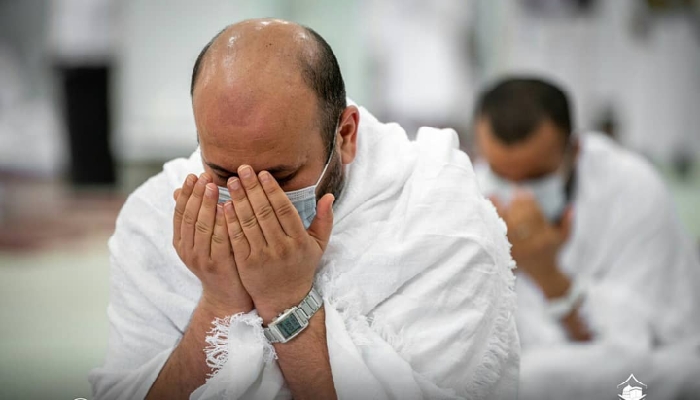
Mount Arafat, July 30: Muslim pilgrims converged Thursday on Saudi Arabia's Mount Arafat for the climax of this year's hajj, the smallest in modern times and a sharp contrast to the massive crowds of previous years.

A tight security cordon has been erected all around the foot of the rocky hill outside Mecca, also known as Jabal al-Rahma or Mount of Mercy.

Pilgrims, donning masks and observing social distancing, were brought in buses from neighbouring Mina, state television showed, as Saudi authorities impose measures to prevent a coronavirus outbreak.

They were subject to temperature checks and attended a sermon -- which state media said was translated into 10 languages -- before they set off on the climb to the summit for hours of Koran recitals and prayers to atone for their sins.

The scene was strikingly different to last year's ritual when a sea of pilgrims ascended Mount Arafat, marshalled by tens of thousands of stewards in a bid to prevent any crushes.

After sunset prayers, pilgrims will make their way down Mount Arafat to Muzdalifah, another holy site where they will sleep under the stars to prepare for the final stage of hajj, the symbolic "stoning of the devil".

It takes place on Friday and also marks the beginning of Eid al-Adha, the festival of sacrifice.

The hajj, one of the five pillars of Islam and a must for able-bodied Muslims at least once in their lifetime, is usually one of the world's largest religious gatherings.

But only up to 10,000 people already residing in the kingdom will participate in this year's ritual, compared with 2019's gathering of some 2.5 million from around the world.

"You are not our guests but those of God, the custodian of the two holy mosques (Saudi Arabia's King Salman) and the nation," Hajj Minister Mohammad Benten said in a video released by the media ministry on Wednesday.

Security cordon

A security cordon has been thrown around the holy sites to prevent any security breaches, an interior ministry spokesman said.

Riyadh faced strong criticism in 2015 when some 2,300 worshippers were killed in the deadliest stampede in the gathering's history.

But this year, those risks are greatly reduced by the much smaller crowd.

The pilgrims have all been tested for the virus, and foreign journalists were barred from this year's hajj, usually a huge global media event.

As part of the rites completed over five days in the holy city of Mecca and its surroundings, the pilgrims converged on Mount Arafat after spending the night in Mina.

A district of Mecca, Mina sits in a narrow valley surrounded by rocky mountains, and is transformed each year into a vast encampment for pilgrims.

They began the hajj on Wednesday with their first "tawaf", the circumambulation of the Kaaba, a large structure in Mecca’s Grand Mosque towards which Muslims around the world pray.

The Kaaba is draped in a black cloth embroidered in gold with Koranic verses and known as the kiswa, which is changed each year during the pilgrimage.

Pilgrims were brought inside the mosque in small batches, walking along paths marked on the floor, in sharp contrast to the normal sea of humanity that swirls around the Kaaba during hajj.

Comments

Add new comment

  • Coastaldigest.com reserves the right to delete or block any comments.
  • Coastaldigset.com is not responsible for its readers’ comments.
  • Comments that are abusive, incendiary or irrelevant are strictly prohibited.
  • Please use a genuine email ID and provide your name to avoid reject.
News Network
May 5,2020

Abu Dhabi, May 5: The overall real GDP (gross domestic product) of the United Arab Emirates is estimated to have grown by 1.7 percent in 2019, the country’s central bank said in a statement on Monday carried by WAM.

"The UAE hydrocarbon sector is estimated to have exhibited a growth of 3.4 percent in 2019. However, non-oil activities advanced at a softer pace growing by 1.0 percent. As a result, overall real GDP is estimated by FCSA (Federal Competitiveness and Statistics Authority) to have grown by 1.7 percent in 2019," said the financial regulator in its Annual Report 2019.

"The spread of COVID-19 is expected to impact trade and supply chain movements, coupled with travel restrictions which paves way for high volatility in capital markets and commodity prices. While the outbreak is expected to negatively affect the global and domestic economies, it is still early to gauge the scale of the economic fallout," the report added.

The report noted that the higher hydrocarbon output, as well as growth in non-hydrocarbon economic activity, supported the pace of the country's overall economic growth in 2019.

"Meanwhile, the fading effect of VAT, the appreciating Dirham, lower energy prices and decline in rents pushed inflation in negative territory. However, the employment rate registered a steady rebound. Looking ahead, the economic outlook for 2020 remains uncertain owing to the COVID-19 outbreak," the report elaborated.

Comments

Add new comment

  • Coastaldigest.com reserves the right to delete or block any comments.
  • Coastaldigset.com is not responsible for its readers’ comments.
  • Comments that are abusive, incendiary or irrelevant are strictly prohibited.
  • Please use a genuine email ID and provide your name to avoid reject.