Bengaluru startup CEO loses arm after crocodile attack

News Network
June 27, 2017

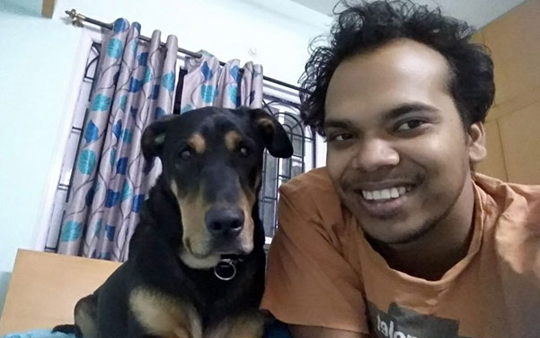
Bengaluru, Jun 27: Bengaluru-based health startup Dozee cofounder Mudit Dandwate was rushed to a hospital after a crocodile ripped his left arm when he ventured into a water body in Ramanagaram.dandwate

Dandwate, 26, an IIT Bombay alumnus, was visiting Thattekere lake, located inside a forest area about 55 km from the city, with a friend. The duo was accompanied by two dogs.

On seeing the lake, the dogs ran toward the lake. Dandwate was attacked by a crocodile while he was trying to get the dogs out of the water. He is undergoing treatment at Hosmat Hospital, where doctors say he will be given a prosthetic arm.

“The powerful bite has crushed the arm. A crocodile bite is toxic as well. Currently, we are performing a medical procedure called debridement to clean the arm to ensure there's no infection,“ Hosmat orthopaedics chief Dr Thomas Chandy said.

Officials of the forest department, which has taken over investigation into the incident, claimed there were boards at the lake warning about crocodiles. Dandwate has been booked for trespassing into a protected forest area.

dand 1

dand 2


Comments

Shanu
 - 
Tuesday, 27 Jun 2017

This will happen if you run behind dog cow mouse.......

Add new comment

  • Coastaldigest.com reserves the right to delete or block any comments.
  • Coastaldigset.com is not responsible for its readers’ comments.
  • Comments that are abusive, incendiary or irrelevant are strictly prohibited.
  • Please use a genuine email ID and provide your name to avoid reject.
News Network
May 25,2020

Kasaragod, May 25: An autorickshaw driver from Belur in Kasaragod was admitted for surgery to a hospital after being hit on the head by a falling jackfruit. He was tested positive for the coronavirus. It is not clear how he contracted the viral infection.

“While he was trying to pluck a jackfruit off a tree, one of them fell on him, injuring his spine. His hands and legs were weakened too. His condition required surgery. Our protocol dictates that we subject everyone who require immediate surgery to the covid test, just to be sure. That’s when he tested positive,” said Dr K Sudeep, superintendent of the Pariyaram Medical College in Kannur.

“He had symptoms of Covid-19. But he has no recent travel history or contact with any infected person. We’re not sure if he got it through one of his passengers in the rickshaw. He had visited the district hospital once so he could have got it from there. Anyway, we are examining it and preparing the route maps,” he added.

His family will be quarantined and health workers have begun to trace his immediate primary contacts.

Though there have been a number of cases in Kerala where a person’s source of infection could not be correctly ascertained, such people have gone on to recover without spreading the infection to others.

The Kerala government is conducting testing of high-risk persons on the frontlines, such as police officials, grocery vendors and health workers, as part of its sentinel surveillance programme, but maintains that there’s little evidence of a community spread in the state.

Comments

Add new comment

  • Coastaldigest.com reserves the right to delete or block any comments.
  • Coastaldigset.com is not responsible for its readers’ comments.
  • Comments that are abusive, incendiary or irrelevant are strictly prohibited.
  • Please use a genuine email ID and provide your name to avoid reject.
coastaldigest.com news network
February 18,2020

Mangaluru, Feb 18: Within days after Kambala racer Srinivasa Gowda emerged a national hero, another Kambala racer Nishant Shetty has grabbed headlines. 

Nishant Shetty from Bajagoli Jogibettu reportedly broke Gowda’s record at the Venoor Kambala on Sunday. Shetty recorded 143m in 13.68 seconds. If calculated for 100m he clocks it in 9.51 seconds. His speed is faster than Gowda who clocked 9.55 seconds.

According to Kambala organisers, with Shetty’s feat, four participants have joined the elite club of racers who have completed the 100 metres in less than ten seconds.

They are Iruvathur Anand (9.57 secs), Akkeri Suresh Shetty (9.57 secs), Srinivas Gowda (9.55 secs) and Nishant Shetty (9.51 secs). Anand and Suresh Shetty had participated in the same Venoor Kambala where Nishant emerged first.

Kambala is an annual race held in Karnataka where people sprint 143m through paddy fields with the buffaloes. During the race, the racers try to bring the buffaloes under control by holding their reins tight and beating them, making it amply clear that the animal plays an equally important role in achieving the timing. Traditionally, it is sponsored by local Tuluva landlords and households in the coastal districts of Dakshina Kannada and Udupi.

Comments

Add new comment

  • Coastaldigest.com reserves the right to delete or block any comments.
  • Coastaldigset.com is not responsible for its readers’ comments.
  • Comments that are abusive, incendiary or irrelevant are strictly prohibited.
  • Please use a genuine email ID and provide your name to avoid reject.
Agencies
July 5,2020

The deadly coronavirus that entered India while there was still nip in the air has beaten rising mercury, humid conditions, unique Indian genome and has entered monsoon season with more potency as fresh cases are only breaking all records in the country.

India recorded a single-day spike of record 24,850 new coronavirus cases on Sunday, taking its total tally to 6.73 lakh corona-positive cases.

Top Indian microbiologists were hopeful in March that after the 21-day lockdown, as summer approaches, the rise in temperature would play an important role in preventing the drastic spread of COVID-19 virus in India.

Several virologists hinted that by June this year, the impact of COVID-19 would be less than what it appeared in March-April.

The claims have fallen flat as the virus is mutating fast, becoming more potent than ever.

According to experts, the novel coronavirus is a new virus whose seasonality and response to hot humid weather was never fully understood.

"The theory was based on the fact that high temperatures can kill the virus as in sterilisation techniques used in healthcare. But these are controlled environment conditions. There are many other factors besides temperature, humidity which influence the transmission rate among humans," Dr Anu Gupta, Head, Microbiologist and Infection Control, Fortis Escorts Heart Institute, told IANS.

There is no built-up immunity to COVID-19 in humans.

"Also, asymptomatic people might be passing it to many others unknowingly. New viruses tend not to follow the seasonal trend in their first year," Gupta emphasized.

Globally, as several countries are now experiencing hot weather, the World Health Organization (WHO) reported a record hike in the number of coronavirus cases, with the total rising by 2,12,326 in 24 hours in the highest single-day increase since COVID-19 broke out.

So far over 11 million people worldwide have tested positive for the disease which has led to over 5,25,000 deaths, according to data from Johns Hopkins University. The US remained the worst-hit country with over 28 lakh cases, followed by Brazil with 15.8 lakh.

According to Sandeep Nayar, Senior Consultant and HOD, Respiratory Medicine, Allergy & Sleep Disorders, BLK Super Speciality Hospital in New Delhi, whether temperature plays a role in COVID-19 infection is highly debated.

One school of thought said in the tropical regions of South Asia, the virus might not thrive longer.

"On the other hand, another school of thought has found that novel Coronavirus can survive in a hot and humid environment and tropical climate does not make a difference to the virus. According to them, this is what distinguishes the novel coronavirus from other common viruses, which usually wane in hot weather," stressed Nayar.

Not much has been studied in the past and no definite treatment or vaccine is available to date.

"Every day, new properties and manifestation of the disease come up. As of now, the only way to prevent this monster is by taking appropriate precautions. Hand hygiene, social distancing, cough etiquette and face masks definitely reduce spread of COVID-19 infection," Nayar told IANS.

Not just top Indian health experts, even Indian-American scientists had this theory in mind that sunshine and summer may ebb the spread of the coronavirus.

Ravi Godse, Director of Discharge Planning, UPMC Shadyside Pennsylvania in the US told IANS in April: "In the summer, the humidity can go up as well, meaning more water drops in the air. If the air is saturated with water and somebody sneezes virus droplets into such air, it is likely that the droplets will fall to the ground quicker, making them less infectious. So the short answer is yes, summer/sunshine could be bettera.

According to Dr Puneet Khanna, Head of Respiratory Medicine and Pulmonology, Manipal Hospital, Delhi, COVID-19 death rates are not too different in tropical countries but since the disease affected them late it was yet to show its peak in these areas.

"The virus can survive well in hot and humid countries and this is proven now," he stressed.

Comments

Add new comment

  • Coastaldigest.com reserves the right to delete or block any comments.
  • Coastaldigset.com is not responsible for its readers’ comments.
  • Comments that are abusive, incendiary or irrelevant are strictly prohibited.
  • Please use a genuine email ID and provide your name to avoid reject.