Bengaluru startup CEO loses arm after crocodile attack

News Network
June 27, 2017

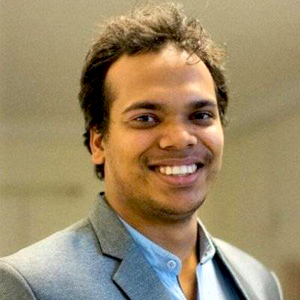
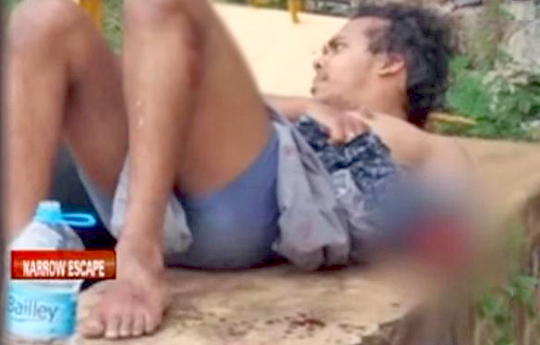
Bengaluru, Jun 27: Bengaluru-based health startup Dozee cofounder Mudit Dandwate was rushed to a hospital after a crocodile ripped his left arm when he ventured into a water body in Ramanagaram.dandwate

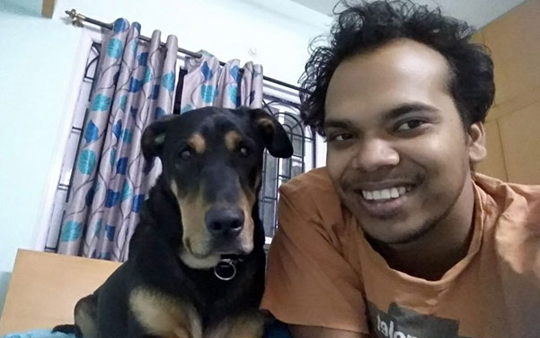
Dandwate, 26, an IIT Bombay alumnus, was visiting Thattekere lake, located inside a forest area about 55 km from the city, with a friend. The duo was accompanied by two dogs.

On seeing the lake, the dogs ran toward the lake. Dandwate was attacked by a crocodile while he was trying to get the dogs out of the water. He is undergoing treatment at Hosmat Hospital, where doctors say he will be given a prosthetic arm.

“The powerful bite has crushed the arm. A crocodile bite is toxic as well. Currently, we are performing a medical procedure called debridement to clean the arm to ensure there's no infection,“ Hosmat orthopaedics chief Dr Thomas Chandy said.

Officials of the forest department, which has taken over investigation into the incident, claimed there were boards at the lake warning about crocodiles. Dandwate has been booked for trespassing into a protected forest area.

dand 1

dand 2


Comments

Shanu
 - 
Tuesday, 27 Jun 2017

This will happen if you run behind dog cow mouse.......

Add new comment

  • Coastaldigest.com reserves the right to delete or block any comments.
  • Coastaldigset.com is not responsible for its readers’ comments.
  • Comments that are abusive, incendiary or irrelevant are strictly prohibited.
  • Please use a genuine email ID and provide your name to avoid reject.
News Network
February 10,2020

Udupi, Feb 10: The throat swabs of three suspected coronavirus patients in Udupi that was sent for tests have come back as negative.

Throat swabs of three persons who got admitted at a district government hospital in Udupi with symptoms of fever on Friday was sent to Bangalore medical college and research institute for test to know whether the admitted persons who returned from China 15 days back had contracted coronavirus.

The 30-year-old man from Kaup taluk had been China on personal work and had returned to Udupi 15 days back. Upon showing the symptoms of fever, throat pain and cold, he was suggested to get admitted.

He was admitted in the isolation ward and was directed to remain under quarantine till the observation period ends and till the test report is obtained.

Another family from Mandarthi, a man and his wife, who had returned after a tour from China 15 days back were also kept under observation at the isolation ward in the district government hospital, Udupi.

Udupi DC G Jagadish has said that there are no coronavirus case reported in Udupi and people need not panic. Sources said that the three tested negatives for coronavirus in Udupi will be discharged from the hospital on Monday.

Comments

Add new comment

  • Coastaldigest.com reserves the right to delete or block any comments.
  • Coastaldigset.com is not responsible for its readers’ comments.
  • Comments that are abusive, incendiary or irrelevant are strictly prohibited.
  • Please use a genuine email ID and provide your name to avoid reject.
News Network
February 26,2020

Hassan, Feb 26: A 35-year-old poachers died on the spot by his fellow man accidentally, mistaking him as animal at Yedikumari Kaginahere forest areas near Sakaleshpura in the district early hours Tuesday, police sources said.

The deceased has been identified as Harish.

The incident happened when ten poachers went hunting for wild animals in the Yedikumari Kaginahare forest areas.

Comments

Add new comment

  • Coastaldigest.com reserves the right to delete or block any comments.
  • Coastaldigset.com is not responsible for its readers’ comments.
  • Comments that are abusive, incendiary or irrelevant are strictly prohibited.
  • Please use a genuine email ID and provide your name to avoid reject.
Agencies
May 8,2020

Washington D.C., May 8: The prime time for brain development in a child's life is the first year, where the infant spends most of the time asleep. It is the time when neural connections form and sensory memories are encoded.

However, when sleep is disrupted, as occurs more often among children with autism, brain development may be affected, too.

New research led by the University of Washington finds that sleep problems in a baby's first 12 months may not only precede an autism diagnosis but also may be associated with altered growth trajectory in a key part of the brain, the hippocampus.

The study, which was published in the American Journal of Psychiatry, researchers report that in a sample of more than 400 taken of 6- to 12-month-old infants, those who were later diagnosed with autism were more likely to have had difficulty falling asleep.

It also states that this sleep difficulty was associated with altered growth trajectories in the hippocampus.

"The hippocampus is critical for learning and memory, and changes in the size of the hippocampus have been associated with poor sleep in adults and older children.

As many as 80 per cent of the children with autism spectrum disorder have sleep problems," said Annette Estes, director of the UW Autism Center and senior author of the study.

"In our clinical experience, parents have a lot of concerns about their children's sleep, and in our work on early autism intervention, we observed that sleep problems were holding children and families back," added Estes, who is also a UW professor of speech and hearing sciences.

"It could be that altered sleep is part-and-parcel of autism for some children. One clue is that behavioural interventions to improve sleep don't work for all children with autism, even when their parents are doing everything just right. This suggests that there may be a biological component to sleep problems for some children with autism," said Estes.

To consider links among sleep, brain development, and autism, researchers at the IBIS Network looked at MRI scans of 432 infants, surveyed parents about sleep patterns, and measured cognitive functioning using a standardized assessment.

At the outset of the study, infants were classified according to their risk for developing autism: Those who were at higher risk of developing autism -- about two-thirds of the study sample -- had an older sibling who had already been diagnosed.

Infant siblings of children with autism have a 20 per cent chance of developing autism spectrum disorder -- a much higher risk than children in the general population.

In the current study, 127 of the 432 infants were identified as "low risk" at the time the MRI scans were taken because they had no family history of autism.

They later evaluated all the participants at 24 months of age to determine whether they had developed autism. Of the roughly 300 children originally considered "high familial risk," 71 were diagnosed with autism spectrum disorder at that age.

Problems with sleep were more common among the infants later diagnosed with an autism spectrum disorder, as were larger hippocampi. No other subcortical brain structures were affected, including the amygdala, which is responsible for certain emotions and aspects of memory, or the thalamus, a signal transmitter from the spinal cord to the cerebral cortex.

The authors note that while parents reported more sleep difficulties among infants who developed autism compared to those who did not, the differences were very subtle and only observed when looking at group averages across hundreds of infants.

Sleep patterns in the first years of life change rapidly as infants transition from sleeping around the clock to a more adult-like sleep/wake cycle. Until further research is completed, Estes said, it is not possible to interpret challenges with sleep as an early sign of increased risk for autism.


Comments

Add new comment

  • Coastaldigest.com reserves the right to delete or block any comments.
  • Coastaldigset.com is not responsible for its readers’ comments.
  • Comments that are abusive, incendiary or irrelevant are strictly prohibited.
  • Please use a genuine email ID and provide your name to avoid reject.