Bengaluru startup CEO loses arm after crocodile attack

News Network
June 27, 2017

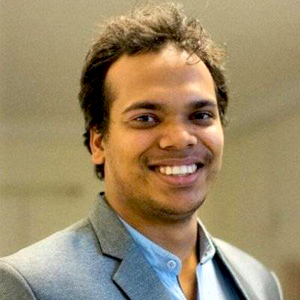
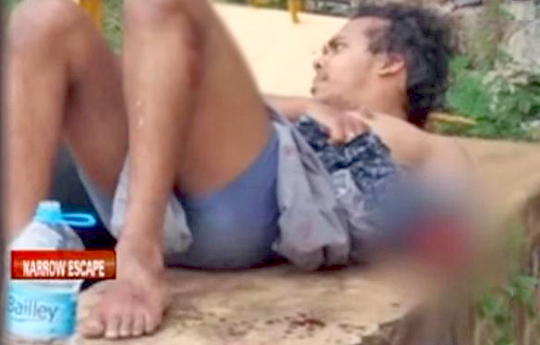
Bengaluru, Jun 27: Bengaluru-based health startup Dozee cofounder Mudit Dandwate was rushed to a hospital after a crocodile ripped his left arm when he ventured into a water body in Ramanagaram.dandwate

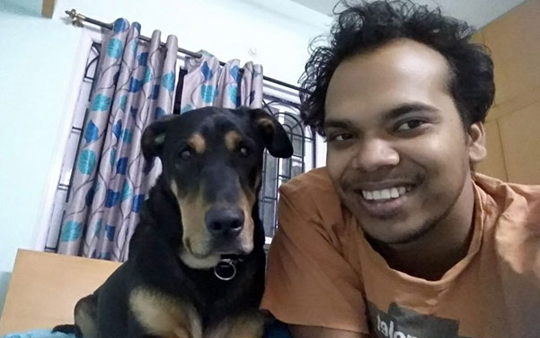
Dandwate, 26, an IIT Bombay alumnus, was visiting Thattekere lake, located inside a forest area about 55 km from the city, with a friend. The duo was accompanied by two dogs.

On seeing the lake, the dogs ran toward the lake. Dandwate was attacked by a crocodile while he was trying to get the dogs out of the water. He is undergoing treatment at Hosmat Hospital, where doctors say he will be given a prosthetic arm.

“The powerful bite has crushed the arm. A crocodile bite is toxic as well. Currently, we are performing a medical procedure called debridement to clean the arm to ensure there's no infection,“ Hosmat orthopaedics chief Dr Thomas Chandy said.

Officials of the forest department, which has taken over investigation into the incident, claimed there were boards at the lake warning about crocodiles. Dandwate has been booked for trespassing into a protected forest area.

dand 1

dand 2


Comments

Shanu
 - 
Tuesday, 27 Jun 2017

This will happen if you run behind dog cow mouse.......

Add new comment

  • Coastaldigest.com reserves the right to delete or block any comments.
  • Coastaldigset.com is not responsible for its readers’ comments.
  • Comments that are abusive, incendiary or irrelevant are strictly prohibited.
  • Please use a genuine email ID and provide your name to avoid reject.
News Network
February 19,2020

Bengaluru, Feb 19: Congress MLA UT Khader on Wednesday slammed the Central government over the enactment of the Citizenship (Amendment) Act and said it violates the Constitution.

"The new citizenship amendment bill is unconstitutional. The citizenship cannot be given on cast and creed basis. Because of these things we are fighting against it," he said while speaking to media in Bengaluru.

Opposition along with several non-BJP state governments, including Madhya Pradesh, West Bengal, Kerala, Punjab and Rajasthan have refused to implement the Citizenship Amendment Act (CAA) and the proposed NRC in their respective states.

The CAA grants citizenship to Hindu, Sikh, Jain, Parsi, Buddhist and Christian refugees from Pakistan, Afghanistan and Bangladesh, who came to India on or before December 31, 2014.

Comments

Add new comment

  • Coastaldigest.com reserves the right to delete or block any comments.
  • Coastaldigset.com is not responsible for its readers’ comments.
  • Comments that are abusive, incendiary or irrelevant are strictly prohibited.
  • Please use a genuine email ID and provide your name to avoid reject.
coastaldigest.com web desk
June 30,2020

Ballari, June 30: A video clip of dead bodies of covid-19 victims being disgracefully thrown into a pit said to be in Karnataka’s Ballari has gone viral on social media triggering outrage from netizens.

Ballari Deputy Commissioner SS Nakul ordered a probe. He told media persons that the veracity of the video is still under question and that it still needs to be established if the video was taken in Ballari.

In the video, a pit is seen which appears to be disinfected. The video features masked men covered in body suits bringing dead bodies from a black hearse van in black body bags one by one and throwing the dead bodies into the same pit. In all, three dead bodies are thrown into the same pit in the video.

"We have assigned an Additional Deputy Commissioner (ADC) to enquire and verify the same. We are awaiting reports. We don't know yet if it (the video) is from Ballari or not," Nakul said.

The district which has so far reported around 800 cases in the last three months has also witnessed around two dozen deaths.

Twitterati on Tuesday raised questions about the handling of the bodies. "Even dead have some respect and they deserved a decent burial," said a social activist from Ballari. Similar reactions echoed on social media and some also pointed out on how the family members who have to stay away from burials feel about it.

Covid burial protocol

According to the protocol set by the Union Health Ministry for the burial of Covid-19 patients, the patients' orifices (nose, mouth and ears) have to be sealed and the body has to be wrapped in three layers of personal protective equipment (PPE). Thereafter it should be placed in a body bag. Family members should not be allowed to accompany the body in the hearse van. Covid-19 victims have to be given a deep burial. The grave should be minimum 10-feet deep.

The grave should be disinfected with bleaching powder and the area should be cordoned off so that the general public is not in the vicinity.  The vehicle used to transport the dead body of a Covid-19 victim -- ambulance or a hearse van -- has to be disinfected for 16 hours before being used again. Most Covid-19 victims in the state have had burials in the absence of family members as they are generally in quarantine for being the primary contacts of the patient.

Comments

Add new comment

  • Coastaldigest.com reserves the right to delete or block any comments.
  • Coastaldigset.com is not responsible for its readers’ comments.
  • Comments that are abusive, incendiary or irrelevant are strictly prohibited.
  • Please use a genuine email ID and provide your name to avoid reject.
Media Release
February 14,2020

Veteran journalist P. Sainath has said that the nation is in a crisis. And this crisis is not limited to just the rural area. It has become a national crisis at various areas such as agriculture, education, economy, job creation etc.

He was delivering the endowment lecture on the topic ‘Indian democracy at the post-liberalization and post-truth era’ at Media Manthan 2020 organized by the PG department of journalism and mass communication at St Aloysius College (Autonomous). 

Mr Sainath said that the many policies adopted in the 90s led to India becoming unusually unequal. Referring to the speech Ambedkar had made at the Constituent Assembly while handing over the draft of the Constitution, Mr Sainath said, “Ambedkar had warned about the weakness of Indian democracy that liberty without equality allows the supremacy of a few over the multitude. Liberty, equality and fraternity must be kept together as we cannot have one without the other.” 

Mr Sainath stated that the agrarian crisis was no longer about the loss of productivity, employment or about farmer suicide; it was a societal, civilizational crisis. Commenting on the lopsided policies such as cow-slaughter ban, he explained how cow slaughter ban had adversely affected many industries due to their interdependency. While Muslims who slaughtered cows were rendered helpless, the cattle traders who were mostly OBCs lost their earnings as the cattle prices crashed. An important industry like Kolhapur sandals industry in Maharashtra went bankrupt as a result of the cow slaughter ban in Maharashtra. He said the policymakers had no idea how the rural industries were interconnected. Demonetisation too devastated the rural economy as 98 percent of rural transactions happen through cash. 

Mr Sainath also spoke about the crisis of inequality which affects the Dalits and the Adivasis far more than anyone else as 90 percent of the rural households take home less than Rs 10,000/- per month. “Women are yet another group whose labour is never counted in the gross domestic product. Women and girls globally do unpaid work which amounts to about 12.5 billion working hours per year. Monetarily speaking, this is worth 10.8 trillion dollars,” Mr Sainath added. 

Speaking about the crisis of jobs Mr Sainath said that major companies were laying off employees just to create more profits for the investors and the adoption of artificial intelligence in the industry would further destroy millions of jobs.

Rector of St Aloysius College Institutions Fr Dionysius Vaz SJ, Principal Dr (Fr) Praveen Martis SJ, HOD of Journalism and Mass Communication department Dr (Fr) Melwyn Pinto SJ were present.

‘Veerappan and Vijay Mallya’s business models are interesting!’

Addressing the gathering during his endowment lecture on Friday, Mr Sainath made an interesting comment on the so called ‘revenue model’. “Whenever I visit IIMs and IITs for lectures on my PARI project, the students there ask me what my revenue model for my project is. I tell them that I do not have a revenue model. In fact, journalism does not begin with a revenue model. Gandhiji, Ambedkar, Bhagat Singh were all great journalists. But they did not have a revenue model,” Mr Sainath said.

On a lighter note, he said that the best revenue model that he liked was that of forest brigand Veerappan and liquor baron Vijay Mallya. “Veerappan ruled the forest for forty years and from the top ministers to the villagers he could dictate terms and liver royally. Similarly, Mallya’s revenue model was to steal the banks and run away abroad and live like a king,” Mr Sainath added.

Journalism is not and can never be a business. It is a calling, he opined. While newspaper can be a business, television can be a business, journalism per se cannot be reduced to a business. “Unfortunately today, journalists are recruited on a contract basis and they have no bargaining power; and there are no unions to fight for their cause. Hence, they are at the mercy of the corporate media houses for their survival and are made to write stories that cannot be called journalism,” Mr Sainath said.

Answering a question as to the pressures he faced as a journalist, he said that external pressures from the government or others could be very well handled. It is the internal pressures from once own media house that journalists find it difficult to manage.


 

Comments

Add new comment

  • Coastaldigest.com reserves the right to delete or block any comments.
  • Coastaldigset.com is not responsible for its readers’ comments.
  • Comments that are abusive, incendiary or irrelevant are strictly prohibited.
  • Please use a genuine email ID and provide your name to avoid reject.