Bengaluru startup CEO loses arm after crocodile attack

News Network
June 27, 2017

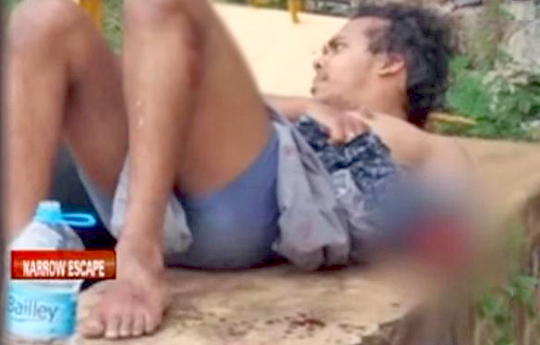
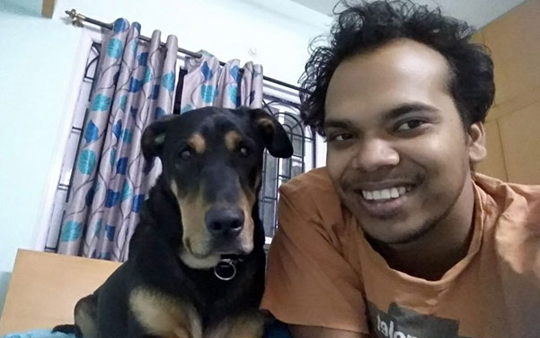
Bengaluru, Jun 27: Bengaluru-based health startup Dozee cofounder Mudit Dandwate was rushed to a hospital after a crocodile ripped his left arm when he ventured into a water body in Ramanagaram.dandwate

Dandwate, 26, an IIT Bombay alumnus, was visiting Thattekere lake, located inside a forest area about 55 km from the city, with a friend. The duo was accompanied by two dogs.

On seeing the lake, the dogs ran toward the lake. Dandwate was attacked by a crocodile while he was trying to get the dogs out of the water. He is undergoing treatment at Hosmat Hospital, where doctors say he will be given a prosthetic arm.

“The powerful bite has crushed the arm. A crocodile bite is toxic as well. Currently, we are performing a medical procedure called debridement to clean the arm to ensure there's no infection,“ Hosmat orthopaedics chief Dr Thomas Chandy said.

Officials of the forest department, which has taken over investigation into the incident, claimed there were boards at the lake warning about crocodiles. Dandwate has been booked for trespassing into a protected forest area.

dand 1

dand 2


Comments

Shanu
 - 
Tuesday, 27 Jun 2017

This will happen if you run behind dog cow mouse.......

Add new comment

  • Coastaldigest.com reserves the right to delete or block any comments.
  • Coastaldigset.com is not responsible for its readers’ comments.
  • Comments that are abusive, incendiary or irrelevant are strictly prohibited.
  • Please use a genuine email ID and provide your name to avoid reject.
News Network
May 23,2020

Mangaluru, May 23: In order to ensure that students do not miss out on their studies due to educational institutions being shut owing to the coronavirus lockdown, Dakshina Kannada Pre-university College Principles Association (DKPUCPA) is conducting online classes on YouTube for pre-university students.

The online lessons are shot by lecturers at St Aloysius College and the lectures are then uploaded on YouTube enabling students to watch them online.

"The whole world is currently in a crucial situation because of COVID-19, and because of the lockdown, all are forced to stay indoors. Usually, we used to conduct lectures in a class full of students, but now it is a new experience that we are providing the same information to students in their absence," Rajaram Rao, a lecturer said while speaking to news agency.

He said at present these classes are being conducted for second year pre-university students.

If any student has a doubt on any concept, he said they can contact the teachers. "At present, students also are getting information about the teachers who have uploaded the videos. All the information about the teachers is already being uploaded on the system so that they can contact the teacher," he said.

Dhanya, a student, hailed the DKPUCPA for the setting up of the online classes despite the prevailing situation.

"The teachers who have taught in these classes have taught very well, as if they are teaching right in front of us. It has been very useful for me during this time," she said.

The nationwide lockdown imposed to combat the threat posed by the coronavirus pandemic has been extended to May 31.

Comments

Add new comment

  • Coastaldigest.com reserves the right to delete or block any comments.
  • Coastaldigset.com is not responsible for its readers’ comments.
  • Comments that are abusive, incendiary or irrelevant are strictly prohibited.
  • Please use a genuine email ID and provide your name to avoid reject.
News Network
June 21,2020

Mangaluru, June 21: A local court has held notorious serial killer Cyanide Mohan Kumar guilty in the murder of a 25-year-old woman from Kasargod. This is the 20th and the last case of Cyanide Mohan to be tried in the sixth additional district and sessions court. 

According to public prosecutor Jayarama Shetty, the victim was working as a cook in a ladies hostel and got in touch with Mohan Kumar, a teacher. He visited her house thrice and promised to marry her. On July 8, 2009, on the pretext of visiting a temple in Sullia, she left home, never to return. 

They had travelled to Bengaluru and three days later, when her family tried to reach her on phone, he told them that she had gone for a bath and that they were married and would be returning back home soon.

The next day Ramakrishna, a constable from Upparpete police station, found a lady lying unconscious outside the bathroom and he immediately rushed her to a local hospital, where she was declared dead on arrival. Like in all other cases, after staying in a lodge and having sex with the victim, he took her to the KSRTC bus stand and asked her to consume a cyanide laced tablet, stating it was a contraceptive pill. 

He asked her to leave behind the jewellery that she was wearing at the hotel room. An unnatural death report was registered and since none of her relatives had turned up for identification of the body, on July 15,2009 the body was buried.

The moment the Dakshina Kannada district police arrested the serial killer on October 21, 2009 and his pictures were all over the media, the family recognised him and the victim’s younger sister filed a missing complaint. The police had also recovered the victim’s jewellery from the house of Mohan’s second wife and the jeweller from whom he had purchased cyanide had also identified him. Meanwhile, the CID had taken over the case and a charge sheet was filed.

"The report from the Forensic Science Laboratory is crucial in this case as cyanide was found in the victim’s viscera. Mohan over the years has become a legal expert and in this case, he had sought two adjournments," said Jayaram Shetty. Mohan is currently lodged in the Hindalga central jail.
 

Comments

AJIT KUMAR
 - 
Sunday, 21 Jun 2020

shame to keep this man  alive for so many criminal cases, shoot him or hang him immideatly

Add new comment

  • Coastaldigest.com reserves the right to delete or block any comments.
  • Coastaldigset.com is not responsible for its readers’ comments.
  • Comments that are abusive, incendiary or irrelevant are strictly prohibited.
  • Please use a genuine email ID and provide your name to avoid reject.
coastaldigest.com news network
February 23,2020

Mangalore University has been participating in the campus bird count a sub-event of ‘Great backyard bird count’ (GBBC) organized by Bird Count India for the past 5 years. This year, CBC was held from 14th to 17th February of 2020 across various campuses in India.

This year the four days event was successfully ended up with the sightings of 103 species of birds from various locations across the campus spread on 300 acres. In this Black Drongo, Black Kite, Brahminy Kite, Common Iora, Green Wabler, Purple-rumed Sunbird, Red-whiskered Bulbul, White-cheeked Barbet, Jungle Babbler and Plum headed parakeets were the common birds, and also observed House Crow with nest and nestlings, Indian Robin nest with eggs, Bronzed Drongo constructing the nest and Shikra mating and carrying nesting materials.  Whereas Yellow-billed Babbler is rare in the campus, Ashy Drongo, Barn Swallow, Booted Eagle, Grey Wagtail, Indian Pitta etc. were migratory birds, Grey-headed Bulbul (Near Threatened bird), Rufous Babbler and Grey-headed Bulbul were Western Ghats Endemics  and Brown Wood Owl, Barn Owl, Spotted Owlet, Nightjars (Savanna, Indian and Jerdon’s) and Sri Lanka Frogmouth were nocturnal birds. Blue-eared Kingfisher Grey-bellied Cuckoo which was very rare and new additions to avian list of the campus.

In the first year (2016) of Mangalore University’s CBC recorded 77 species, in 2017 recorded 95 species, in 2018 recorded 110 species and in 2019 recorded 107 species of birds. However some of the common species like Rose ringed parakeets, Blue tailed bee-eater, Nilgiri Flowerpecker and Indian roller etc., sighted last year were not seen this year. But with 2 new additions from this CBC, the checklist of Mangalore University Campus has been updated with a total of 141 species.

This event was coordinated by Vivek Hasyagar from the Department of Applied Zoology and Maxim Rodrigues from the Department of Marine Geology. Survey trails were led by more than 60 students and research scholars from various Departments of Mangalore University includes Applied Zoology, Biosciences, Microbiology, Botany, Physics, Chemistry and Material Science.  In addition, some enthusiastic participants from St. Aloysius College had involved in identifying the birds around the campus.

Quote:

Wild/planned fire affects negatively on the existing ecologically sensitive areas in and around the campus especially in lateritic grasslands. Because many insectivorous birds are dependent on these lateritic grassland habitats for their food and breeding grounds for many ground dwelling birds like Yellow wattled lapwing, Red wattled lapwing, Indian Robin and Barred buttonquails. Conserving these habitats will be helpful in protecting these birds.

Quotes from the participants: “The Campus Bird Count 2020 at Mangalore University was an experience of its own kind. Observing birds in their natural habitat gave me new perspective of viewing them not only as another living being, but as equals, or even of higher intelligence. The Campus Bird Count is an important step towards documenting bird life year after year, and creating awareness amongst youngsters, so that proper conservation steps can be taken to protect them from human interference”.

-Jyotsna Dessai ( 1 M.Sc Zoology)

Comments

Add new comment

  • Coastaldigest.com reserves the right to delete or block any comments.
  • Coastaldigset.com is not responsible for its readers’ comments.
  • Comments that are abusive, incendiary or irrelevant are strictly prohibited.
  • Please use a genuine email ID and provide your name to avoid reject.