



Benjamin Netanyahu a cold-blooded killer: Turkey

Agencies
December 23, 2018

Turkey has hit out at Israel's "lawless occupation" of Palestinian territory after the Israeli prime minister accused Turkey of "massacres" against Kurds in a new war of words.

Turkish Foreign Minister Mevlut Cavusoglu labelled Benjamin Netanyahu "a cold-blooded killer of modern times", in a Tweet on Sunday, adding that the prime minister was "responsible for massacres of thousands of innocent Palestinians".

Relations between Turkey and Israel have been tense this year over multiple issues including a controversial law passed by the Israeli parliament in July which defined the country as the nation-state of the Jewish people.

Netanyahu said President Recep Tayyip Erdogan "should not preach to Israel" after the Turkish leader warned young Turks on Saturday: "Do not kick the enemy you have brought down to the ground. You are not a Jew in Israel."

Netanyahu said Erdogan was "the occupier of northern Cyprus, whose army massacres women and children in Kurdish villages, inside and outside Turkey" in a tweet late on Saturday.

Erdogan's spokesperson and chief adviser Ibrahim Kalin lambasted Netanyahu, who he said "should end the lawless occupation of Palestinian lands and the brutal oppression of Palestinian people" instead of "begging President Erdogan not to speak out the truth".

Kalin added in the tweet on Sunday: "Bashing Erdogan or using Kurds as a political chip will not save him from his domestic troubles."

On December 14, Erdogan also said Palestinians were subjected to "pressures, violence and intimidation policies no less grave than the oppression done to the Jews during the second world war", referring to the Holocaust.

Turkey-Israel ties have been strained since Ankara ordered the Israeli ambassador to leave Turkey in May over the killing of protesters along the separation fence between Israel and the Gaza Strip.

Erdogan, who regards himself as a champion of the Palestinians, has bitterly criticised Israel previously, calling it in July "the world's most fascist and racist state".

Comments

Add new comment

  • Coastaldigest.com reserves the right to delete or block any comments.
  • Coastaldigset.com is not responsible for its readers’ comments.
  • Comments that are abusive, incendiary or irrelevant are strictly prohibited.
  • Please use a genuine email ID and provide your name to avoid reject.
Agencies
April 27,2020

Riyad, Apr 27: The Saudi-led Arab Coalition supporting Yemen’s UN-recognized government on Monday urged all parties to end any escalation of hostilities and return to the status that existed before the Southern Transitional Council (STC) declared self-rule.

In a statement carried by the Saudi Press Agency (SPA), the coalition emphasized “the need to cancel any step that violates the Riyadh agreement and work to accelerate its implementation.” 

On Sunday, the United Arab Emirates-backed STC scrapped a peace deal with the internationally recognized government of President Abed Rabbo Mansour Hadi.

Accusing the government of corruption and mismanagement, the separatists said they would “self-govern” the key southern port city of Aden and other southern provinces.

Yemen’s Foreign Minister Mohammed Al-Hadhrami described the move as a “resumption of its (STC’s) armed insurgency and rejection and complete withdrawal from the Riyadh agreement.” 

Authorities in Yemen’s southern provinces of Hadramawt, Abyan, Shabwa, Al-Mahra and the remote island of Socotra also rejected the separatist group’s claim to self-rule.

The government said local and security authorities in the five provinces dismissed the move as a “clear and definite coup.” 

Some of the provinces issued their own statements condemning it.

The coalition appealed to all parties to “give priority to the interests of the Yemeni people over any other interests”. 

It also urged the parties involved not to lose their focus on working to achieve the goal of restoring the state, ending the Houthi “coup” and “countering terrorist organizations”.

“The Coalition has and will continue to undertake practical and systematic steps to implement the Riyadh Agreement between the parties to unite Yemeni ranks, restore state institutions and combat the scourge of terrorism,” the statement said. “The responsibility rests with the signatories to the Agreement to undertake national steps toward implementing its provisions, which were signed and agreed upon with a time matrix for implementation.”

The STC has been part of the coalition-backed forces fighting the Iran-backed Houthi militia, which seized control of the Yemeni capital Sanaa and other provinces in 2014.

The Houthi “coup” has led to the formation of the Saudi-led coalition, which had since driven away the Houthis from the south and other provinces. President Hadi’s government has made Aden as its temporary seat.

Comments

Add new comment

  • Coastaldigest.com reserves the right to delete or block any comments.
  • Coastaldigset.com is not responsible for its readers’ comments.
  • Comments that are abusive, incendiary or irrelevant are strictly prohibited.
  • Please use a genuine email ID and provide your name to avoid reject.
Agencies
August 2,2020

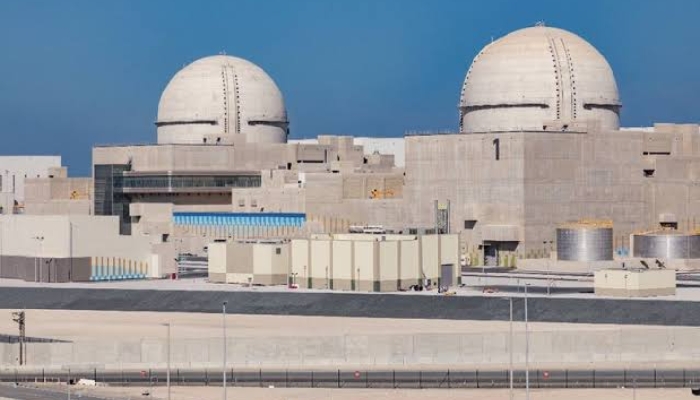
Dubai, Aug 2: The United Arab Emirates (UAE) announced on Saturday that it has started operations in the first of four reactors at the Barakah nuclear power station - the first nuclear power plant in the Arab world.

Emirates Nuclear Energy Corporation (ENEC), which is building and operating the plant with Korea Electric Power Corporation (KEPCO) said in a press release that its subsidiary Nawah Energy Company "has successfully started up Unit 1 of the Barakah Nuclear Energy Plant, located in the Al Dhafrah Region of Abu Dhabi".

That signals that Unit 1, which had fuel rods loaded in March, has achieved "criticality" - a sustained fission chain reaction.

"The start-up of Unit 1 marks the first time that the reactor safely produces heat, which is used to create steam, turning a turbine to generate electricity," said ENEC.

Barakah, which was originally scheduled to open in 2017, has been dogged by delays and is billions of dollars over budget. It has also raised myriad concerns among nuclear energy veterans who are concerned about the potential risks Barakah could visit upon the Arabian Peninsula, from an environmental catastrophe to a nuclear arms race.

Paul Dorfman, an honorary senior research fellow at the Energy Institute, University College London and founder and chair of the Nuclear Consulting Group, has criticised the Barakah reactors' "cheap and cheerful" design that he says cuts corners on safety.

Dorfman authored a report (PDF) last year detailing key safety features Barakah's reactors lack, such as a "core catcher" to literally stop the core of a reactor from breaching the containment building in the event of a meltdown. The reactors are also missing so-called Generation III Defence-In-Depth reinforcements to the containment building to shield against a radiological release resulting from a missile or fighter jet attack.

Both of these engineering features are standard on new reactors built in Europe, says Dorfman.

There have been at least 13 aerial attacks on nuclear facilities in the Middle East - more than any other region on earth.

The vulnerability of critical infrastructure in the Arabian Peninsula was further laid bare last year after Saudi Arabia's oil facilities at Abqaiq and Khurais were attacked by 18 drones and seven cruise missiles - an assault that temporarily knocked out more than half of the kingdom's oil production.

On Saturday, Dorfman reiterated his concern that there is no regional protocol in place to determine liability should an accident or incident at Barakah result in radioactive contamination spreading from the UAE to its neighbours. 

"Given Barakah has started up, because of all the well-rehearsed nuclear safety and security problems, it may be critically important that the Gulf states collectively evolve a Nuclear Accident Liability Convention, so that if anything does go wrong, victim states may have some sort of redress," Dorfman told Al Jazeera. 

The UAE has substantial oil and gas reserves, but it has made huge investments in developing alternative energy sources, including nuclear and solar.

Experts though have questioned why the UAE - which is bathed in sunlight and wind - has pushed ahead with nuclear energy - a far more expensive and riskier option than renewable energy sources.

When the UAE first announced Barakah in 2009, nuclear power was cheaper than solar and wind. But by 2012 - when the Emirates started breaking ground to build the reactors - solar and wind costs had plummeted dramatically.

Between 2009 and 2019, utility-scale average solar photovoltaic costs fell 89 percent and wind fell 43 percent, while nuclear jumped 26 percent, according to an analysis by the financial advisory and asset manager Lazard.

There are also concerns about the potential for Barakah to foment nuclear proliferation in the Middle East - a region rife with geopolitical fault lines and well-documented history of nuclear secrecy.

The UAE has sought to distance itself from the region's bad behaviour by agreeing not to enrich its own uranium or reprocess spent fuel. It has also signed up to the United Nation's nuclear watchdog's Additional Protocol, significantly enhancing inspection capabilities, and secured a 123 Agreement with the United States that allows bilateral civilian nuclear cooperation.

Comments

Add new comment

  • Coastaldigest.com reserves the right to delete or block any comments.
  • Coastaldigset.com is not responsible for its readers’ comments.
  • Comments that are abusive, incendiary or irrelevant are strictly prohibited.
  • Please use a genuine email ID and provide your name to avoid reject.
News Network
February 3,2020

New Delhi, Feb 3: The Allahabad High Court on Monday granted bail to former BJP leader Swami Chinmayanand in the alleged rape case of a law student. He was arrested in September last year after the 23-year-old woman accused him of sexual harassment and blackmail.

The woman was a student of the Chinmayanand-controlled SS Law College in Shahjahanpur in Uttar Pradesh.

Chinmayanand is facing charges under Sections 376C (sexual intercourse by a person or persons taking advantage of their official position), 354 D (stalking), 342 (wrongful confinement) and 506 (criminal intimidation) of the Indian Penal Code (IPC).

The case is being investigated by a Special Investigation Team (SIT) formed on the directions of the Supreme Court.

The case came to light after the woman posted a video on August 23 last year on social media alleging that “a senior leader of the saint community” was harassing and threatening to kill her. The law student went missing a day later, after which her father lodged a complaint, accusing Chinmayanand of harassing his daughter.

Chinmayanand was expelled from the BJP after his arrest.

The SIT had, on November 6, submitted chargesheet in the case.

In a parallel case, the woman was charged with trying to extort money from Chinmayanad. The Allahabad High Court granted her bail in that case in December last year.

Comments

Add new comment

  • Coastaldigest.com reserves the right to delete or block any comments.
  • Coastaldigset.com is not responsible for its readers’ comments.
  • Comments that are abusive, incendiary or irrelevant are strictly prohibited.
  • Please use a genuine email ID and provide your name to avoid reject.