



Bhatkal-born alleged ISIS recruiter Shafi Armar named global terrorist

Agencies
June 16, 2017

New Delhi, Jun 16: Fugitive chief recruiter for terror group ISIS in the Indian subcontinent Mohammed Shafi Armar was today named a Specially Designated Global Terrorist by the US.Armar
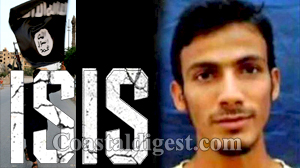
The US State Treasury Department, while updating its list of Specially Designated Global Terrorists (SDGT), has included in it Armar, a native of Bhatkal in Karnataka, clearing the way for sanctions against him.

An Interpol Red Corner notice is also pending against the 30-year-old Armar, who has many aliases like 'Chhote Maula', 'Anjan Bhai' and 'Yousuf al-Hindi'.

Armar's name has now been added to the Office of Foreign Assets Control of the US Treasury Department which enforces economic sanctions programmes, primarily against countries and groups of individuals, such as terrorists and narcotics traffickers.

The sanctions can be either comprehensive or selective, using the blocking of assets and trade restrictions to accomplish foreign policy and national security goals of the US.

Armar was said to have left for Pakistan along with his elder brother after crackdown on Indian Mujahideen cadres.

After a fight with Bhatkal brothers, including Riyaz, the founder of IM, in Pakistan, Armar is believed to have created Ansar ul Tawhid, which later pledged its allegiance to the ISIS.

There have been many reports of him having been dead in a drone attack or crackdown by the allied forces. However, every time intelligence agencies began giving credence to such reports, his name or voice cropped up in intercepts.

Tech savvy, Armar has been operating on Facebook and other personal messenger services to contact, brainwash and recruit youths from India, Bangladesh and Sri Lanka.

His links to the ISIS were also the highlight of the interrogation of Yasin Bhatkal, who was arrested near the Nepal border in 2013.

Shafi Armar first came on the radar of investigation agencies when the NIA was probing suspected ISIS cadres in Ratlam of Madhya Pradesh.

During the interrogation of alleged IS operatives, it emerged that Armar was motivating and radicalising Muslim youths in India. He was said to have been recruiting youths for the Jund ul Khalifa-e-Hind through online radicalisation.

The NIA had charge-sheeted him along with five others for allegedly conspiring to carry out terror strikes in the national capital and also during ardhkumbh in Haridwar.

The National Investigation Agency had told a special court that these accused were planning to assemble Improvised Explosive Devices (IEDs) using extracts from "match sticks".

The United Arab Emirates had deported three Indians who were allegedly working for Armar.

It emerged during the interrogation of IM suspects that he was a self-proclaimed ally of Abu Bakr al-Baghdadi, chief of the ISIS.

Comments

Shankar
 - 
Saturday, 17 Jun 2017

So sad, youngsters falling prey to religious extremism.

Add new comment

  • Coastaldigest.com reserves the right to delete or block any comments.
  • Coastaldigset.com is not responsible for its readers’ comments.
  • Comments that are abusive, incendiary or irrelevant are strictly prohibited.
  • Please use a genuine email ID and provide your name to avoid reject.
coastaldigest.com news network
February 18,2020

Mangaluru, Feb 18: Within days after Kambala racer Srinivasa Gowda emerged a national hero, another Kambala racer Nishant Shetty has grabbed headlines. 

Nishant Shetty from Bajagoli Jogibettu reportedly broke Gowda’s record at the Venoor Kambala on Sunday. Shetty recorded 143m in 13.68 seconds. If calculated for 100m he clocks it in 9.51 seconds. His speed is faster than Gowda who clocked 9.55 seconds.

According to Kambala organisers, with Shetty’s feat, four participants have joined the elite club of racers who have completed the 100 metres in less than ten seconds.

They are Iruvathur Anand (9.57 secs), Akkeri Suresh Shetty (9.57 secs), Srinivas Gowda (9.55 secs) and Nishant Shetty (9.51 secs). Anand and Suresh Shetty had participated in the same Venoor Kambala where Nishant emerged first.

Kambala is an annual race held in Karnataka where people sprint 143m through paddy fields with the buffaloes. During the race, the racers try to bring the buffaloes under control by holding their reins tight and beating them, making it amply clear that the animal plays an equally important role in achieving the timing. Traditionally, it is sponsored by local Tuluva landlords and households in the coastal districts of Dakshina Kannada and Udupi.

Comments

Add new comment

  • Coastaldigest.com reserves the right to delete or block any comments.
  • Coastaldigset.com is not responsible for its readers’ comments.
  • Comments that are abusive, incendiary or irrelevant are strictly prohibited.
  • Please use a genuine email ID and provide your name to avoid reject.
News Network
March 22,2020

Bengaluru, Mar 22: The Karnataka government on Sunday afternoon announced that 9 districts in the State will be under lock down till March 31, barring essential services. It also announced imposition of Section 144 across the state for 3 hours - between 9 p.m. (when the "Janata curfew" will end) to 12 midnight.

The nine COVID-19-affected districts are Bengaluru, Bengaluru Rural, Mysuru, Kodagu, Dakshina Kannada (Mangaluru), Dharwad, Belagavi, Kalaburgi and Chikkablapur.

Announcing these measures after attending a meeting chaired by Chief Minister B. S Yeddyurappa, Home Minister Basavaraj Bommai said that there will be no commercial activity in these districts till March 31.

Inter-district movement, including public transport will be restricted. "Public transport will not work across the state tomorrow too. Air conditioned buses will be stopped till March 31," he added. He also clarified that while public transport, including KSRTC, BMTC and Namma Metro, will be withdrawn, private transport services such as cabs and autos will continue to ply.

According to Mr. Bommai, the State government will put in place further measures next week depending on how the situation will unfold in the State and the neighbouring States.

"Government offices will be operational in the State, including in the nine COVID 19-affected districts. As per the current schedule, the legislature sessions will also continue. Pourakarmikas will be working at 50% strength," he added.

Comments

Add new comment

  • Coastaldigest.com reserves the right to delete or block any comments.
  • Coastaldigset.com is not responsible for its readers’ comments.
  • Comments that are abusive, incendiary or irrelevant are strictly prohibited.
  • Please use a genuine email ID and provide your name to avoid reject.
Ram Puniyani
March 14,2020

In the wake of Citizenship Amendment Act (CAA) UN High Commissioner, Michele Bachelet, has filed an intervention in the Supreme Court petition challenging the constitutionality of the Citizenship Amendment Act, as she is critical of CAA. Responding to her, India’s Foreign Minister S. Jai Shanker strongly rebutted her criticism, saying that the body (UNHCR) has been wrong and is blind to the problem of cross border terrorism. The issue on hand is the possibility of scores of people, mainly Muslims, being declared as stateless. The problem at hand is the massive exercise of going through the responses/documents from over 120 crore of Indian population and screening documents, which as seen in Assam, yield result which are far from truthful or necessary.

The issue of CAA has been extensively debated and despite heavy critique of the same by large number of groups and despite the biggest mass opposition ever to any move in Independent India, the Government is determined on going ahead with an exercise which is reminiscent of the dreaded regimes which are sectarian and heartless to its citizens, which have indulged in extinction of large mass of people on grounds of citizenship, race etc. The Foreign minister’s assertion is that it is a matter internal to India, where India’s sovereignty is all that matters! As far as sovereignty is concerned we should be clear that in current times any sovereign power has to consider the need to uphold the citizenship as per the principle of non-discrimination which is stipulated in Art.26 of the International Covenant on Civil and Political (ICCPR) rights.

Can such policies, which affect large number of people and are likely to affect their citizenship be purely regarded as ‘internal’? With the World turning into a global village, some global norms have been formulated during last few decades. The norms relate to Human rights and migrations have been codified. India is also signatory to many such covenants in including ICCPR, which deals with the norms for dealing with refugees from other countries. One is not talking of Chicago speech of Swami Vivekanand, which said that India’s greatness has been in giving shelter to people from different parts of the World; one is also not talking of the Tattariaya Upanishad’s ‘Atithi Devovhav’ or ‘Vasudhaiva Kutumbkam’ from Mahaupanishad today.

What are being talked about are the values and opinions of organizations which want to ensure to preserve of Human rights of all people Worldwide. In this matter India is calling United Nations body as ‘foreign party’; having no locus standi in the case as it pertains to India’s sovereignty. The truth is that since various countries are signatories to UN covenants, UN bodies have been monitoring the moves of different states and intervening at legal level as Amicus (Friend of the Court) to the courts in different countries and different global bodies. Just to mention some of these, UN and High Commissioner for Human Rights has often submitted amicus briefs in different judicial platforms. Some examples are their intervention in US Supreme Court, European Court of Human Rights, International Criminal Court, and the Inter-American Court of Human Rights. These are meant to help the Courts in areas where UN bodies have expertise.

 Expertise on this has been jointly formulated by various nations. These interventions also remind the nations as to what global norms have been evolved and what are the obligations of individual states to the values which have evolved over a period of time. Arvind Narrain draws our attention to the fact that, “commission has intervened in the European Court of Human Rights in cases involving Spain and Italy to underscore the principle of non-refoulement, which bars compulsory expulsion of illegal migrants… Similarly, the UN has intervened in the International Criminal Court in a case against the Central African Republic to explicate on the international jurisprudence on rape as a war crime.”

From time to time organizations like Amnesty International and Human Rights Watch have been monitoring the status of Human rights of different countries. This puts those countries in uncomfortable situation and is not welcome by those establishments. How should this contradiction between ‘internal matter’, ‘sovereignty’ and the norms for Human rights be resolved? This is a tough question at the time when the freedom indices and democratic ethos are sliding downwards all over the world. In India too has slid down on the scale of these norms.

In India we can look at the intervention of UN body from the angle of equality and non discrimination. Democratic spirit should encourage us to have a rethink on the matters which have been decided by the state. In the face of the greatest mass movement of Shaheen bagh, the state does need to look inwards and give a thought to international morality, the spirit of global family to state the least.

The popular perception is that when Christians were being persecuted in Kandhmal the global Christian community’s voice was not strong enough. Currently in the face of Delhi carnage many a Muslim majority countries have spoken. While Mr. Modi claims that his good relations with Muslim countries are a matter of heartburn to the parties like Congress, he needs to relook at his self gloating. Currently Iran, Malaysia, Indonesia and many Muslim majority countries have spoken against what Modi regime is unleashing in India. Bangladesh, our neighbor, has also seen various protests against the plight of Muslims in India. More than the ‘internal matter’ etc. what needs to be thought out is the moral aspect of the whole issue. We pride ourselves in treading the path of morality. What does that say in present context when while large section of local media is servile to the state, section of global media has strongly brought forward what is happening to minorities in India.   

The hope is that Indian Government wakes up to its International obligations, to the worsening of India’s image in the World due to CAA and the horrific violence witnessed in Delhi.

Comments

Add new comment

  • Coastaldigest.com reserves the right to delete or block any comments.
  • Coastaldigset.com is not responsible for its readers’ comments.
  • Comments that are abusive, incendiary or irrelevant are strictly prohibited.
  • Please use a genuine email ID and provide your name to avoid reject.