



Bhatkal-born alleged ISIS recruiter Shafi Armar named global terrorist

Agencies
June 16, 2017

New Delhi, Jun 16: Fugitive chief recruiter for terror group ISIS in the Indian subcontinent Mohammed Shafi Armar was today named a Specially Designated Global Terrorist by the US.Armar

The US State Treasury Department, while updating its list of Specially Designated Global Terrorists (SDGT), has included in it Armar, a native of Bhatkal in Karnataka, clearing the way for sanctions against him.

An Interpol Red Corner notice is also pending against the 30-year-old Armar, who has many aliases like 'Chhote Maula', 'Anjan Bhai' and 'Yousuf al-Hindi'.

Armar's name has now been added to the Office of Foreign Assets Control of the US Treasury Department which enforces economic sanctions programmes, primarily against countries and groups of individuals, such as terrorists and narcotics traffickers.

The sanctions can be either comprehensive or selective, using the blocking of assets and trade restrictions to accomplish foreign policy and national security goals of the US.

Armar was said to have left for Pakistan along with his elder brother after crackdown on Indian Mujahideen cadres.

After a fight with Bhatkal brothers, including Riyaz, the founder of IM, in Pakistan, Armar is believed to have created Ansar ul Tawhid, which later pledged its allegiance to the ISIS.

There have been many reports of him having been dead in a drone attack or crackdown by the allied forces. However, every time intelligence agencies began giving credence to such reports, his name or voice cropped up in intercepts.

Tech savvy, Armar has been operating on Facebook and other personal messenger services to contact, brainwash and recruit youths from India, Bangladesh and Sri Lanka.

His links to the ISIS were also the highlight of the interrogation of Yasin Bhatkal, who was arrested near the Nepal border in 2013.

Shafi Armar first came on the radar of investigation agencies when the NIA was probing suspected ISIS cadres in Ratlam of Madhya Pradesh.

During the interrogation of alleged IS operatives, it emerged that Armar was motivating and radicalising Muslim youths in India. He was said to have been recruiting youths for the Jund ul Khalifa-e-Hind through online radicalisation.

The NIA had charge-sheeted him along with five others for allegedly conspiring to carry out terror strikes in the national capital and also during ardhkumbh in Haridwar.

The National Investigation Agency had told a special court that these accused were planning to assemble Improvised Explosive Devices (IEDs) using extracts from "match sticks".

The United Arab Emirates had deported three Indians who were allegedly working for Armar.

It emerged during the interrogation of IM suspects that he was a self-proclaimed ally of Abu Bakr al-Baghdadi, chief of the ISIS.

Comments

Shankar
 - 
Saturday, 17 Jun 2017

So sad, youngsters falling prey to religious extremism.

Add new comment

  • Coastaldigest.com reserves the right to delete or block any comments.
  • Coastaldigset.com is not responsible for its readers’ comments.
  • Comments that are abusive, incendiary or irrelevant are strictly prohibited.
  • Please use a genuine email ID and provide your name to avoid reject.
News Network
August 2,2020

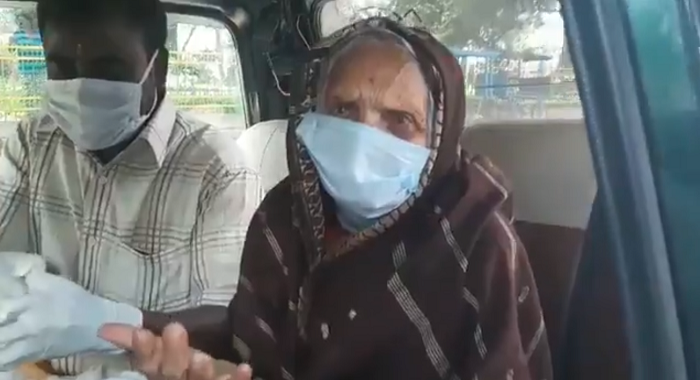
Chitradurga,  Aug 2: Said to be 110-years-old, a grand old woman Siddamma was discharged on Saturday from a COVID Hospital in Chitradurga after recovering from the novel coronavirus.

According to Dr Basavaraj, District Surgeon, Chitradurga, the woman had tested positive for the disease on July 27.

After her recovery, the frail woman dressed in a sari was seen being wheeled out from the hospital.

As many as 5,172 new COVID-19 cases and 98 deaths were reported in Karnataka on Saturday, taking the state's count of coronavirus cases to 1,29,287.

The active cases in the state now stand at 73,219 while 53,648 people have been discharged.

"5,172 new COVID-19 cases and 98 deaths reported in Karnataka in the last 24 hours, taking total cases to 1,29,287 including 53,648 discharges and 2,412 deaths. 

The number of active cases stands at 73,219," said State Health Department.

So far, a total of 2,412 people have succumbed to the virus in the State.

Comments

Add new comment

  • Coastaldigest.com reserves the right to delete or block any comments.
  • Coastaldigset.com is not responsible for its readers’ comments.
  • Comments that are abusive, incendiary or irrelevant are strictly prohibited.
  • Please use a genuine email ID and provide your name to avoid reject.
News Network
April 2,2020

The current physical distancing guidelines provided by the World Health Organisation (WHO) and by the US Centers for Disease Control and Prevention (CDC) may not be adequate to curb the coronavirus spread, according to a research which says the gas cloud from a cough or sneeze may help virus particles travel up to 8 metres. The research, published in the Journal of the American Medical Association, noted that the the current guidelines issued by the WHO and CDC are based on outdated models from the 1930s of how gas clouds from a cough, sneeze, or exhalation spread.

Study author, MIT associate professor Lydia Bourouiba, warned that droplets of all sizes can travel 23 to 27 feet, or 7-8 metres, carrying the pathogen.

According to Bourouiba, the current guidelines are based on "arbitrary" assumptions of droplet size, "overly simplified", and "may limit the effectiveness of the proposed interventions" against the deadly pandemic.

 She explained that the old guidelines assume droplets to be one of two categories, small or large, taking short-range semi-ballistic trajectories when a person exhales, coughs, or sneezes.

However based on more recent discoveries, the MIT scientist said, sneezes and coughs are made of a puff cloud that carries ambient air, transporting within it clusters of droplets of a wide range of sizes.

Bourouiba warned that this puff cloud, with ambient air entrapped in it, can offer the droplets moisture and warmth that can prevent it from evaporation in the outer environment.

"The locally moist and warm atmosphere within the turbulent gas cloud allows the contained droplets to evade evaporation for much longer than occurs with isolated droplets," she said.

"Under these conditions, the lifetime of a droplet could be considerably extended by a factor of up to 1000, from a fraction of a second to minutes," the researcher explained in the study.

The MIT scientist, who has researched the dynamics of coughs and sneezes for years, added that these droplets settle along the trajectory of a cough or sneeze contaminating surfaces, with their residues staying suspended in the air for hours.

"Even when maximum containment policies were enforced, the rapid international spread of COVID-19 suggests that using arbitrary droplet size cutoffs may not accurately reflect what actually occurs with respiratory emissions, possibly contributing to the ineffectiveness of some procedures used to limit the spread of respiratory disease," Bourouiba wrote in the study

Comments

Add new comment

  • Coastaldigest.com reserves the right to delete or block any comments.
  • Coastaldigset.com is not responsible for its readers’ comments.
  • Comments that are abusive, incendiary or irrelevant are strictly prohibited.
  • Please use a genuine email ID and provide your name to avoid reject.
News Network
May 3,2020

Bengaluru, May 3: Undergraduate and postgraduate students skipping online classes held by their universities run the risk of being debarred from writing their exams. 

State universities, which are monitoring the attendance of online classes, are asking their affiliate colleges to send the monthly online attendance details and this would reflect in their regular attendance. This would apply to those studying professional courses like medicine and engineering. 

State medical education minister Dr K Sudhakar has asked all medical colleges to regularly send attendance details to the Rajiv Gandhi University of Health Sciences (RGUHS).

RGUHS vice-chancellor Dr Sachidanand confirmed to DH that the varsity is indeed monitoring the attendance of students. “Online classes are equal to classroom teaching. (Such method of conducting classes) are necessary during the Covid-19 pandemic and the nationwide lockdown,” he said.

According to the Supreme Court directions, students should have 75% attendance to be eligible to appear for the final exams. There could be relaxations if they have health issues. If students are bunking online classes, it would reflect on their minimum attendance necessary to appear for the exams, the vice-chancellors of state-run varsities said.

Bangalore University vice-chancellor Prof K R Venugopal said most of the students are attending online classes and teachers are messaging the parents of those who are irregular. “(Of course) if they fall short of the minimum attendance, they won’t be allowed to appear for the exams,” he said.

Bengaluru North University vice-chancellor Prof T D Kemparaju said the administration has asked its teachers to record details of students attending online classes and update the university.

Mixed signals 

Meanwhile, the University Grants Commission (UGC) on Wednesday issued guidelines directing all universities to treat the lockdown period as “deemed as attended” for students and research scholars. Experts pointed out that the order would prompt students not to take the online classes seriously.

“Arrangements have been made at the state varsities to make students attend online classes compulsorily and students are also serious about it. Now, because of the UGC guidelines, they may bunk classes,” said the vice-chancellor of a state-run university.

Comments

Add new comment

  • Coastaldigest.com reserves the right to delete or block any comments.
  • Coastaldigset.com is not responsible for its readers’ comments.
  • Comments that are abusive, incendiary or irrelevant are strictly prohibited.
  • Please use a genuine email ID and provide your name to avoid reject.