


Bhatkal-born alleged ISIS recruiter Shafi Armar named global terrorist

Agencies
June 16, 2017

New Delhi, Jun 16: Fugitive chief recruiter for terror group ISIS in the Indian subcontinent Mohammed Shafi Armar was today named a Specially Designated Global Terrorist by the US.Armar
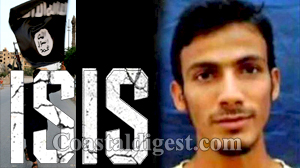
The US State Treasury Department, while updating its list of Specially Designated Global Terrorists (SDGT), has included in it Armar, a native of Bhatkal in Karnataka, clearing the way for sanctions against him.

An Interpol Red Corner notice is also pending against the 30-year-old Armar, who has many aliases like 'Chhote Maula', 'Anjan Bhai' and 'Yousuf al-Hindi'.

Armar's name has now been added to the Office of Foreign Assets Control of the US Treasury Department which enforces economic sanctions programmes, primarily against countries and groups of individuals, such as terrorists and narcotics traffickers.

The sanctions can be either comprehensive or selective, using the blocking of assets and trade restrictions to accomplish foreign policy and national security goals of the US.

Armar was said to have left for Pakistan along with his elder brother after crackdown on Indian Mujahideen cadres.

After a fight with Bhatkal brothers, including Riyaz, the founder of IM, in Pakistan, Armar is believed to have created Ansar ul Tawhid, which later pledged its allegiance to the ISIS.

There have been many reports of him having been dead in a drone attack or crackdown by the allied forces. However, every time intelligence agencies began giving credence to such reports, his name or voice cropped up in intercepts.

Tech savvy, Armar has been operating on Facebook and other personal messenger services to contact, brainwash and recruit youths from India, Bangladesh and Sri Lanka.

His links to the ISIS were also the highlight of the interrogation of Yasin Bhatkal, who was arrested near the Nepal border in 2013.

Shafi Armar first came on the radar of investigation agencies when the NIA was probing suspected ISIS cadres in Ratlam of Madhya Pradesh.

During the interrogation of alleged IS operatives, it emerged that Armar was motivating and radicalising Muslim youths in India. He was said to have been recruiting youths for the Jund ul Khalifa-e-Hind through online radicalisation.

The NIA had charge-sheeted him along with five others for allegedly conspiring to carry out terror strikes in the national capital and also during ardhkumbh in Haridwar.

The National Investigation Agency had told a special court that these accused were planning to assemble Improvised Explosive Devices (IEDs) using extracts from "match sticks".

The United Arab Emirates had deported three Indians who were allegedly working for Armar.

It emerged during the interrogation of IM suspects that he was a self-proclaimed ally of Abu Bakr al-Baghdadi, chief of the ISIS.

Comments

Shankar
 - 
Saturday, 17 Jun 2017

So sad, youngsters falling prey to religious extremism.

Add new comment

  • Coastaldigest.com reserves the right to delete or block any comments.
  • Coastaldigset.com is not responsible for its readers’ comments.
  • Comments that are abusive, incendiary or irrelevant are strictly prohibited.
  • Please use a genuine email ID and provide your name to avoid reject.
News Network
June 26,2020

Bengaluru, Jun 26: The National Restaurant Association of India (NRAI) on Thursday came up with a Standard Operating Procedure (SOP) for restaurants whereby among other physical distancing norms, it has suggested a 2-metre gap between tables.

Formulated in partnership with Releski, a Bengaluru based skill-tech company, the SoP suggests that in case of back-to-back seating, people sitting with their backs towards each other will have their seats divided by 'Plexiglass' divider raised up to 2 meters from the ground.

"In a typical restaurant, the improvised seating plan should have a minimum distance of 2 metres between tables. The distance of 2 metres (6 feet) between tables should measure from one edge of the table to the other table's edge," it said.

In case of loose or free seating such as in banquet style or food court style seating, a minimum 2 meters of distance should be maintained between tables.

The guidelines noted that, to encourage physical distancing, restaurants have to sacrifice their seating capacity, to promote health and safety, and also to gain trust from their patrons.

"In order to perform this, divide your restaurants under different sectors. Pull out your restaurant's floor plan and colour code different sections red and yellow. Red sections are potential areas where maximum footfall or traffic is observed. Yellow sections are areas where the footfalls are average," it said.

All the red sections are encircled or bordered by placing barricades or Q manager and will open at specific points to access the yellow section and all the opening points will have hand sanitisers and sprays, and every guest who walks from red zones to yellow zones will sanitise himself/herself to reduce the chances of contamination.

For air conditioning, the guidelines of CPWD shall be followed which inter alia emphasises that the temperature setting of all air conditioning devices should be in the range of 24-30 degree Celsius, relative humidity should be in the range of 40- 65 per cent, intake of fresh air should be as much as possible and cross ventilation should be adequate, the guidelines suggested.

The industry body has also suggested appointment of a COVID-free Ambassador who would operate as the Chief Health Officer within the restaurant team, preferably from the management team in each shift.

The ambassador's would put the new daily work routines into practice, to monitor compliance with good practice and to lead the preventative measures, adapt to health & safety recommendations and requirements of the restaurant and oversee the implementation of the norms.

Anurag Katriar, President of NRAI and CEO & Executive Director of deGustibus Hospitality, said: "Every restaurant cutting across formats is facing the harsh reality of subdued to shut business volumes in the present and the uncertainty of business environment in the future. One thing is certain that hygiene and safety will be a key differentiator in the post-pandemic restaurant operations."

Comments

Add new comment

  • Coastaldigest.com reserves the right to delete or block any comments.
  • Coastaldigset.com is not responsible for its readers’ comments.
  • Comments that are abusive, incendiary or irrelevant are strictly prohibited.
  • Please use a genuine email ID and provide your name to avoid reject.
News Network
February 19,2020

Bengaluru, Feb 19: A public interest litigation (PIL) has been filed in the Karnataka High Court, seeking a stay on Anand Singh functioning as Minister of Forests, Environment and Ecology contending that there are criminal cases filed against him by the Ministry.

"A stay be granted prohibiting Anand Singh from functioning as the Cabinet Minister for the Ministry of Forests, Environment and Ecology. Any other order that the Honourable Court may deem fit in the interest of justice and equity," the PIL prays.

The petition, filed by advocate Vijay Kumar, said that the Chief Minister has allocated the portfolio of the Ministry of Forests, Environment and Ecology to Singh without considering the fact that there are several criminal faces filed against him by the Ministry.

It said that the allocation of the Ministry of Forests, Environment and Ecology portfolio to Singh is in the conflict of interest.

"The holding of the post of Cabinet minister for the Ministry of Forests, Environment and Ecology is against public interest and completely in conflict of interest as he has business for which the subject Ministry is the overseeing authority and further he will also have access to the case files which again is in conflict of interest," the PIL said.

PIL adds that "it is pertinent and absolutely necessary" to deny the incumbent from accessing files related to his cases and from taking any decisions which may provide him with pecuniary benefits through his businesses.

Comments

Add new comment

  • Coastaldigest.com reserves the right to delete or block any comments.
  • Coastaldigset.com is not responsible for its readers’ comments.
  • Comments that are abusive, incendiary or irrelevant are strictly prohibited.
  • Please use a genuine email ID and provide your name to avoid reject.
News Network
February 27,2020

Benagluru, Feb 27: The sudden hike in bus fares by the state-run transport corporation has triggered a public outrage and protests by the opposition Congress and the Janata Dal-Secular (JD-S) in Karnataka.

Terming the hike as anti-people and inflationary, the Congress urged the ruling BJP to withdraw it forthwith and spare the commuters from the additional burden.

"KSRTC and its affiliates should not further burden the people when the cost of living has gone up and its bus service is used by the majority in the absence of trains in many regions of the state," said Ravi Gowda of the Congress.

In a surprise announcement on Tuesday night, the Karnataka State Road Transport Corporation (KSRTC) and its two affiliates -- North Eastern Karnataka Road Transport Corporation (NEKSRTC )and North Western Karnataka Road Transport Corporation (NWKSRTC) -- increased bus fares by 12% with effect from Wednesday, drawing the ire of commuters and opposition parties alike.

Condemning the fare hike, JD(S) leader and former Chief Minister H D Kumaraswamy urged the KSRTC to roll back the revised fares and give relief to the common man reeling under price rise due to CGST, SGST and food inflation.

"The BJP government has deliberately increased the bus fare ahead of the state budget for 2020-21 fiscal on March 2, catching people unawares. Though student passes have been spared from the hike, regular passengers are forced to pay Rs 5-32 more instead of getting better efficiency, management and productivity," Kumaraswamy said in a statement in Bengaluru.

It's an additional burden on us, said Bengaluru resident K. Venkatesh, while adding,

"The 12 percent hike in bus fares by the KSRTC and its north-east and north-west affiliates from Wednesday will hit passengers hard and make commuting costly.”

"The fare hike will negate the state government's efforts to encourage public transport service and force passengers to travel on the train, which is cheaper, faster and safer," asserted Venugopal Gupta, a cloth merchant in the city.

Justifying the hike, KSRTC Managing Director Shivayogi Kalasad told media that the hike was inevitable due to the steady increase in diesel price, dearness allowance in staff salary and overall cost of operations.

"Since the last fare revision came in May 2014, the operational cost has gone up substantially due to Rs 11.27 per litre hike in diesel price, increase in DA to employees and repairing, maintenance and fleet management costs," Kalasad said.

The financial burden due to fuel price hike is Rs 261 crore, DA Rs 341 crore and operational cost Rs 601 crore per annum for KSRTC alone, he said.

"For the benefit of rural passengers, fares have been reduced to Rs 5 from Rs 7 for the first 3 km. There is no increase in fares for the first 12 km and up to first 6 km in express service," Kalasad added.

Comments

Add new comment

  • Coastaldigest.com reserves the right to delete or block any comments.
  • Coastaldigset.com is not responsible for its readers’ comments.
  • Comments that are abusive, incendiary or irrelevant are strictly prohibited.
  • Please use a genuine email ID and provide your name to avoid reject.