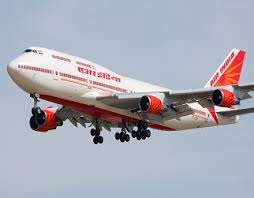
Bid to smuggle ganja into Gulf averted: 3 held; illicit drugs, car seized

[email protected] (CD Network)
May 23, 2016

flightKasaragod, May 23: The district police have seized a huge quantity of ganga being transported in a car on the national highway at Hosadurga yesterday.

They have also arrested three people on board the car identified as Moidin (34) from Padannakad, Ubaid (45) and T Shafeeq (33) from Ambalathara village.

The trio were caught while transporting 11 kg of ganja in four bundles. Acting on a tip off, a team of police was waiting for the car on the highway.

When the ganja transporting car tried to escape, the police managed to chase it. Preliminary investigation revealed they had planned the ganja into a Gulf country. Many gulf countries including Saudi Arabia award death penalty for ganja peddlers.

Comments

shaji
 - 
Monday, 23 May 2016

drug traffickers should be dealt severely. They are ruining lives of many people. keep them behind jail for few years. However, main culprits behind the deal should also be traced and punished. I think these people are only carriers working for some big people. Police should burst the racket and catch the people who run the business.

SK
 - 
Monday, 23 May 2016

What is the relevance of giving Air India flight photo for this news.... Apply the gulf laws for such criminal activities....

Add new comment

  • Coastaldigest.com reserves the right to delete or block any comments.
  • Coastaldigset.com is not responsible for its readers’ comments.
  • Comments that are abusive, incendiary or irrelevant are strictly prohibited.
  • Please use a genuine email ID and provide your name to avoid reject.
Ram Puniyani
February 22,2020

This January 2020, it is thirty years since the Kashmiri Pundits’ exodus from the Kashmir valley took place. They had suffered grave injustices, violence and humiliation prior to the migration away from the place of their social and cultural roots in Kashmir Valley. The phenomenon of this exodus had been due to the communalization of militancy in Kashmir in the decade of 1980s. While no ruling Government has applied itself enough to ‘solve’ this uprooting of pundits from their roots, there are communal elements who have been aggressively using ‘what about Kashmiri Pundits?’, every time liberal, human rights defenders talk about the plight of Muslim minority in India. This minority is now facing an overall erosion of their citizenship rights.

Time and over again in the aftermath of communal violence in particular, the human rights groups have been trying to put forward the demands for justice and rehabilitation of the victim minority. Instead of being listened to those particularly from Hindu nationalist combine, as a matter of routine shout back, where were you when Kashmiri Pundits were driven away from the Valley? In a way the tragedy being heaped on one minority is being justified in the name of suffering of Pundits and in the process violence is being normalized. This sounds as if two wrongs make a right, as if the suffering Muslim minority or those who are trying to talk in defense of minority rights have been responsible for the pain of Kashmiri Pundits.

During these three, many political formations have come to power, including BJP, Congress, third front and what have you. To begin with when the exodus took place Kashmir was under President’s rule and V. P. Singh Government was in power at the center. This Government had the external support of BJP at that time. Later BJP led NDA came to power for close to six years from 1998, under the leadership of Atal Bihari Vajpayee. Then from 2014 it is BJP, with Narerda Modi as PM, with BJP brute majority is in power. Other components of NDA are there to enjoy some spoils of power without any say in the policies being pursued by the Government. Modi is having absolute power with Amit Shah occasionally presenting Modi’s viewpoints.

Those blurting, ‘what about Kashmiri Pundits?’ are using it as a mere rhetoric to hide their communal color. The matters of Kashmir are very disturbing and cannot be attributed to be the making of Indian Muslims as it is being projected in an overt and subtle manner. Today, of course the steps taken by the Modi Government, that of abrogation of Article 370, abolition of clause 35 A, downgrading the status of Kashmir from a state to union territory have created a situation where the return of Kashmiri Pundits may have become more difficult, as the local atmosphere is more stifling and the leaders with democratic potential have been slapped with Public Safety Act, where they can be interned for long time without any answerability to the Courts. The internet had been suspended, communication being stifled in an atmosphere where democratic freedoms are curtailed which makes solution of any problem more difficult.

Kashmir has been a vexed issue where the suppression of the clause of autonomy, leading to alienation led to rise of militancy. This was duly supported by Pakistan. The entry of Al Qaeda elements, who having played their role against Russian army in 1980s entered into Kashmir and communalized the situation in Kashmir. The initial Kashmir militancy was on the grounds of Kashmiriyat. Kashmiriyat is not Islam, it is synthesis of teachings of Buddha, values of Vedant and preaching’s of Sufi Islam. The tormenting of Kashmiri Pundits begins with these elements entering Kashmir.

Also the pundits, who have been the integral part of Kashmir Valley, were urged upon by Goodwill mission to stay on, with local Muslims promising to counter the anti Pundit atmosphere. Jagmohan, the Governor, who later became a minister in NDA Government, instead of providing security to the Pundits thought, is fit to provide facilities for their mass migration. He could have intensified counter militancy and protected the vulnerable Pundit community. Why this was not done?

Today, ‘What about Kashmiri Pundits?’ needs to be given a serious thought away from the blame game or using it as a hammer to beat the ‘Muslims of India’ or human rights defenders? The previous NDA regime (2014) had thought of setting up enclosures of Pundits in the Valley. Is that a solution? Solution lies in giving justice to them. There is a need for judicial commission to identify the culprits and legal measures to reassure the Pundit community. Will they like to return if the high handed stifling atmosphere, with large number of military being present in the area? The cultural and religious spaces of Pundits need to be revived and Kashmiryat has to be made the base of any reconciliation process.

Surely, the Al Qaeda type elements do not represent the alienation of local Kashmiris, who need to be drawn into the process of dialogue for a peaceful Kashmir, which is the best guarantee for progress in this ex-state, now a Union territory. Communal amity, the hallmark of Kashmir cannot be brought in by changing the demographic composition by settling outsiders in the Valley. A true introspection is needed for this troubled area. Democracy is the only path for solving the emigration of Pundits and also of large numbers of Muslims, who also had to leave the valley due to the intimidating militancy and presence of armed forces in large numbers. One recalls Times of India report of 5th February 1992 which states that militants killed 1585 people from January 1990 to October 1992 out of which 982 were Muslims and 218 Hindus.

We have been taking a path where democratic norms are being stifled, and the promises of autonomy which were part of treaty of accession being ignored. Can it solve the problem of Pundits?

Comments

Add new comment

  • Coastaldigest.com reserves the right to delete or block any comments.
  • Coastaldigset.com is not responsible for its readers’ comments.
  • Comments that are abusive, incendiary or irrelevant are strictly prohibited.
  • Please use a genuine email ID and provide your name to avoid reject.
News Network
May 19,2020

Bengaluru, May 19: Containment zones in Karnataka will be much smaller in size under the latest lockdown norms. However, rules and loopholes will be tightened and action against violators will be stringent in order to check the spread of the disease.

Revised guidelines issued by the Centre to the state, reveal containment zones are delineated based on mapping of cases and contacts. Intensive action will be carried out in these areas with the aim of breaking the chain of transmission. Therefore, the area of a containment zone should be appropriately defined by the district administration/local urban bodies with technical inputs at local level.

The health department is considering shrinking the size of containment zones from the existing 100 metres to open up more space for economic activities. Medical education minister K Sudhakar, also a member of the Covid taskforce, said additional chief secretary (health department) Javed Akthar will issue a new definition of a containment zone after the Covid-19 taskforce holds its next meeting.

“We are planning to further shrink it and restrict containment zones to an apartment complex, independent house or even a lane where the Covid-19 patient resides,” Sudhakar said. He went on to say bigger containment zones will impede businesses and normal activities in the vicinity, something which the government wants to avoid.

The minister said Karnataka will also do away with colour-coding districts. “With restrictions being relaxed for almost all activities, it does not make sense to pursue with colour codes. It is either containment zone or outside containment zone,” he said.

In rural areas, the minister said containment zones will be identified by the taluk heads. Government sources say it is difficult to restrict activities to certain areas or smaller location in rural areas as farmers and people will have to travel to the outskirts of their villages for their livelihood.

An official said, a containment operation (large outbreak or cluster) is deemed successful when no case is reported in 28 days from the containment zone.

Comments

Add new comment

  • Coastaldigest.com reserves the right to delete or block any comments.
  • Coastaldigset.com is not responsible for its readers’ comments.
  • Comments that are abusive, incendiary or irrelevant are strictly prohibited.
  • Please use a genuine email ID and provide your name to avoid reject.
News Network
July 8,2020

Bengaluru, Jul 8: Karnataka on Wednesday reported the biggest single-day spike of 2,062 coronavirus cases and a record 54 fatalities, taking the total number of infections to 28,877 and the death count to 470, the health department said.

778 COVID-19 patients were also discharged after recovery in the state.

Out of the fresh cases reported today, 1,148 cases were reported from Bengaluru alone with 22 deaths.

The previous biggest single-day spike was recorded on July 5 with 1,925 cases.

As of July 8 evening, cumulatively 28,877 COVID-19 positive cases have been confirmed in the state, which includes 470 deaths and 11,876 discharges, the health department said in its bulletin.

It said out of 16,527 active cases, 16,075 patients are in isolation at designated hospitals and stable, while 452 are in ICU.

The dead include 22 from Bengaluru urban, Dharwad seven, Ballari four, three each from Hassan and Raichur, two each from Ramanagara, Chikkaballapura, Vijayapura, Tumakuru, Mysuru, and one each from Bidar, Dakshina Kannada, Kalaburagi, Chikkamagaluru and Bengaluru rural.

Among the districts where the new cases were reported, Bengaluru urban accounted for 1,148 cases, followed by Dakshina Kannada 183, Dharwad 89, Kalaburagi 66, fifty nine each from Ballari and Mysuru, Bengaluru rural 37, Ramanagara 34, Chikkaballapura 32, 31 each from Udupi and Haveri, Bidar 29, Belagavi 27, Hassan 26, and 24 each from Bagalkote and Tumakuru.

While Chikkamagaluru reported 23 cases, it was 20 in Mandya, Uttara Kannada 19, Davangere 18, 17 each from Raichur and Shivamogga, Kolar 16, 11 each from Yadgir and Koppal, Gadag five, Vijayapura four, and Chitradurga two.

Bengaluru urban district tops the list of positive cases, with 12,509 infections, followed by Kalaburagi 1,816 and Dakshina Kannada 1,534.

Among discharges, Bengaluru urban tops the list with 2,228 discharges, followed by Kalabuagi 1,351 and Udupi 1,178.

A total of 7,59,181 samples were tested so far, out of which 19,134 were tested on Wednesday alone.

According to the bulletin, so far 7,11,319 samples have been reported as negative, and out of them 16,503 were reported negative today.


Comments

Add new comment

  • Coastaldigest.com reserves the right to delete or block any comments.
  • Coastaldigset.com is not responsible for its readers’ comments.
  • Comments that are abusive, incendiary or irrelevant are strictly prohibited.
  • Please use a genuine email ID and provide your name to avoid reject.