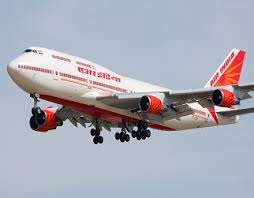
Bid to smuggle ganja into Gulf averted: 3 held; illicit drugs, car seized

[email protected] (CD Network)
May 23, 2016

flightKasaragod, May 23: The district police have seized a huge quantity of ganga being transported in a car on the national highway at Hosadurga yesterday.

They have also arrested three people on board the car identified as Moidin (34) from Padannakad, Ubaid (45) and T Shafeeq (33) from Ambalathara village.

The trio were caught while transporting 11 kg of ganja in four bundles. Acting on a tip off, a team of police was waiting for the car on the highway.

When the ganja transporting car tried to escape, the police managed to chase it. Preliminary investigation revealed they had planned the ganja into a Gulf country. Many gulf countries including Saudi Arabia award death penalty for ganja peddlers.

Comments

shaji
 - 
Monday, 23 May 2016

drug traffickers should be dealt severely. They are ruining lives of many people. keep them behind jail for few years. However, main culprits behind the deal should also be traced and punished. I think these people are only carriers working for some big people. Police should burst the racket and catch the people who run the business.

SK
 - 
Monday, 23 May 2016

What is the relevance of giving Air India flight photo for this news.... Apply the gulf laws for such criminal activities....

Add new comment

  • Coastaldigest.com reserves the right to delete or block any comments.
  • Coastaldigset.com is not responsible for its readers’ comments.
  • Comments that are abusive, incendiary or irrelevant are strictly prohibited.
  • Please use a genuine email ID and provide your name to avoid reject.
News Network
June 2,2020

Tumkur, Jun 2: Karnataka Agriculture Minister BC Patil on Monday said that state will not be affected due to locust swarm as it has moved to other states.

"There will be no effect as locust insects diverted to other states after they came from Pakistan. We were also worried and were prepared to face it, luckily we will not be affected by insects," he said.

Locust is a type of grasshoppers and moves in large numbers and devastates crops. Several parts of Rajasthan including Ganganagar have reported locust attacks.

There is a prediction of another attack in June this year.

Comments

Add new comment

  • Coastaldigest.com reserves the right to delete or block any comments.
  • Coastaldigset.com is not responsible for its readers’ comments.
  • Comments that are abusive, incendiary or irrelevant are strictly prohibited.
  • Please use a genuine email ID and provide your name to avoid reject.
News Network
February 21,2020

Bengaluru, Feb 21: The Supreme Court in its interim order on Thursday allowed the plea of the Karnataka government for implementation of the final award by a tribunal for sharing of water between Goa, Karnataka and Maharashtra from the Mahadayi river.

The interim order was passed by a bench comprising Justice D Y Chandrachud and Justice Hemant Gupta after hearing the counsel from the three states. The bench said the final hearing in the matter will take place in July.

It also said the interim order is subject to the final outcome of the petitions filed by the three states against the tribunal's award.

The Mahadayi Water Dispute tribunal had passed the order on August 14, 2018, allocating 13.42 TMC ( Thousand Million Cubic Feet.) water (including 3.9 TMC for diversion into the depleted Malaprabha river basin) from the Mahadayi river basin to Karnataka.

Maharashtra was allotted 1.33 TMC water while Goa was given 24 TMC in the final decision of the tribunal. The UPA-2 government had constituted Mahadayi Water Disputes Tribunal in 2010.

Karnataka government, which has locked horns with the neighbouring Goa on the larger issue of sharing Mahadayi River water between both the states, had petitioned the tribunal seeking the release of 7.56 tmcft of water for the Kalasa-Banduri Nala project.

The Kalasa-Banduri Nala (diversion) project, which will utilise 7.56 tmcft of water from the inter-state Mahadayi river, is being undertaken by Karnataka to improve drinking water supply to the twin cities of Hubballi-Dharwad and the districts of Belagavi and Gadag.

It involves building barrages across Kalasa and Banduri, the tributaries of the Mahadayi River, to divert 7.56 tmc water to the Malaprabha river which fulfils the drinking water needs of the twin cities.

Comments

Add new comment

  • Coastaldigest.com reserves the right to delete or block any comments.
  • Coastaldigset.com is not responsible for its readers’ comments.
  • Comments that are abusive, incendiary or irrelevant are strictly prohibited.
  • Please use a genuine email ID and provide your name to avoid reject.
coastaldigest.com news network
February 23,2020

Mangalore University has been participating in the campus bird count a sub-event of ‘Great backyard bird count’ (GBBC) organized by Bird Count India for the past 5 years. This year, CBC was held from 14th to 17th February of 2020 across various campuses in India.

This year the four days event was successfully ended up with the sightings of 103 species of birds from various locations across the campus spread on 300 acres. In this Black Drongo, Black Kite, Brahminy Kite, Common Iora, Green Wabler, Purple-rumed Sunbird, Red-whiskered Bulbul, White-cheeked Barbet, Jungle Babbler and Plum headed parakeets were the common birds, and also observed House Crow with nest and nestlings, Indian Robin nest with eggs, Bronzed Drongo constructing the nest and Shikra mating and carrying nesting materials.  Whereas Yellow-billed Babbler is rare in the campus, Ashy Drongo, Barn Swallow, Booted Eagle, Grey Wagtail, Indian Pitta etc. were migratory birds, Grey-headed Bulbul (Near Threatened bird), Rufous Babbler and Grey-headed Bulbul were Western Ghats Endemics  and Brown Wood Owl, Barn Owl, Spotted Owlet, Nightjars (Savanna, Indian and Jerdon’s) and Sri Lanka Frogmouth were nocturnal birds. Blue-eared Kingfisher Grey-bellied Cuckoo which was very rare and new additions to avian list of the campus.

In the first year (2016) of Mangalore University’s CBC recorded 77 species, in 2017 recorded 95 species, in 2018 recorded 110 species and in 2019 recorded 107 species of birds. However some of the common species like Rose ringed parakeets, Blue tailed bee-eater, Nilgiri Flowerpecker and Indian roller etc., sighted last year were not seen this year. But with 2 new additions from this CBC, the checklist of Mangalore University Campus has been updated with a total of 141 species.

This event was coordinated by Vivek Hasyagar from the Department of Applied Zoology and Maxim Rodrigues from the Department of Marine Geology. Survey trails were led by more than 60 students and research scholars from various Departments of Mangalore University includes Applied Zoology, Biosciences, Microbiology, Botany, Physics, Chemistry and Material Science.  In addition, some enthusiastic participants from St. Aloysius College had involved in identifying the birds around the campus.

Quote:

Wild/planned fire affects negatively on the existing ecologically sensitive areas in and around the campus especially in lateritic grasslands. Because many insectivorous birds are dependent on these lateritic grassland habitats for their food and breeding grounds for many ground dwelling birds like Yellow wattled lapwing, Red wattled lapwing, Indian Robin and Barred buttonquails. Conserving these habitats will be helpful in protecting these birds.

Quotes from the participants: “The Campus Bird Count 2020 at Mangalore University was an experience of its own kind. Observing birds in their natural habitat gave me new perspective of viewing them not only as another living being, but as equals, or even of higher intelligence. The Campus Bird Count is an important step towards documenting bird life year after year, and creating awareness amongst youngsters, so that proper conservation steps can be taken to protect them from human interference”.

-Jyotsna Dessai ( 1 M.Sc Zoology)

Comments

Add new comment

  • Coastaldigest.com reserves the right to delete or block any comments.
  • Coastaldigset.com is not responsible for its readers’ comments.
  • Comments that are abusive, incendiary or irrelevant are strictly prohibited.
  • Please use a genuine email ID and provide your name to avoid reject.